

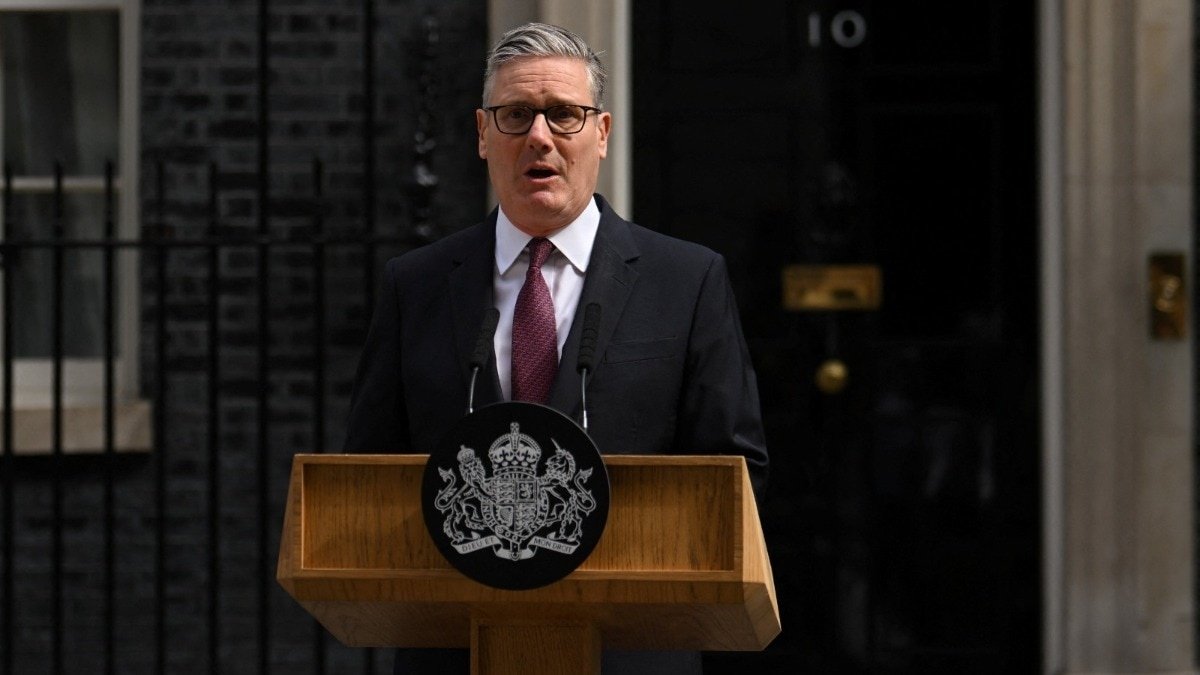
Less than two years after leading the Labour Party to a historic landslide victory, British Prime Minister Keir Starmer stood outside 10 Downing Street on Monday to announce his resignation. His departure after just 23 months in office plunges British politics back into a familiar state of volatility, paving the way for the United Kingdom to welcome its seventh prime minister in a single decade.
Starmer confirmed he will remain as a caretaker prime minister until the party selects his successor, promising to ensure an “orderly handover of power.”
Why Did Starmer Resign?
While the announcement capped a weekend of intense political speculation, the pressure on Starmer had been building for months. His leadership ultimately collapsed under the weight of severe domestic struggles, shifting political tides, and self-inflicted political wounds.
-
The Squeeze from the Left and Right: Labour lawmakers grew increasingly terrified of an upcoming electoral wipeout. The party was bleeding progressive, liberal voters to the rising Green Party, while simultaneously facing a massive surge on its right flank from Nigel Farage’s anti-immigration Reform UK party.
-
Stagnant Living Standards: Despite a massive parliamentary majority, Starmer struggled to jumpstart economic growth or alleviate a grueling, multi-year cost-of-living crisis. As living standards remained flat, his personal approval ratings plummeted to historic lows.
-
The Flashpoint Appointment: The final blow to his authority came from a massive political scandal involving his decision to appoint former MP Peter Mandelson as the UK Ambassador to the United States. Mandelson’s past ties to convicted sex offender Jeffrey Epstein provoked severe public backlash and an internal party revolt.
“Every decision I have taken has been about putting the country I love first… The question my party is asking now, is whether I am best placed to lead us into the next general election. I have heard the answer of my parliamentary party to that question, and I accept that answer with good grace.”
— Keir Starmer, Resignation Address
The Decade of Instability: 6 PM Exits in 10 Years
Starmer’s exit occurs almost exactly on the 10th anniversary of the historic Brexit referendum—the watershed event that kickstarted a decade of unprecedented political turnover in British history.
| Prime Minister | Party | Approximate Tenure | Primary Catalyst for Exit |
| David Cameron | Conservative | 6 Years (Resigned 2016) | Stepped down after losing the Brexit referendum. |
| Theresa May | Conservative | 3 Years (Resigned 2019) | Ousted after failing to pass her Brexit withdrawal deal through Parliament. |
| Boris Johnson | Conservative | 3 Years (Resigned 2022) | Brought down by a series of high-profile ethics and lockdown scandals. |
| Liz Truss | Conservative | 44 Days (Resigned 2022) | Forced out after her unfunded “mini-budget” triggered a market crash. |
| Rishi Sunak | Conservative | 20 Months (Defeated 2024) | Lost the July 2024 general election to Keir Starmer’s Labour. |
| Keir Starmer | Labour | 23 Months (Resigned 2026) | Resigned following a collapse in polling and intense internal party pressure. |
The Race to Succeed Him
While Starmer faced sharp domestic criticism, his tenure earned international praise for rallying European defense support for Ukraine and managing geopolitical fallout in the Middle East. However, focus has completely shifted to who will run the country next.
The Labour Party leadership contest is already taking shape with a clear frontrunner:
-
Andy Burnham: The highly popular former Mayor of Greater Manchester—who joined the Labour Party at age 15—secured a clear path back into Westminster last week by winning a parliamentary seat in a special by-election. He has officially launched his leadership campaign.
-
Wes Streeting: The former Health Secretary and prominent Starmer critic was widely expected to run for the top job himself. In a surprising twist, Streeting announced he would step aside and throw his full backing behind Burnham, potentially clearing the way for an uncontested transition of power by late July.
