

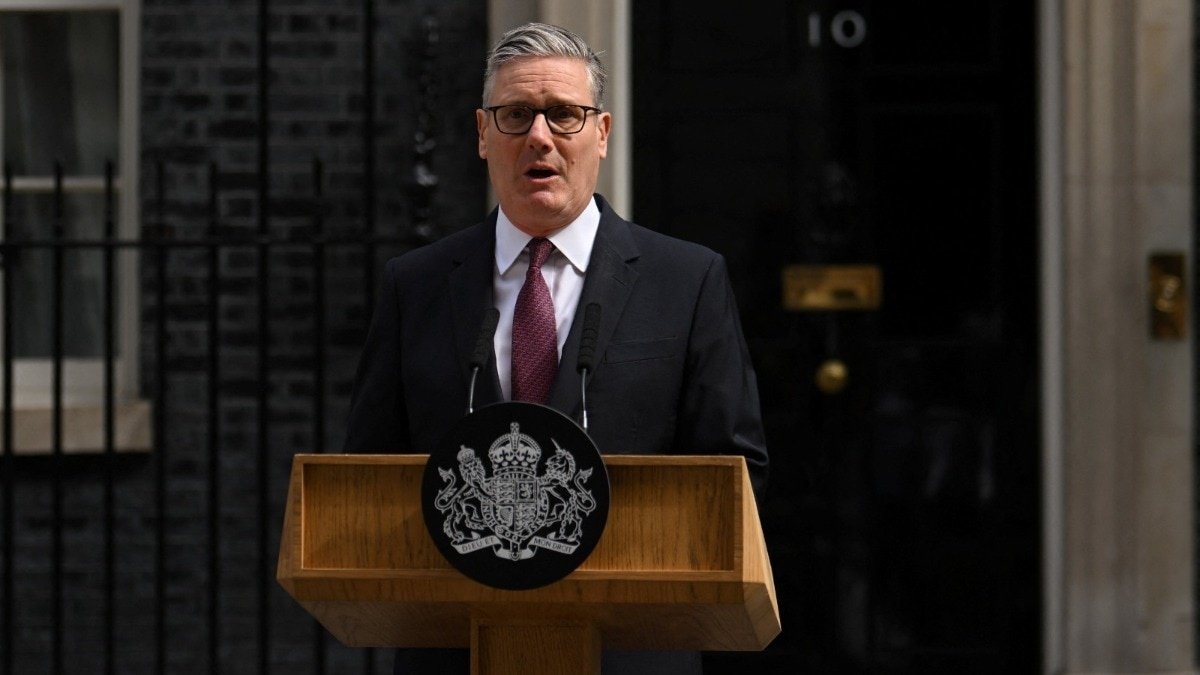
In a stunning political earthquake, UK Prime Minister Keir Starmer stood outside 10 Downing Street on Monday to announce his resignation as leader of the governing Labour Party. Arriving just 23 months after leading Labour to a historic landslide victory in July 2024, Starmer’s exit plunges British politics back into familiar volatility.
Starmer confirmed he will remain in office as caretaker prime minister until his successor is chosen, paving the way for the United Kingdom to appoint its seventh premier in just ten years.
While the announcement follows days of intense speculation, the pressure within the centre-left Labour Party had been building for months. Lawmakers grew increasingly panicked by a severe drop in the party’s popularity and acted decisively to prevent an electoral disaster.
-
The Two-Way Political Squeeze: Labour found itself bleeding progressive and liberal voters to the rising Green Party while simultaneously facing a powerful right-wing surge from Nigel Farage’s anti-immigration Reform UK party.
-
Domestic and Economic Stagnation: Starmer struggled to deliver promised economic growth, repair tattered public services, or ease the punishing cost-of-living crisis, driving his personal approval ratings to historic lows.
-
The Diplomatic Flashpoint: The final breaking point came with his controversial appointment of scandal-tainted former MP Peter Mandelson as the UK Ambassador to the United States. Mandelson’s past links to convicted sex offender Jeffrey Epstein triggered an immediate internal party mutiny and key cabinet resignations.
A Decade of Westminster Instability
Starmer’s exit comes almost exactly on the 10th anniversary of the historic Brexit referendum, underlining a remarkable decade of unprecedented political turnover in Great Britain.
Though Starmer won international praise for his handling of foreign policy—notably in rallying European support for Ukraine and navigating geopolitical tensions involving Iran—his domestic position became entirely untenable. The Labour Party is now moving rapidly to establish a succession plan:
-
Andy Burnham: The highly popular former Mayor of Greater Manchester is currently the heavy frontrunner to take the reins. Having just won a special by-election to return to Parliament as an MP, Burnham has centered his campaign on offering a fresh, distinct direction for the country.
-
Wes Streeting: The former Health Secretary and prominent Starmer critic was previously considered a primary contender. However, in an effort to avoid a divisive summer campaign and ensure party unity, Streeting announced he would step aside and endorse Burnham, potentially clearing the path for an uncontested transition.
Nominations to select the next Labour leader are scheduled to open on July 9, with the formal leadership contest concluding before Parliament returns in September.
