

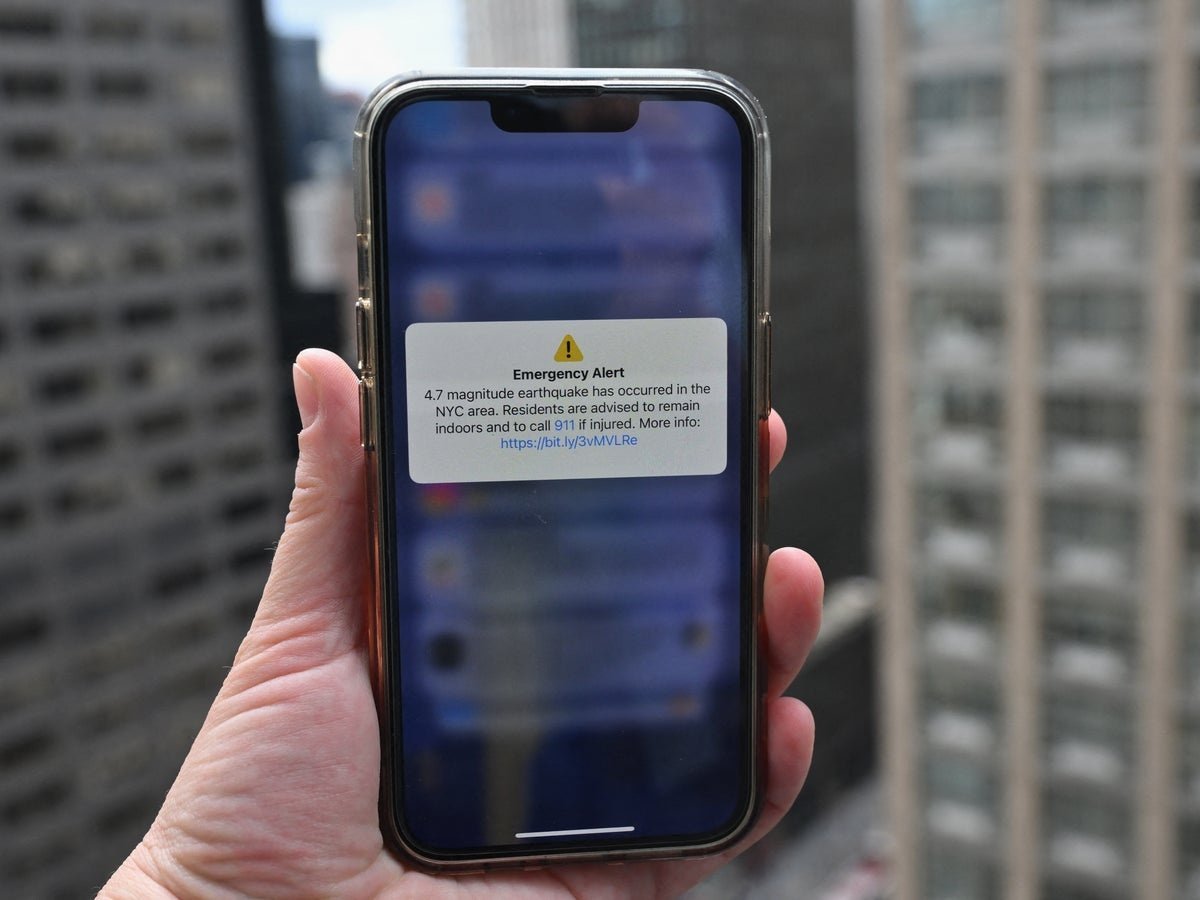
A massive earthquake in Venezuela has spotlighted a major shift in modern disaster management. Moments before the ground violently shook, millions of residents received automated emergency alerts directly on their Android smartphones.
The event has reignited global interest in how consumer technology can serve as a decentralized, real-time life-saving network.
The Mechanics: Detection vs. Prediction
It is vital to understand that technology does not predict earthquakes. Instead, Google’s Android Earthquake Alerts System utilizes crowd-sourced data to detect a seismic event the exact millisecond it begins, outrunning the destructive shockwaves.
How the Crowdsourced Network Works
Every modern smartphone contains a tiny, built-in sensor called an accelerometer, which is designed to detect orientation and movement (like switching your screen from portrait to landscape).
-
Catching the P-Wave: When an earthquake begins, it releases initial, fast-moving seismic waves called Primary (P) waves. These are subtle and often go unnoticed by humans.
-
The Cloud Aggregator: If thousands of stationary Android phones in a specific area experience the exact same P-wave vibrations simultaneously, Google’s cloud algorithms instantly calculate the earthquake’s epicenter, depth, and estimated magnitude.
-
Outrunning the S-Wave: A digital alert is pushed via cellular data at the speed of light. This signal travels drastically faster than the Secondary (S) waves—the rolling, highly destructive tremors that cause buildings to collapse.
What a Few Seconds Buys You
While a warning window of 5 to 10 seconds might sound brief, disaster management experts emphasize that it provides a critical window to dramatically reduce injuries and casualties:
| Warning Window | Actionable Safety Measures |
| 3 Seconds | Drop, Cover, and Hold On. Step away from glass windows or heavy overhead cabinets. |
| 5 Seconds | Automatically pause industrial machinery, halt delicate medical surgeries, or safely pull a vehicle to the side of the road. |
| 10+ Seconds | Clear out of fragile structures, safely exit elevators before power grids shut down, or move to designated open-air safety zones. |
The Future of Resilience: Disaster specialists note that this event proves we no longer have to rely exclusively on expensive, specialized terrestrial seismograph networks. As cities grow more dense and interconnected, leveraging billions of existing mobile devices creates a universally accessible safety net for a wide array of natural hazards.
