

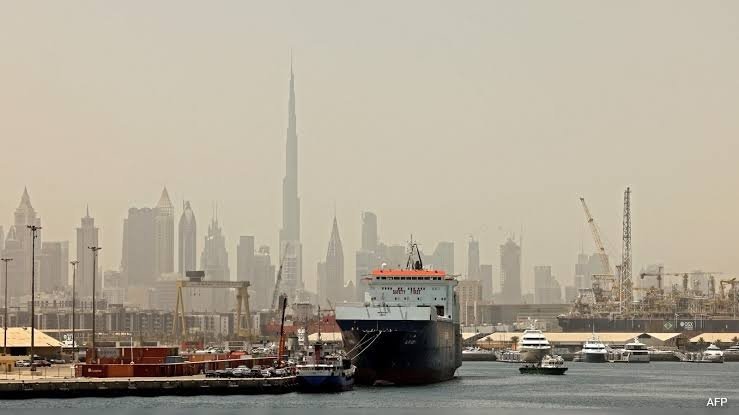
The United Arab Emirates is preparing for a monumental shift in its maritime trade strategy. DP World is in talks to develop a brand-new multipurpose port and container terminal in the eastern emirate of Fujairah.
This plan is designed to bypass the highly vulnerable Strait of Hormuz completely, mitigating severe economic disruptions caused by regional blockades and military crossfire.
The Catalyst: Hormuz Under Siege
The decision comes after shipping activity at Dubai’s flagship Jebel Ali Port—historically the region’s largest and most crucial container hub— plummeted by 90% to 95%.
This drop followed Iran’s closure of the Strait of Hormuz in February 2026 in response to US-Israeli military strikes.
With Jebel Ali caught in the crossfire (including a fire caused by intercepted missile debris) and the UAE being targeted by nearly 3,000 drones and missiles during the regional escalation, finding a “defensive” alternative became an economic emergency.
The Strategic Solution: Shifting to the East Coast
By establishing a new port hub in Fujairah on the Gulf of Oman, the UAE can fundamentally alter its supply chain routes:
While Jebel Ali Port will remain the UAE’s crown jewel and will not be downsized, the Fujairah project offers a critical pressure valve. Cargo can be safely unloaded on the eastern coast and transported overland by truck directly to Dubai, Abu Dhabi, and other Gulf nations without entering the Persian Gulf choke point.
DP World officials state that a term sheet is currently under discussion, and the initial phase of this backup port could be completed in as little as 18 months.
