

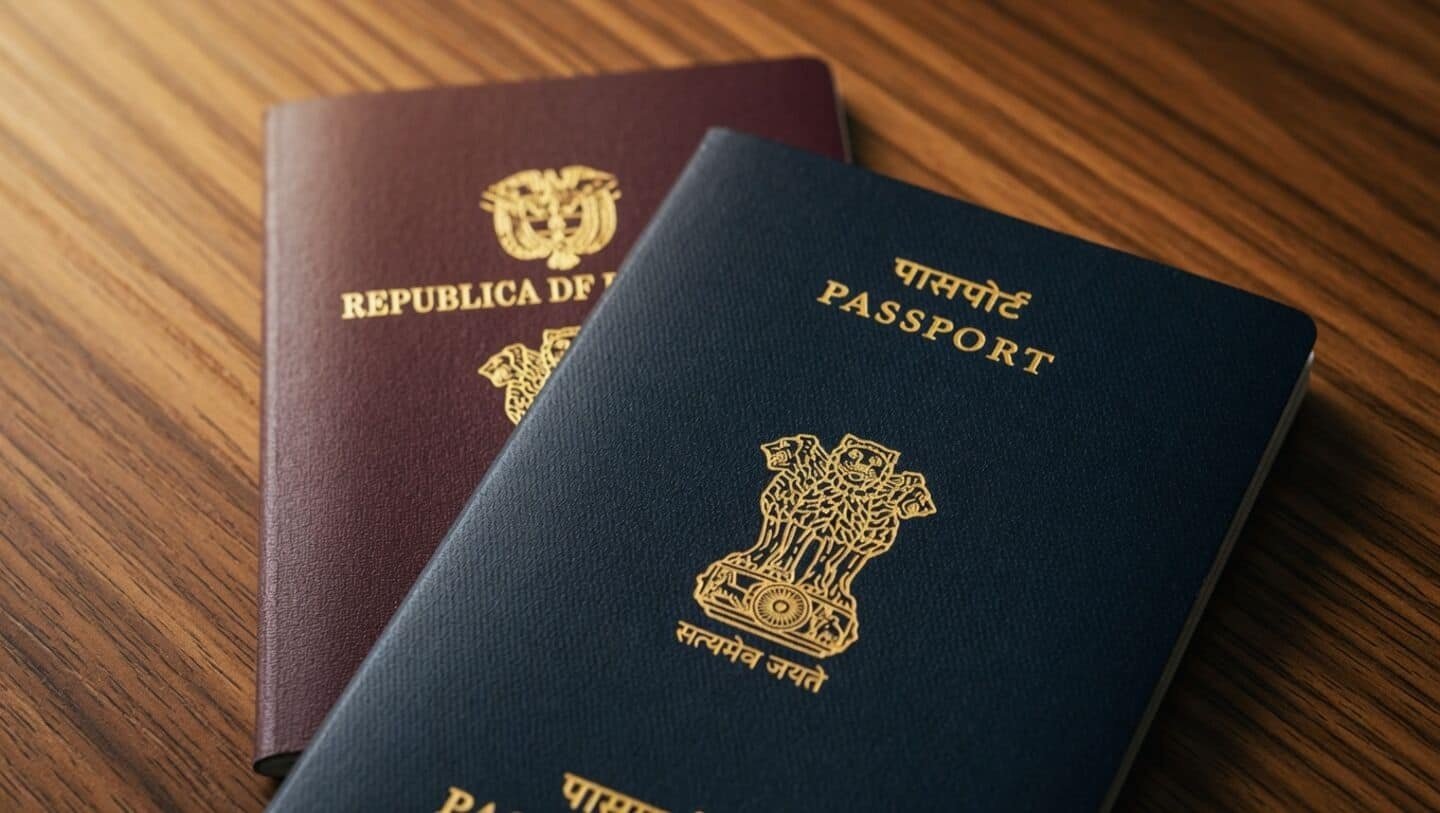
A major online debate has erupted in India regarding whether an Indian passport serves as legal proof of citizenship. The controversy began after a Ministry of External Affairs official remarked that a passport is “strictly a travel document” and does not automatically grant access to citizen-specific welfare schemes.
This position has triggered widespread public confusion and criticism, given the exhaustive background checks and physical police verifications required to obtain a passport. Figures ranging from lyricist Javed Akhtar to political leaders have questioned the logic of the government issuing a document specifying nationality if it does not legally prove citizenship. Critics also expressed concern that this stance could undermine international trust in the document.
The Legal Distinction
According to government sources, a passport has never legally constituted conclusive evidence of citizenship under Indian law. The distinction rests on two separate pieces of legislation:
-
The Passports Act, 1967: This law regulates the travel document itself. Under specific provisions, a passport can technically be issued to non-citizens. A 2013 Bombay High Court ruling affirmed this, stating that because the Act allows for the issuance of passports to non-citizens, possession of one cannot be considered definitive evidence of citizenship. Furthermore, a passport remains the property of the government and can be impounded.
-
The Citizenship Act, 1955: This is the foundational law that governs and establishes an individual’s legal status as an Indian citizen. The criteria to confer or strip citizenship are distinct from the administrative rules governing travel documents.
The ID Loop and Administrative Challenges
Former diplomat Nirupama Menon Rao noted that while the law and public understanding differ, the passport remains “the most authoritative document” in practice worldwide.
The row highlights a broader systemic issue in India’s civil registration system. Citizens frequently navigate a complex loop of overlapping identity verification requirements—where documents like voter cards and secondary IDs are required to obtain or renew one another, yet many have been discounted as absolute proof of citizenship in various legal or electoral contexts.
Ultimately, the definitive legal documents that establish Indian citizenship remain a birth certificate or an official certificate of citizenship grant. The ongoing debate underscores a growing administrative gap and the public demand for a single, universally accessible standard for identity and citizenship verification.
