

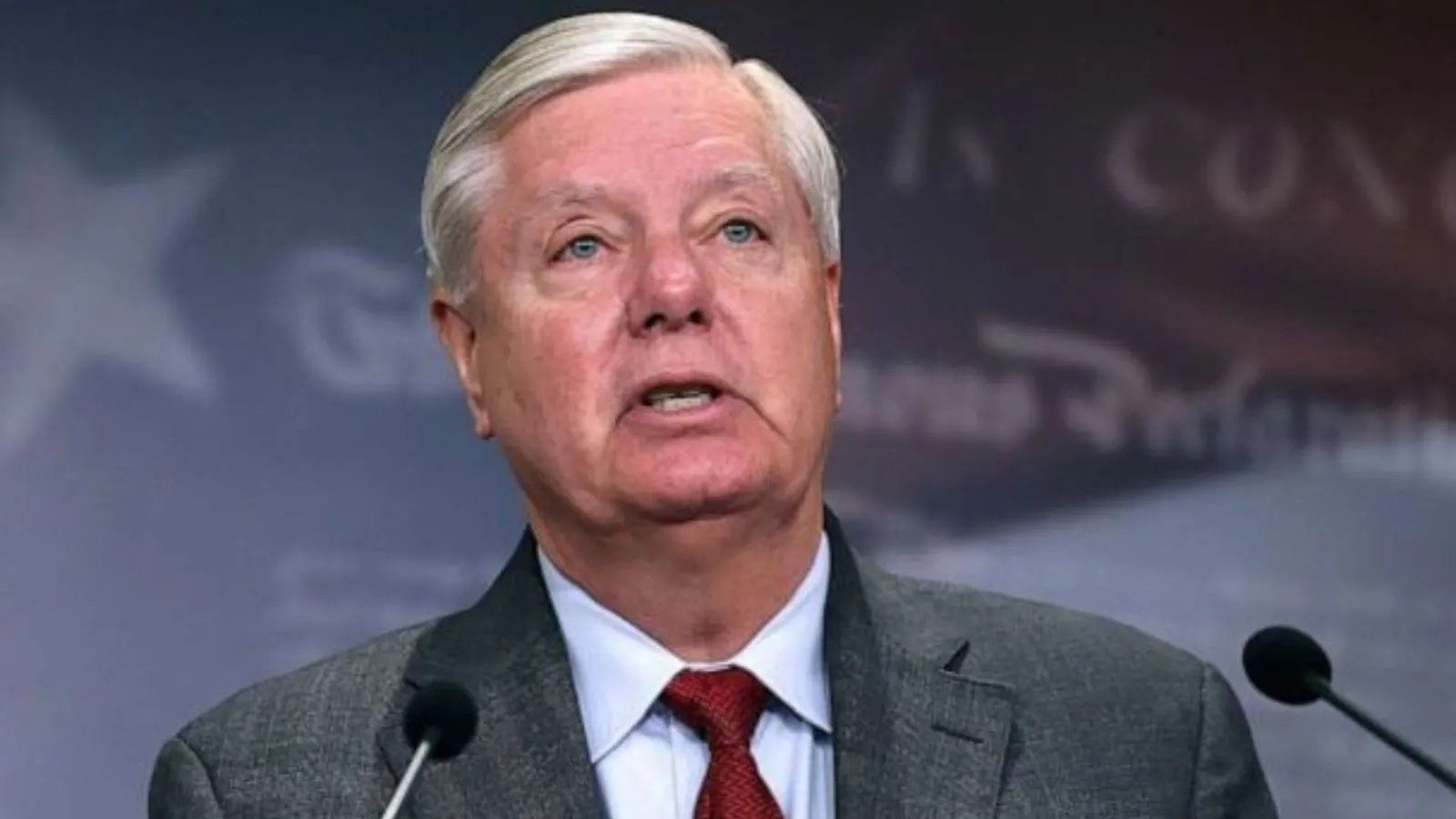
Veteran US Senator Lindsey Graham, a central figure in Republican foreign policy and a staunch ally of President Donald Trump, has died suddenly at the age of 71. Graham’s office confirmed he passed away on Saturday following a brief illness immediately after returning from an official trip to Ukraine. Preliminary medical findings point to a ruptured aorta as the cause of death.
Graham served South Carolina in Congress for over three decades and was known for bridging conventional hawkish Washington interventionism with Trump’s “America First” agenda.
Trump Reacts to the Loss
President Donald Trump expressed profound shock over his ally’s sudden death, calling Graham a “true American patriot” during a CNN interview.
“He called me last night. He just got back from Ukraine… He was full of vim and vigor. He was tired. He said, ‘I’m tired because it’s a long trip.’ But other than that, he was fine. What a terrible loss it is.” — President Donald Trump
Crucial Global Stances and Controversies
Throughout his long tenure, Graham championed an aggressive, military-first approach to global conflicts, often generating intense international debate:
-
The 500% Tariff Proposal on India: Graham fiercely co-authored the Sanctioning Russia Act of 2025 alongside Democrat Richard Blumenthal. The bill sought to levy catastrophic 500% tariffs on countries like India, China, and Brazil that continued to purchase Russian energy. Graham explicitly labeled these oil transactions as “blood money.”
-
Unwavering Ukraine Defense: Despite a shifting stance within his own party regarding foreign aid, Graham remained a fierce defender of Kyiv. Ukrainian President Volodymyr Zelenskyy praised Graham as a “true defender of freedom,” noting he had visited the war-torn nation 10 times since 2022.
-
The Iran and Gaza Conflicts: Graham strongly supported aggressive strategies in the Middle East. He backed US airstrikes on Iranian nuclear sites and controversially recommended sending ground troops to seize Iran’s Kharg Island. He was also an outspoken defender of Israel’s military campaigns, prompting Israeli Prime Minister Benjamin Netanyahu to mourn him as “one of Israel’s greatest friends.”
