

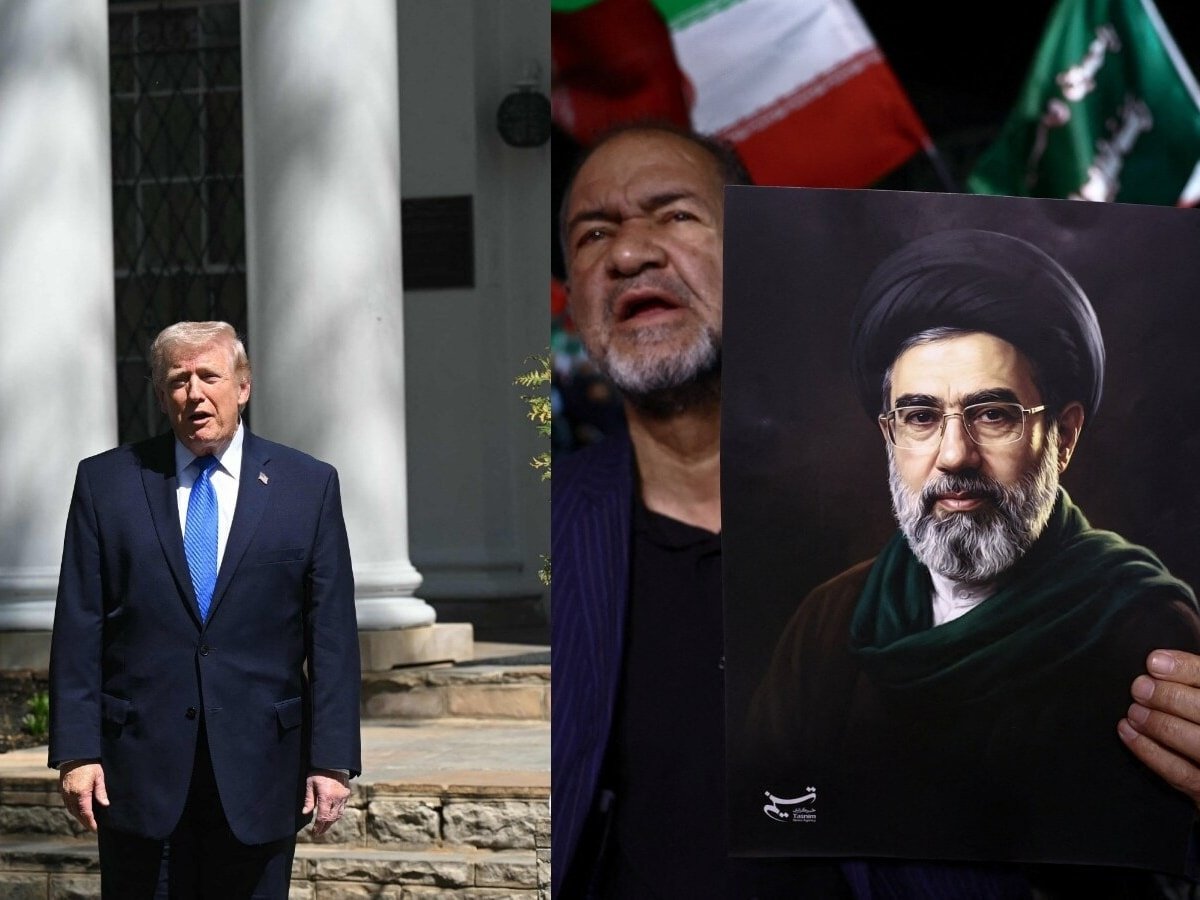
Despite the devastating loss of Ayatollah Ali Khamenei and several top commanders in the opening strikes of the war (commencing February 28, 2026), Iran’s theocratic system remains operational. The Islamic Republic was designed with a “layered” institutional structure specifically to survive the “decapitation” of its leadership.
Here is the current hierarchy of power in a depleted but resilient Tehran:
1. The Supreme Leadership: A Shadowy Succession
The role of Supreme Leader has passed to Mojtaba Khamenei, the son of the late Ayatollah. However, his authority is currently under scrutiny:
-
The “Janbaz” Status: State media refers to him as a “wounded veteran” of the current conflict. He has not been seen in photos or video since his appointment over three weeks ago, leading to rumors about his physical condition.
-
Dependence on the Guards: Lacking his father’s natural religious and political standing, Mojtaba is seen as heavily beholden to the Revolutionary Guards (IRGC) for his position.
2. The IRGC: The “Mosaic” Command
The Islamic Revolutionary Guards Corps (IRGC) has moved from a supporting pillar to the central decision-making body of the state.
-
Resilience: The IRGC uses a “mosaic” structure where every unit can operate independently. New commanders are pre-designated to step in immediately if a superior is killed.
-
New Leadership: Ahmad Vahidi has taken over as the IRGC’s top commander after his predecessors were killed. He is a hardliner with deep experience in the Qods Force and internal security.
3. Key Power Players Remaining
With veteran diplomats like Ali Larijani and naval heads like Alireza Tangsiri dead, a mix of hardliners and survivors are steering the ship:
| Name | Role | Influence Level |
| Mohammad Baqer Qalibaf | Parliament Speaker | High. Currently the top political heavyweight; reportedly negotiating with the US. |
| Esmail Qaani | Qods Force Chief | Critical. Manages Iran’s “Axis of Resistance” proxies across the Middle East. |
| Masoud Pezeshkian | President | Moderate. While the senior elected official, he was recently forced to retract apologies made to Gulf states after IRGC pressure. |
| Abbas Araqchi | Foreign Minister | Essential. The veteran diplomat handling high-stakes talks with the West, Russia, and China. |
| Saeed Jalili | Former Security Chief | Rising. An uncompromising hardliner and former nuclear negotiator. |
Summary of the Political Climate
The current leadership is arguably more hardline than the one that started the war. The loss of moderate or pragmatic “bridge” figures like Larijani has left the state in the hands of the military elite and ultra-conservative clerics like Ayatollah Alireza Arafi (Guardian Council) and Mohseni-Ejei (Judiciary Head).
While the system is “resilient,” the fact that the new Supreme Leader has only issued two written statements and zero public appearances suggests a fragile transition period behind the scenes.
