

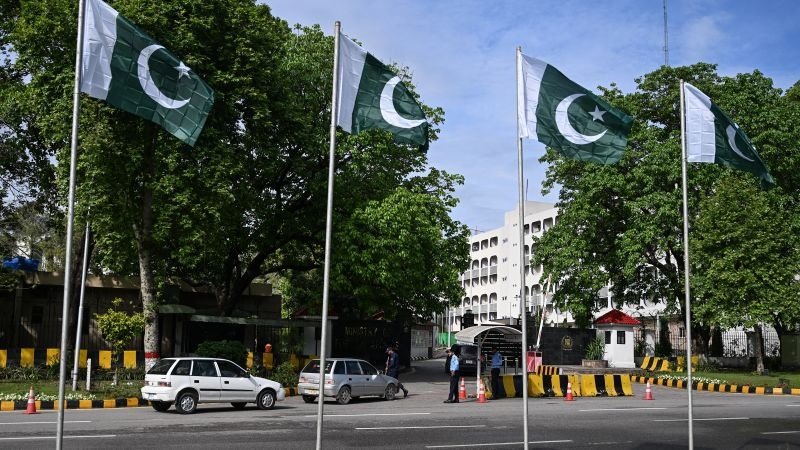
In a significant shift in Middle Eastern diplomacy, President Donald Trump has extended the US-Iran ceasefire “indefinitely,” publicly crediting the mediation of Pakistan’s leadership. This move places Islamabad—specifically Prime Minister Shehbaz Sharif and Field Marshal Asim Munir—at the center of a global effort to prevent a total regional conflagration.
The “Trump Whisperer”: A Strategic Breakthrough
Citing a direct request from Pakistan, Trump announced via Truth Social that the US would pause planned military strikes to allow a “fractured” Iranian regime time to present a unified peace proposal. While the maritime blockade of the Strait of Hormuz remains, the indefinite nature of the truce marks a rare departure from the administration’s typical “deadline diplomacy.”
-
Pakistan’s Role: Acting as the “adult in the room,” Islamabad leveraged its unique position as a nuclear-armed Muslim nation with historical ties to both Washington and Tehran.
-
The Munir Factor: Field Marshal Asim Munir’s surprise 2025 White House visit and subsequent negotiations in Tehran were pivotal in securing this diplomatic opening.
Why Pakistan is Playing the Peacemaker
For a nation often grappling with economic instability and a reputation for internal security challenges, this “peacemaker” role is a calculated move to pivot its global standing.
| Driver | Impact on Pakistan |
| Economic Survival | Stability in the Gulf prevents oil price spikes and exchange rate crashes that threaten to bankrupt Islamabad. |
| Diplomatic Recasting | By facilitating peace, Pakistan aims to shed its “troubled nation” label and re-emerge as a responsible global actor. |
| Business & Investment | Increased stature is being used to attract foreign investment and secure military/economic pacts with the US and Saudi Arabia. |
Risks and Regional Ripples
Despite the current success, the path forward is fraught with complexity for both Pakistan and its neighbors:
1. The Internal Backlash
Critics suggest Pakistan may be acting more as a US proxy than a neutral mediator. If talks fail, Islamabad risks being blamed by both Tehran and its own anti-US domestic factions.
2. The Indian Perspective
While New Delhi benefits from Middle Eastern stability, there is strategic concern regarding Pakistan’s growing diplomatic clout. A “strengthened” Pakistani military, emboldened by international validation and potential new arms sales, historically complicates the security dynamic on the subcontinent.
3. The Hybrid Power Structure
The ceasefire highlights the “hybrid” nature of Pakistani governance, where the military leadership (Munir) often takes the lead on high-stakes foreign policy, potentially sidelining civilian democratic processes in favor of military-led diplomacy.
“Pakistan’s job now is to make sure that both sides believe they are getting an honourable exit.” — Zamir Akram, former Pakistani Ambassador.
