

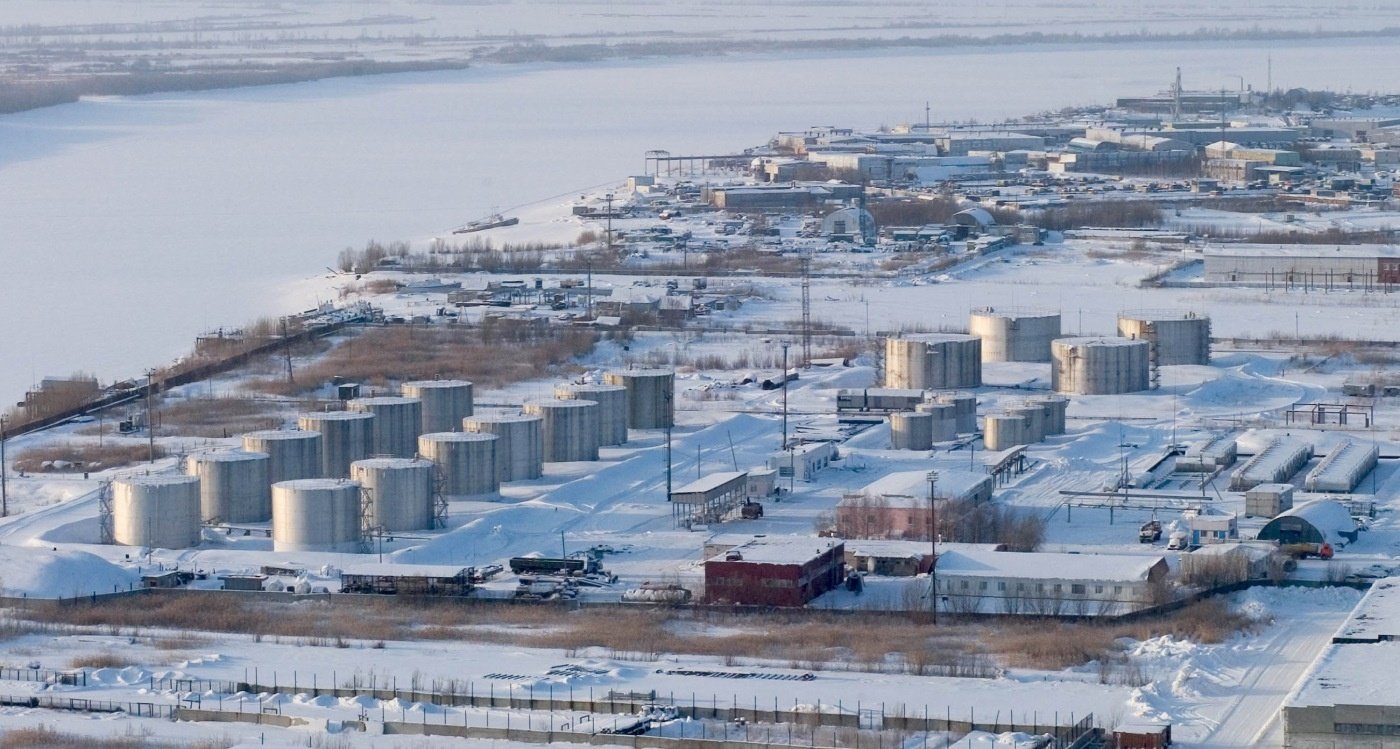
As of late April 2026, the Russian economy is a study in contradictions. Depending on which dataset you trust, Russia is either a resilient “high-income” powerhouse that has successfully pivoted to a war footing, or a debt-strained nation masking a looming industrial collapse with statistical propaganda.
The central tension lies in whether the record-high oil prices—driven by the 2026 Iran War and the closure of the Strait of Hormuz—are enough to outpace the staggering $625 million daily cost of the ongoing invasion of Ukraine.
The Dual Narrative: Moscow vs. The West
| Metric | Official Kremlin Version (Rosstat/MinFin) | Independent/Western Intelligence Views (SITE/MUST) |
| GDP Growth | 3.6% (2023) / 3%+ (2024–2025) | Verging on recession; Q1 2026 saw a 2% output drop. |
| Inflation | Officially 5.9% (March 2026) | Estimated at 15% to 25% based on retail deflators. |
| Budget Deficit | Targeted at 1.6% of GDP for 2026. | Full-blown crisis; seven years of consecutive deficits. |
| Reserves | $734.6 Billion (Nov 2025); $310B in Gold. | Composition is opaque; liquidity of “frozen” assets is zero. |
1. The “Golden Lifeline”: Oil & the Iran War Factor
The conflict in West Asia has inadvertently handed the Kremlin a financial buoy. With the Strait of Hormuz blocked—disrupting 20% of global supply—Brent Crude surged past $120 per barrel in March 2026.
-
The Revenue Surge: Analysts estimate the conflict could add 1–3 trillion rubles ($13B–$40B) to Russia’s budget this year.
-
Asian Pivot: Despite Western sanctions, China has nearly doubled its Russian oil imports in 2026, reaching 1.9 million barrels per day. India maintains steady imports, accounting for 20% of its total seaborne supply.
-
The Catch: Bloomberg reports that despite higher prices, Russian seaborne export volumes collapsed by 9.2% in February 2026 due to tightening “shadow fleet” sanctions and logistical strain.
2. The War Bill: A “Military-Centered” Economy
Russia’s direct defense spending for 2025–2026 has reached an estimated $140 billion, roughly 7.3% of its GDP. This shift has created several “invisible” stressors:
-
Labor Shortage: With hundreds of thousands of men in the military or defense factories, the civilian sector is facing its worst labor crisis in decades.
-
Interest Rate Choke: To combat the “real” inflation, the Central Bank of Russia has maintained a 15% key interest rate, making borrowing nearly impossible for non-military businesses.
-
The “Non-Oil” Deficit: While oil revenues look good, the non-oil budget remains deeply negative. Russia is essentially a one-trick pony, using energy spikes to pay for a military machine that consumes resources faster than they can be replaced.
3. The Statistical “Propaganda” Gap
Researchers at the Stockholm Institute of Transition Economics (SITE) highlight that since 2022, nearly 500 datasets (including detailed trade and company financials) have disappeared from official Russian sites.
-
Methodology Shifts: Rosstat revised its inflation basket four times in two years—a process usually done once every five years.
-
The Correlation Break: Historically, official inflation and independent trackers moved together. Since 2022, they have completely diverged, suggesting that the “5.9% inflation” figure may be a mathematical fiction.
The Verdict: Resilience or Reckoning?
Russia is currently adapting, not collapsing. It has successfully transitioned into a “war economy” with high state control. However, this stability is fragile. It depends entirely on global oil staying above $100/barrel and the continued willingness of China and India to bypass G7 price caps.
If the Iran War ceases and oil prices normalize, Russia faces a “long recession or a sudden shock,” as the massive military spending will no longer have a revenue surplus to hide behind.
