

The All India Muslim Personal Law Board (AIMPLB) clarified its stance before a nine-judge Constitution Bench of the Supreme Court on Friday, stating that while Muslim women are permitted to enter mosques for namaz, they must adhere to specific institutional regulations and “religious discipline.”
The submissions were part of a broader legal examination regarding the “Essential Religious Practices” (ERP) test, stemming from the Sabarimala reference.
Key Submissions by AIMPLB
Senior Advocate MR Shamshad, representing the Board, outlined several core points regarding the participation of women in mosque prayers:
-
No Universal Bar: There is a consensus across Islamic denominations that women are permitted to enter mosques and offer prayers. This practice is historically rooted and dates back to the time of the Prophet.
-
Access vs. “Insistence”: While entry is permitted, the Board argued that women cannot insist on using specific entrances (such as the main door) or demand the removal of physical barriers that separate men and women during prayer.
-
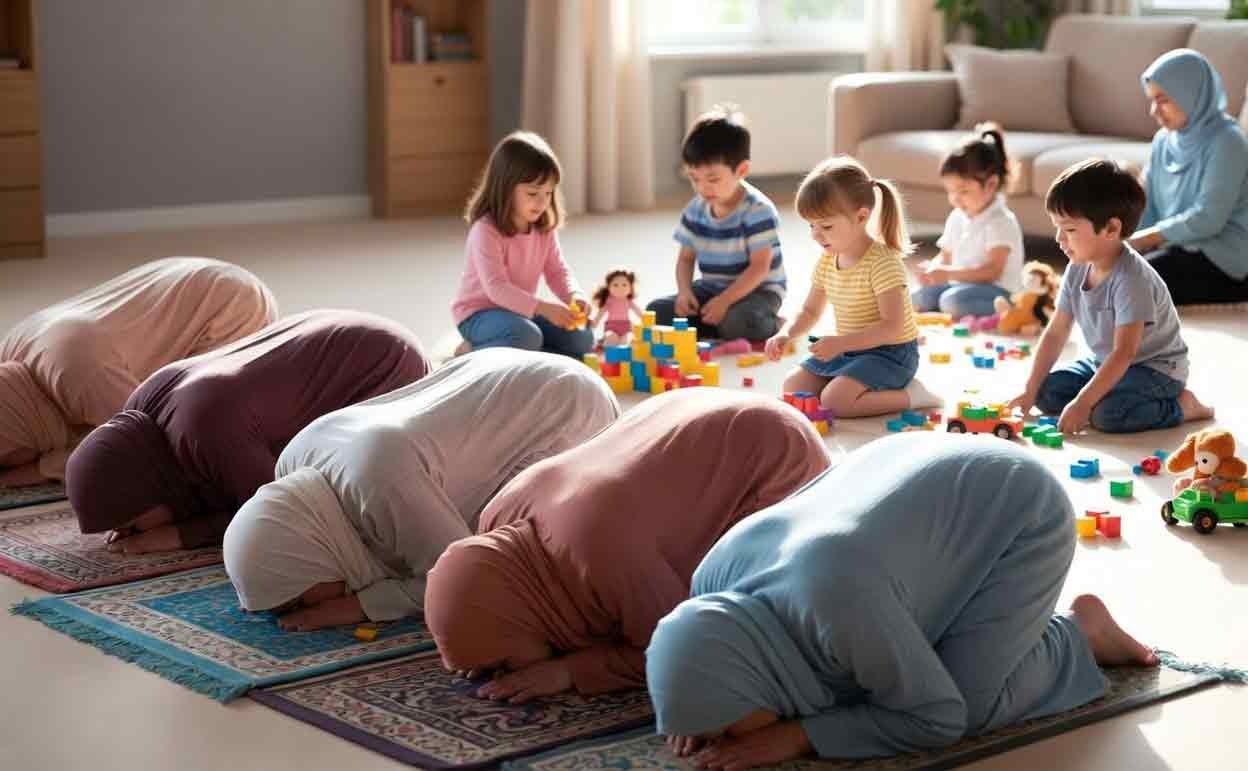
The “Preference” of Location: The Board submitted that while congregational prayer is obligatory for men, it is not mandatory for women. According to their interpretation, it is “preferable” for women to pray at home, where they are said to receive the same religious reward.
-
Congregational Participation: If a woman chooses to attend a mosque, she is permitted to participate in the congregation (jama’at). However, Shamshad noted that an individual cannot claim a right to stand in a specific spot or lead the prayers.
Judicial Observations
The bench, led by Chief Justice of India Surya Kant, engaged with the historical and practical aspects of the submission:
-
Historical Context: Justice Ahsanuddin Amanullah noted that the Prophet himself stated women should not be stopped from attending mosques. He observed that historical reasons for women staying home often included practicalities, such as childcare.
-
The “Conducting” of Prayer: The court clarified that since mosques do not have a “sanctum sanctorum,” the discipline involves maintaining the structured order of the congregation.
Why This Matters
The petition seeks a formal declaration that women should be allowed to pray in mosques without restrictions. The AIMPLB’s response attempts to balance the acknowledgment of the right to pray with the maintenance of traditional gender-segregated spaces within Islamic worship. The Supreme Court’s eventual ruling will likely hinge on how it defines the “essential” nature of these spatial restrictions versus the right to equality in worship.
