

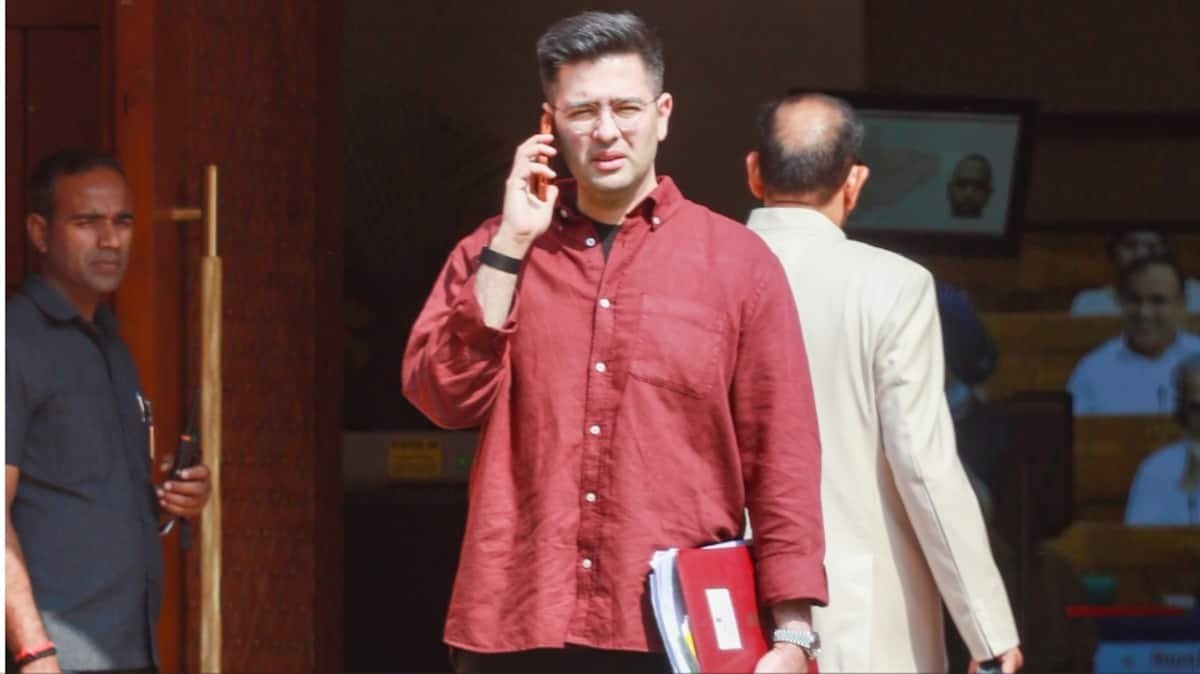
In a twist of political fate that feels more like a cinematic script than current events, Rajya Sabha MP Raghav Chadha has led a significant split from the Aam Aadmi Party (AAP) to join the BJP. While the move has sent shockwaves through the Indian political landscape, the most striking detail isn’t the defection itself, but the fact that Chadha’s own legislative past could have blocked his present path.
The Numbers Game: How the Split Succeeded
Under the current Tenth Schedule (Anti-Defection Law), a group of lawmakers can switch parties without facing disqualification if they represent at least two-thirds of their original party’s strength in the House.
-
AAP’s Rajya Sabha Strength: 10 MPs.
-
The Threshold: 7 MPs (two-thirds of 10).
-
The Reality: Chadha + 6 other MPs (including notable names like Swati Maliwal and Harbhajan Singh) made the jump, hit the magic number of seven, and effectively merged into the BJP.
The “Chadha Amendment” That Wasn’t
Back in August 2022, a younger, more idealistic Chadha proposed a private member’s bill to tighten the very law he just navigated. Had his proposal been enacted, the landscape would look very different today:
| Feature | Current Law (Used by Chadha) | Chadha’s 2022 Proposal |
| Defection Threshold | Two-thirds (2/3) | Three-fourths (3/4) |
| Required MPs (for AAP) | 7 MPs | 8 MPs |
| Penalty | Potential ministerial berths | Barred from elections for 6 years |
If Chadha’s bill had passed, he would have needed eight MPs to defect instead of seven. Furthermore, the threat of being barred from elections for six years likely would have cooled the ambitions of those looking for immediate power within the BJP.
A “Blot on Democracy”
In 2022, Chadha passionately argued that his bill was necessary to stop the “nefarious floor crossing” and “horse-trading” that he claimed was a “blot on our democracy.” At the time, he cited the 2020 fall of the Congress government in Madhya Pradesh as a cautionary tale. Now, those same words are being used by AAP loyalists to highlight what they call a “betrayal” of the highest order.
What Lies Ahead for AAP?
The AAP, a party less than 15 years old, now faces an existential crisis:
-
Shrinking Presence: Their Rajya Sabha strength has plummeted to just three members.
-
Legal Battles: While the Rajya Sabha Chairman is expected to accept the merger, AAP plans to pursue disqualification in the courts.
-
Political Fallout: With the Punjab elections on the horizon in 2027, the loss of Chadha—a master strategist who helped secure AAP’s victory there in 2022—is a massive blow to Arvind Kejriwal and Chief Minister Bhagwant Mann.
“BJP has once again betrayed Punjabis,” was the brief, stinging response from Arvind Kejriwal on X.
As Chadha reportedly prepares for a potential role as a Union Minister, the irony remains: the man who once sought to build a “firewall” against defections found the only remaining door left open.
