

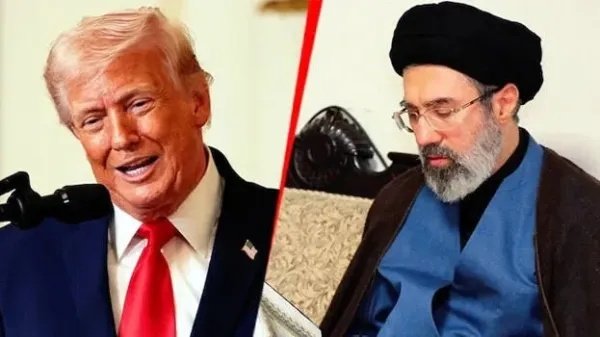
As the conflict between the U.S. and Iran reaches its 64th day, hopes for a swift diplomatic resolution have dimmed. On May 2, 2026, President Donald Trump formally rejected a peace proposal delivered via Pakistan, asserting that the terms were unacceptable and that a “premature” exit would only lead to a renewed war in the near future.
The Diplomatic Deadlock
Despite a technical “termination” of war notification sent to Congress to bypass the 60-day War Powers deadline, hostilities remain high.
-
The Rejected Deal: Trump stated the Iranian proposal included demands he “can’t agree to,” blaming Tehran’s “disjointed leadership” for the failure of talks.
-
Maritime Sanctions: The U.S. has issued a stern warning: any commercial vessel paying tolls or fees to Iran for passage through the Strait of Hormuz could face severe U.S. sanctions.
-
Public Opinion: Domestic pressure is mounting on the White House. A new poll shows 61% of Americans now believe the use of military force against Iran was a mistake.
Military and Regional Developments
In Iran
-
Casualties: 14 Iranian soldiers were killed on Friday while attempting to defuse unexploded ordnance in Zanjan province.
-
Economic War: Supreme Leader Mojtaba Khamenei has called on citizens to engage in “economic battle” to offset the impact of the U.S.-led blockade.
-
Coastal Control: The IRGC Navy has announced “new rules” for coastal waters, signaling an intent to tighten their grip on the region’s maritime entry points.
In the U.S. & Abroad
-
Naval Movements: The USS Gerald R. Ford has finally departed the Middle East for home after nearly a year of deployment. However, the U.S. maintains a massive presence with 20 ships, including two aircraft carriers (the Abraham Lincoln and George H.W. Bush).
-
Military Sales: The State Department cleared $8.6 billion in military sales to Israel and Gulf allies (Qatar, Kuwait, UAE) to bolster regional defenses.
-
China Tensions: Washington sanctioned the China-based Qingdao Haiye Oil Terminal for importing Iranian crude; Beijing has condemned the move as “unilateral and unlawful.”
The Lebanon Front
While the primary conflict focuses on Iran, the spillover into Lebanon continues to be deadly.
-
Ceasefire Violations: Despite a standing ceasefire, Israeli strikes in southern Lebanon killed 12 people on Friday.
-
Political Fallout: Lebanese Parliament Speaker Nabih Berri accused Israel of using the ceasefire as a “cover” to continue an intensified bombing campaign.
The Big Picture: Analysts suggest both Washington and Tehran are “desperate” to end the war, but neither side is willing to accept a deal that doesn’t allow them to “save face” and claim a strategic victory.
