

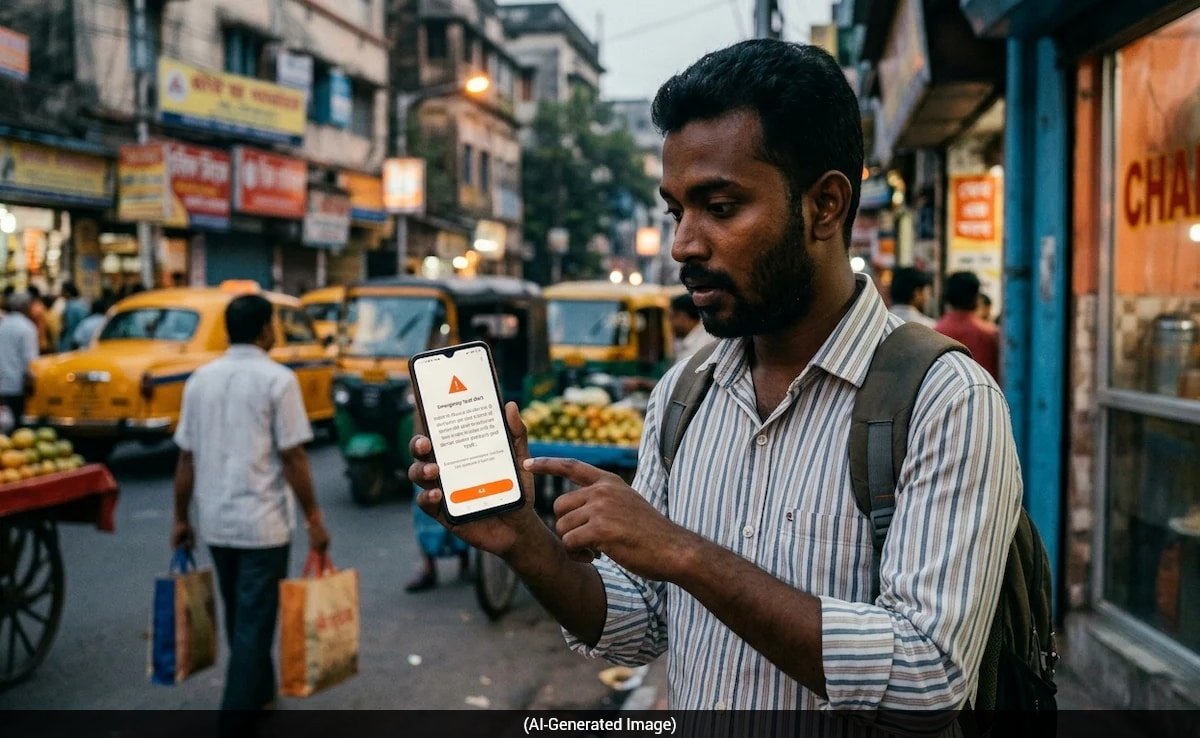
If your phone erupted in a sharp, unfamiliar alarm today, there’s no cause for alarm—it was just a test of India’s most advanced safety net. On May 2, 2026, the Government of India officially rolled out its indigenous Cell Broadcast emergency alert system, sending a nationwide test message to millions of mobile users.
The system, launched by Union Home Minister Amit Shah and Communications Minister Jyotiraditya Scindia, marks a major leap in how India handles large-scale emergencies.
Key Features of the SACHET Platform
Developed by the Centre for Development of Telematics (C-DOT), the SACHET platform is designed to be the backbone of India’s disaster response.
-
Override Capabilities: Unlike standard notifications, these alerts bypass “Silent” and “Do Not Disturb” modes, ensuring they grab immediate attention.
-
Localized Targeting: Authorities can send alerts to specific geographic areas, from entire states down to localized neighborhoods.
-
Multilingual Reach: The system supports over 19 Indian languages, making it accessible to a diverse population.
-
Infrastructure: It utilizes the Common Alerting Protocol (CAP), an international standard, and is currently operational across all 36 states and union territories.
Why Cell Broadcast is Better Than SMS
While the government has previously sent billions of SMS alerts for weather warnings, the new Cell Broadcast technology offers several critical advantages:
| Feature | Standard SMS | Cell Broadcast |
| Speed | Can be delayed by network congestion | Instantaneous delivery |
| Attention | Standard notification sound | High-pitched, unique alarm |
| Reliability | Not guaranteed if lines are busy | Works even during heavy network traffic |
| Settings | Can be silenced | Overrides DND and silent modes |
What Hazards Will It Cover?
The SACHET system is built to handle both natural and man-made disasters, providing citizens with precious seconds to find safety during:
-
Natural Disasters: Earthquakes, tsunamis, cyclones, and lightning strikes.
-
Industrial Hazards: Gas leaks and chemical spills.
-
Weather Events: Severe floods and heatwaves.
Important Note: If you received today’s alert marked “Extremely Severe Alert,” remember that it was a formal test. No action is required. As the system becomes fully operational, it will serve as a vital tool in minimizing loss of life during real-world crises.
