

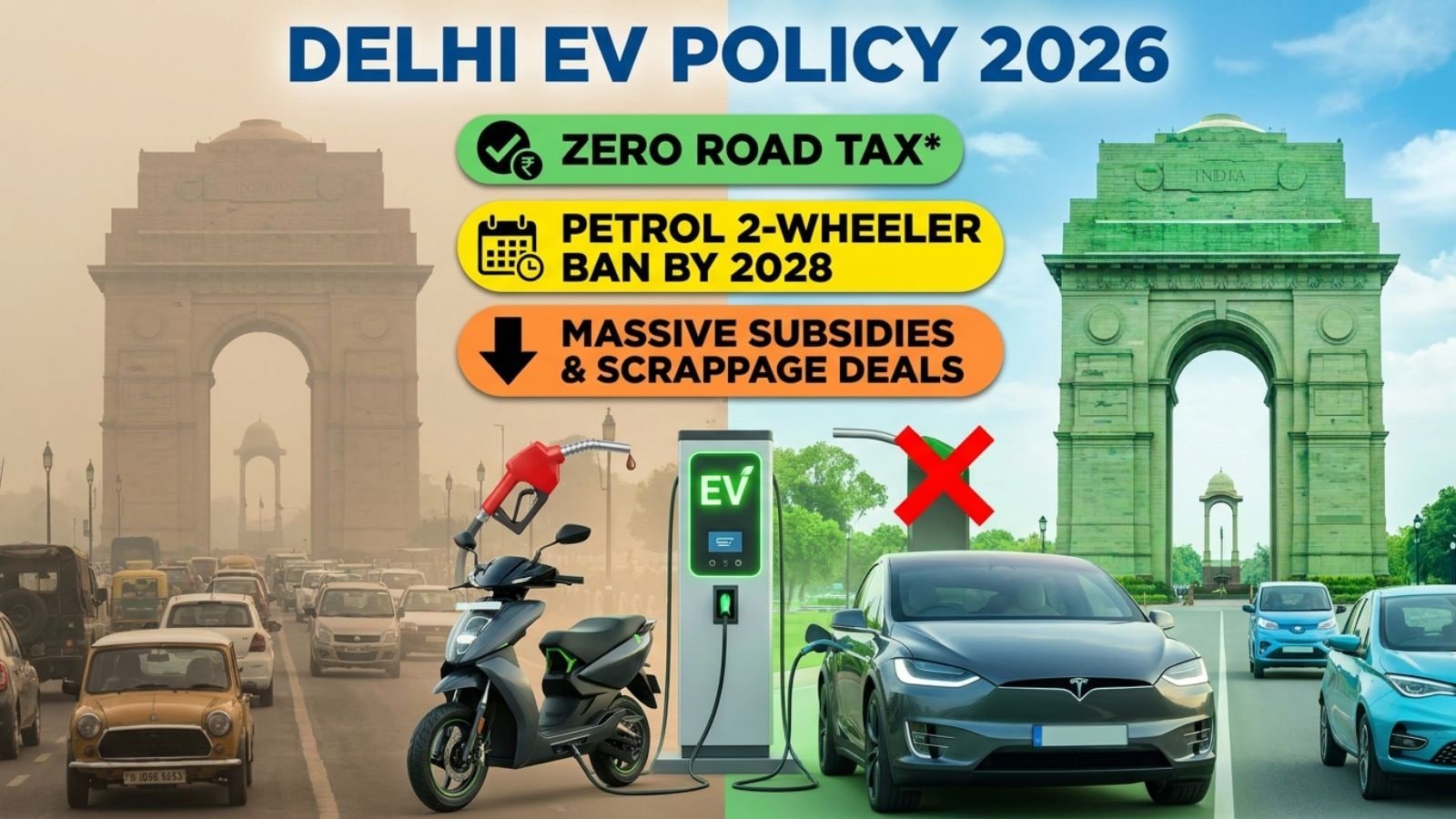
In what stands as India’s most aggressive push toward vehicle electrification to date, the Delhi Government has officially rolled out its landmark Delhi EV Policy 2026. Backed by a massive ₹7,000 crore outlay and active until March 31, 2030, the policy lays out a strict, time-bound roadmap to systematically phase out internal combustion engine (ICE) vehicles from the national capital.
For residents and commercial operators in Delhi, the financial and regulatory landscape of vehicle ownership has fundamentally shifted.
Massive Financial Incentives & Tax Waivers
To bring electric vehicles (EVs) at par with or cheaper than their fossil-fuel counterparts, the policy introduces immediate tax relief alongside direct subsidies.
1. Zero Road Tax and Registration Fees
The government has waived 100% of road tax and registration fees for electric vehicles. However, a crucial price cap applies to passenger cars: the waiver is strictly valid for electric cars priced up to ₹30 lakh (ex-showroom). Luxury EVs crossing this threshold will attract standard tax rates.
2. Direct Purchase Subsidies (via DBT)
All direct financial assistance will be credited straight to the buyer’s bank account through Direct Benefit Transfer:
-
Electric Two-Wheelers: Up to ₹30,000
-
Electric Three-Wheelers: Up to ₹50,000
-
N-1 Electric Trucks (under 3.5 tonnes): Up to ₹1,00,000
The ICE Ban: Hard Deadlines for Petrol & Diesel
The policy moves beyond just incentivizing EVs by setting hard expiration dates for the registration of new petrol, diesel, and CNG vehicles in specific segments.
-
January 1, 2027: Complete ban on new petrol, diesel, or CNG registrations for L-5 category auto-rickshaws (both passenger and cargo) and N-1 commercial goods carriers.
-
April 1, 2028: The end of the petrol commuter era in Delhi. From this date onward, 100% of all new two-wheeler registrations must be electric.
Up to ₹1 Lakh in Scrappage Bonuses
With a dedicated ₹1,500 crore carve-out from the total budget, the government is heavily rewarding owners who scrap their old polluting vehicles to transition to electric.
| Vehicle Category | Scrappage Incentive Amount |
| Four-Wheelers | ₹1,00,000 |
| N-1 Commercial Trucks | ₹50,000 |
| Three-Wheelers | ₹25,000 |
| Two-Wheelers | ₹10,000 |
Fleet Mandates and Infrastructure Push
To tackle the city’s notorious winter smog, the policy places special emphasis on heavy commercial freight, school transport, and charging infrastructure:
-
Exemption from ‘No Entry’ Hours: The first 1,000 heavy-duty N-2 electric trucks (weighing between 3.5 to 12 tonnes) purchased within three months of the policy notification will receive a 10-year exemption from Delhi’s restrictive commercial ‘No Entry’ timings.
-
School Bus Fleet Transition: School bus operators are legally mandated to transition their fleets to electric in a phased manner—hitting 10% electrification within 2 years, 20% by year three, and reaching 30% by March 2030.
-
Killing Range Anxiety: To support this massive influx of electric vehicles, the government is targeting the deployment of more than 30,000 active charging points across the National Capital Region (NCR).
