

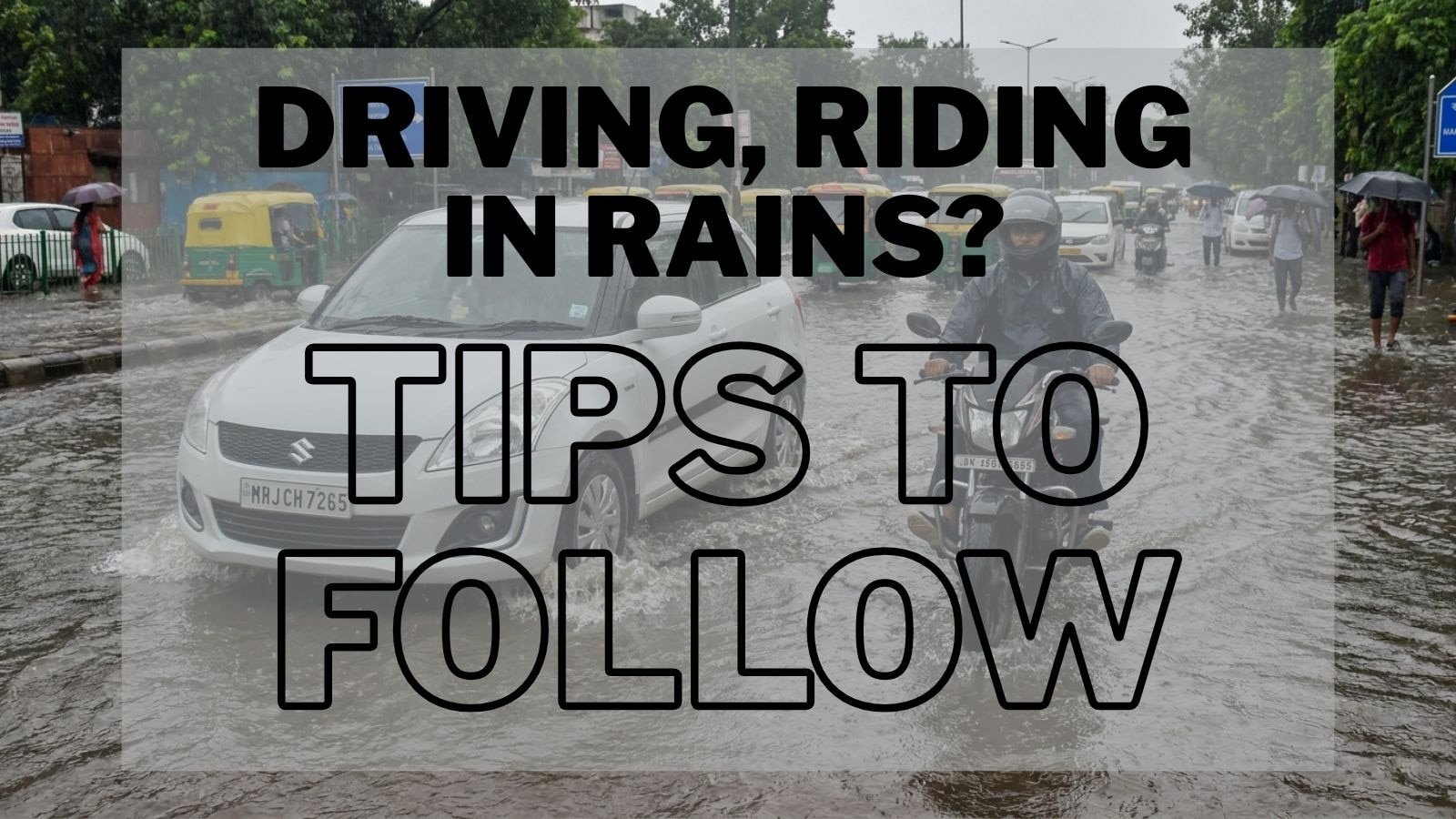
Driving or riding through a severely waterlogged Delhi-NCR right now is incredibly risky. If you have no choice but to navigate the flooded roads during this Red Alert, you need to use specific, proactive mechanics to keep your vehicle running and ensure your own safety.
Here is a simplified checklist of the critical actions from Mohit Bhardwaj’s survival guide:
If You Are Driving a Car
-
Check the Hubcaps: If the water line rises past the center of your wheels or hits the lower edge of your doors, turn back immediately. Most hatchbacks and sedans cannot handle more than 150–200mm of depth.
-
Keep Revs Up in First Gear: Shift to first gear, slip the clutch slightly, and maintain high RPMs. The continuous exhaust pressure prevents water from backing up into the tailpipe.
-
Crack the Windows Open: Electronic systems fail fast when flooded, which can dead-lock modern doors. Keep your windows open an inch or two before entering deep water to ensure a clear escape route.
-
The Golden Rule: If the engine stalls in water, do not attempt to restart it. Cranking it will suck water into the air intake, causing immediate hydro-lock (which destroys the engine cylinders). Leave it off, push it to safety, and call for help.
If You Are Riding a Two-Wheeler
-
Stick to the Center Lane: Roads are designed to slope toward the sides for drainage. The edges are where water runs deepest and hides submerged hazards like open manholes and deep craters.
-
Never Drop the Throttle: Keep the bike in first gear and regulate your speed entirely by slipping the clutch while maintaining high engine revs. Closing the throttle completely creates a vacuum that pulls water straight up the exhaust.
-
Watch the Bow Wave: Let larger vehicles like buses or SUVs go first to displace the water, but maintain a wide following distance so their wake doesn’t knock you over.
-
Expect Brake Fade: Submerged drum or disc brakes lose most of their stopping power. Keep your speed strictly below 20 kmph and rely heavily on engine braking (downshifting) to slow down.
Once you safely clear a waterlogged zone, remember to gently pulse your brakes a few times at low speed—the friction-generated heat will dry out your pads and restore your breaking power.
