

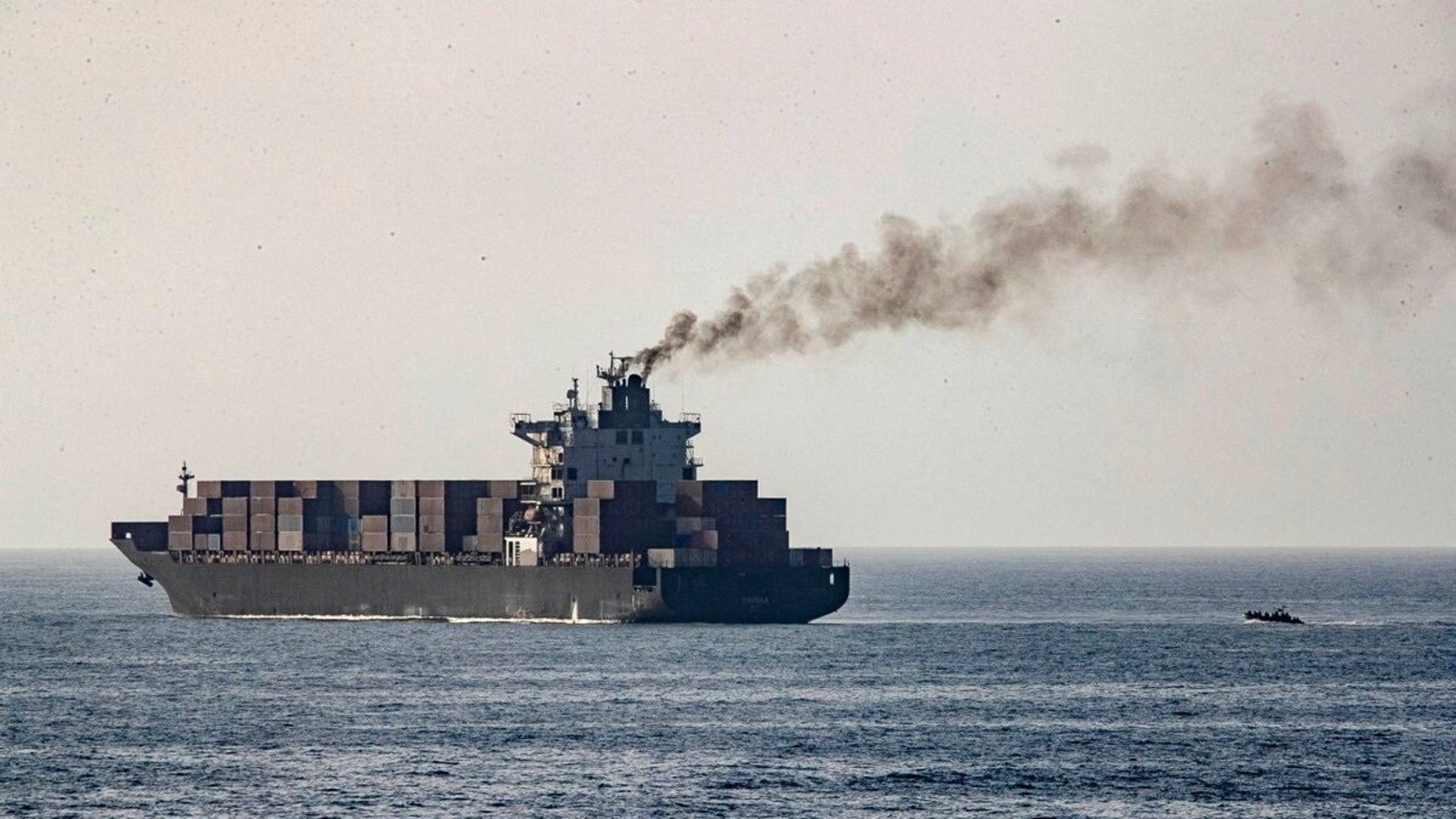
The burgeoning tension in the Strait of Hormuz has taken a provocative turn as Republican figure Nikki Haley alleged that the Iranian vessel seized by the U.S. Navy was transporting chemical components for missiles. This claim adds a “China factor” to the already volatile standoff, suggesting Beijing is actively propping up Tehran’s military capabilities.
The Seizure of the Touska
The Iranian-flagged container ship, Touska, was boarded by U.S. forces on Sunday near the port of Chabahar. While the U.S. characterizes the move as an enforcement of its military blockade, Iran has denounced the action as “armed piracy.”
Key Details of the Seizure:
-
The Vessel: Operated by the Islamic Republic of Iran Shipping Lines (IRISL), a group already under U.S. sanctions.
-
The Route: Ship-tracking data confirms the vessel was traveling from China to Iran.
-
The Cargo: While Haley specifically cited “chemical shipments for missiles,” U.S. security sources have been more cautious, labeling the cargo as “dual-use items” (goods that can serve both industrial and military purposes).
Nikki Haley’s Allegations
In a post on X, Haley emphasized that the Touska ignored repeated orders to stop before being boarded. She framed the incident as evidence of a deepening alliance between Beijing and Tehran.
“Another reminder that China is helping prop up Iran’s regime – a reality that can’t be ignored.” — Nikki Haley
Impact on Islamabad Peace Talks
The seizure has thrown a wrench into the diplomatic efforts currently being spearheaded by Pakistan. The fallout includes:
-
Tehran’s Ultimatum: Iran has stated it will not participate in the second round of peace talks in Islamabad until the U.S. lifts its naval blockade.
-
Military Readiness: Iranian officials claim they were prepared to engage U.S. forces during the seizure but held back because families of the crew were on board.
-
The “New Cards” Threat: Iran has warned that if the ceasefire (expiring Wednesday) is not resolved, they will reveal “new cards” on the battlefield.
Strategic Context: Dual-Use Goods
U.S. Central Command (CENTCOM) maintains a strict list of prohibited dual-use items, which includes specialized metals, pipes, and electronic components. Historically, Washington has accused IRISL of being the primary conduit for Iran’s ballistic missile procurement, a narrative this latest seizure appears to reinforce.
As the clock ticks toward the Wednesday ceasefire deadline, the discovery of potential missile components could provide President Trump with further justification for his “maximum pressure” tactics—or provide Iran with a reason to walk away from the negotiating table entirely.
