

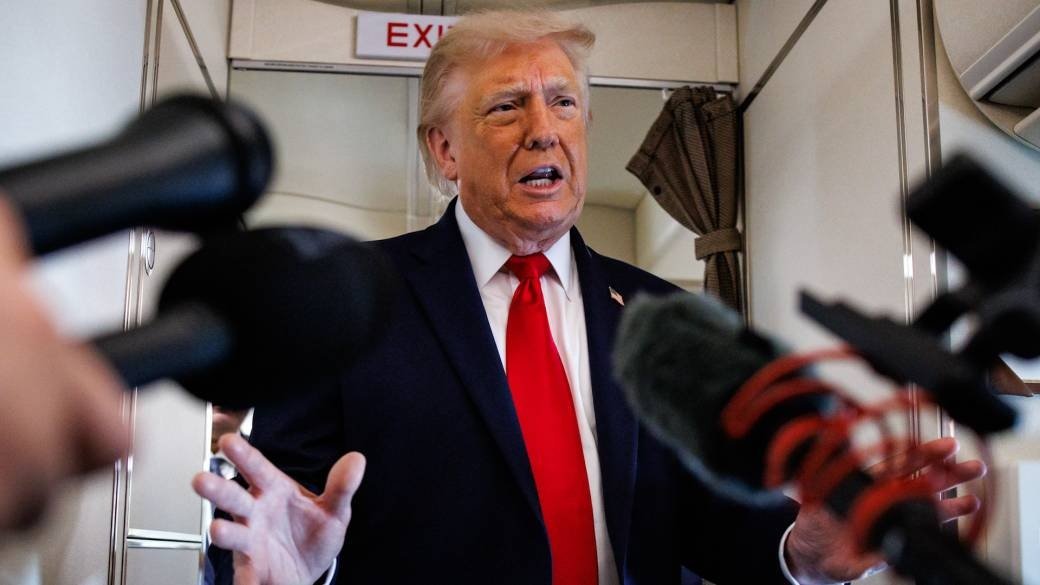
Even as formal delegations sat down in Switzerland to negotiate an end to the escalating West Asia war, U.S. President Donald Trump unleashed a series of severe warnings directed at Tehran. Trump threatened overwhelming military action and a potential takeover of the Strait of Hormuz if Iran attempts to choke off the strategic maritime chokepoint or continues supporting regional proxies.
The Strategic Flashpoint: The Strait of Hormuz
The primary source of immediate tension centers on the Strait of Hormuz, the world’s most critical oil transit artery connecting the Persian Gulf to global markets. Over the weekend, Tehran claimed to have closed the strait in response to intensifying conflicts in Lebanon, a move the U.S. Central Command quickly monitored.
As highlighted in the map, this narrow maritime gateway sits directly adjacent to Iran, giving it considerable regional leverage. Because a massive portion of global energy shipments passes through this bottleneck daily, any threat of closure shocks international energy futures. Surging oil prices have already strained the U.S. economy, adding high consumer gas costs to a highly sensitive political landscape.
Backchannel Diplomacy Meets Public Firestorms
The high-stakes negotiations represent the opening phase of a 60-day diplomatic roadmap brokered by mediator nations Pakistan and Qatar at the Bürgenstock resort in Switzerland.
While the official diplomatic teams have been engineered to project a disciplined front, public comments over the last 48 hours have been extraordinarily combative:
“You close the Strait of Hormuz and you won’t have a country. You won’t even make it back to your f***ing country.”
— U.S. President Donald Trump, in an interview with Fox News
Trump further underscored the warning on Truth Social, cautioning that if Iran failed to stop Hezbollah militants from “causing trouble,” the U.S. military would hit them harder than ever before.
Iran’s chief negotiator and parliamentary speaker, Mohammad Bagher Ghalibaf, quickly fired back, warning the United States to weigh its words carefully: “Our armed forces are ready to respond to them in a different manner. No matter what they say, we are the ones who act.”
The Breakthrough: De-Confliction Channels Established
Despite the heavy public saber-rattling and a brief threat of an Iranian walkout, the marathon high-level talks concluded their first round with a concrete diplomatic step forward. Delegations led by U.S. Vice President JD Vance and Ghalibaf successfully hammered out foundational emergency guidelines.
While lower-level technical teams are scheduled to remain at the Swiss resort to hash out finer regulatory details for the rest of the week, Vice President Vance noted that the initial session successfully laid a “good foundation for a successful final deal.”
