

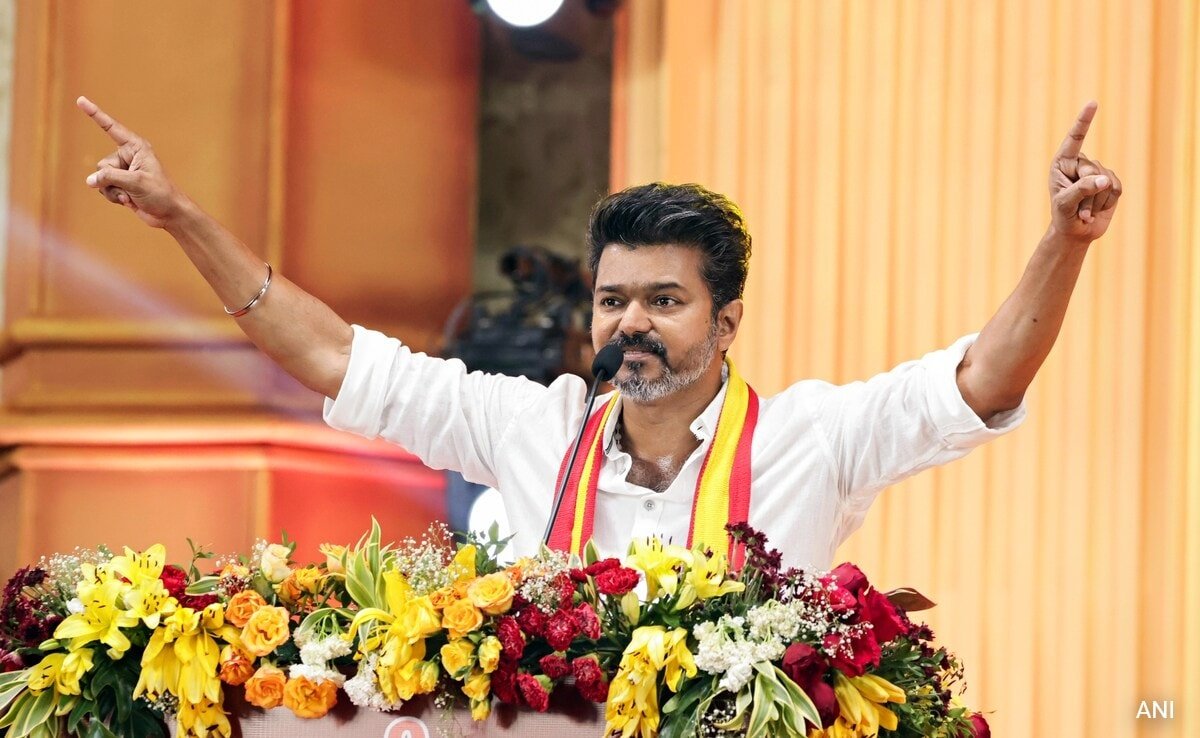
The political landscape of India is shifting dramatically today as counting continues for the 2026 Assembly elections. Jammu and Kashmir Chief Minister Omar Abdullah’s succinct reaction on X—“Bloody hell”—perfectly captured the shockwaves sent through the nation by early trends in West Bengal and Tamil Nadu.
As of midday on May 4, 2026, two massive “political earthquakes” are unfolding:
1. West Bengal: The End of “Mamata Raj”?
In a historic shift, the BJP has breached the 147-seat majority mark and is currently leading in over 190 seats.
-
The Upset: For the first time, the BJP appears set to form a government in West Bengal, pushing Mamata Banerjee’s Trinamool Congress (TMC) to a distant second (leading in around 94 seats).
-
The Context: This follows a record-breaking 92.47% voter turnout and a controversial voter roll cleanup that removed nearly 11% of the state’s electorate.
-
Key Fact: The BJP’s surge into the Presidency region (Kolkata and Howrah) marks a structural collapse of the TMC’s urban strongholds.
2. Tamil Nadu: The Rise of “Thalapathy” Vijay
The debut of actor-turned-politician Vijay and his party, the Tamilaga Vettri Kazhagam (TVK), has completely disrupted the traditional DMK-AIADMK duopoly.
-
The Lead: TVK is currently the single-largest party, leading in over 110–130 seats (the majority mark is 118).
-
The Victim: The ruling DMK has slipped to third place in many trends, while the AIADMK is holding the second spot.
-
Symbolic Defeat: Early trends showed Chief Minister MK Stalin trailing in his long-time bastion of Kolathur, while Vijay holds leads in both Perambur and Tiruchirappalli East.
3. Kerala and Assam: Consistency and Comebacks
-
Kerala: Following historical trends of alternating power, the Congress-led UDF is leading in approximately 85 seats, positioning itself to unseat the incumbent LDF government.
-
Assam: The BJP is maintaining a steady lead in 79 seats, looking likely to secure a third consecutive term under Himanta Biswa Sarma.
