

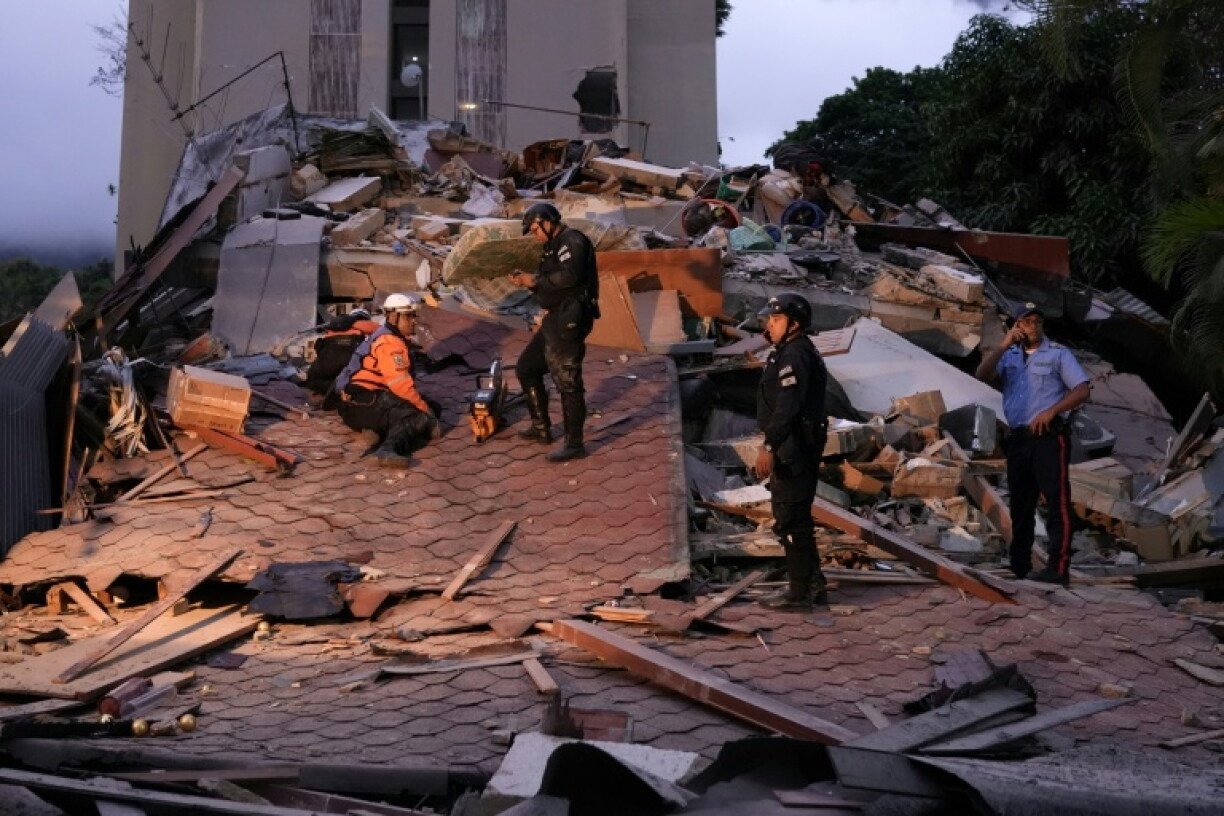
Venezuela recently declared a state of emergency following two powerful, back-to-back earthquakes—measuring magnitudes 7.2 and 7.5—that struck within just 39 seconds of each other. Originating in Yaracuy state, west of Caracas, the double shock collapsed buildings and triggered warnings from the United States Geological Survey (USGS) of potentially high casualties.
The disaster has thrust the region’s volatile geography into the global spotlight, raising questions about what makes Venezuela so highly susceptible to such intense seismic activity.
The Tectonic Tug-of-War
Venezuela’s vulnerability is primarily driven by its location atop a major geological collision zone. While the majority of the mainland sits securely on the stable South American Plate, its northern coast and offshore Caribbean islands sit directly on a highly active plate boundary.
-
Plate Friction: The Caribbean Plate and the South American Plate constantly grind past each other, with the Caribbean Plate shifting eastward at a rate of roughly 20 millimeters per year.
-
High-Risk Zone: This persistent friction builds immense stress within the Earth’s crust. Roughly 80% of Venezuela’s population resides within these active seismic zones, leaving millions vulnerable to sudden fault ruptures.
-
Major Fault Lines: The underground pressure is routinely unleashed along major local fault systems, most notably the notorious Bocono Fault, which has a long history of generating destructive tremors.
The Hidden Danger of “Shallow-Focus” Quakes
The severity of the damage in Venezuela is heavily exacerbated by the depth of the ruptures. The twin quakes occurred at depths of 22 kilometers and a mere 10 kilometers, classifying them as shallow-focus earthquakes.
Unlike deep earthquakes, where seismic waves lose energy as they travel long distances through the mantle to reach the surface, shallow-focus quakes occur right beneath the surface. Because the energy has very little time or distance to dissipate, it hits heavily populated towns and cities with maximum intensity, resulting in catastrophic structural damage.
A Global Perspective on Seismic Risk
The occurrence of major earthquakes in Venezuela, Japan, and California within hours of each other has sparked widespread discussion on global tectonic activity. While these events are geographically distinct, they highlight the continuous movement of the Earth’s 15 major and minor tectonic plates floating on the semi-fluid mantle.
| Historic Earthquake | Magnitude | Notable Impacts |
| Venezuela (2026) | 7.2 & 7.5 | Twin quakes striking 39 seconds apart; shallow-focus damage. |
| Turkiye & Syria (2023) | 7.8 | Over 55,000 fatalities; flattened entire urban centers. |
| Nepal (2015) | 7.3 | Approximately 9,000 deaths; triggered widespread landslides. |
| Japan (2011) | 9.0–9.1 | Triggered the Tohoku tsunami and the Fukushima nuclear disaster. |
| Haiti (2010) | 7.0 | Estimated 222,570 deaths; remains the deadliest 21st-century quake. |
| Indonesia (2004) | 9.1 | Triggered the Indian Ocean tsunami, claiming over 227,900 lives. |
While subduction zones like the Pacific Ring of Fire account for roughly 81% of the world’s largest earthquakes, the strike-slip and transform boundaries slicing through northern South America ensure that Venezuela remains a highly volatile seismic hotspot.
