

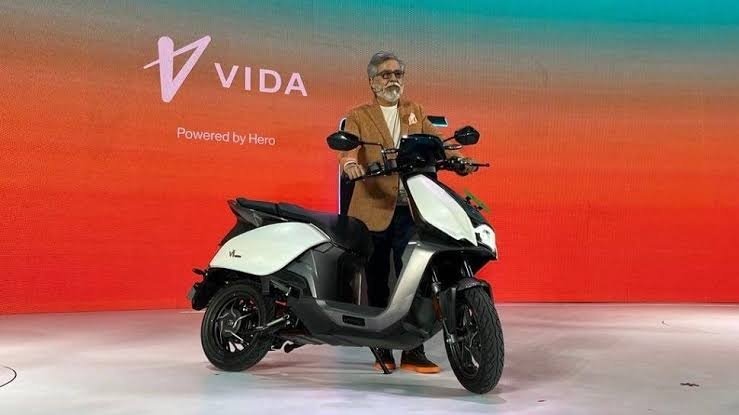
In the fast-moving landscape of Indian electric vehicle (EV) infrastructure, institutional weight counts just as much as pure product metrics. On July 1, 2026, Hero MotoCorp’s electric mobility subsidiary, VIDA, unveiled a complete brand identity overhaul.
While general market commentators focused on the marketing spectacle—which included securing a title in the Asia Book of Records for spelling out a massive 35,292 sq. ft. logo using physical vehicles—the real story lies in the data. The brand refresh comes exactly as Hero MotoCorp makes a dramatic statement on India’s EV retail charts, surging past aggressive pure-play competitors.
1. The EV Realignment: Hero Overtakes Ola Electric
To understand why Hero MotoCorp is updating its branding now, look directly at the retail VAHAN registration data recorded during the first half of 2026.
For the first six months of 2026, Hero’s EV volumes touched 1,06,032 units, comfortably outpacing Ola Electric’s 66,052 units. In June 2026 alone, Hero registered 21,812 electric two-wheelers against Ola’s 16,144.
By scaling up production rapidly, doubling its month-on-month dispatches, and utilizing its massive stake in Ather Energy as a dual-layer strategy, Hero has structurally destabilized the startup-dominated narrative of the Indian EV market. The brand refresh is an aggressive victory lap designed to show institutional scale.
2. Geometry of Trust: Deconstructing the New “V-Lettermark”
The central core of the brand refresh is a geometric, forward-leaning V-Lettermark that replaces the original 2022 logo. The design strategy bridges legacy internal combustion scale with future tech architecture:
-
The Left Anchor: The left pillar of the new ‘V’ is extracted directly from the left vertical line of Hero’s iconic ‘H’ logo. This choice reinforces the backing of the world’s largest two-wheeler manufacturer, offering consumer trust and engineering backing.
-
The 30-Degree Trajectory: The right arm of the lettermark tilts forward at a precise 30-degree trajectory, visually indicating high-velocity forward movement.
-
The VOOM Signature: Accompanying the visual identity is an integrated motion language and digital electric sonic signature nicknamed “The VOOM.” This signature is designed to scale across everything from physical electric motor casings to next-generation connected digital instrument clusters.
3. Product Ecosystem Expansion: From Scooter to Portfolio
When VIDA debuted in 2022, it was essentially a single-product experiment bounded by the premium V1 scooter. By mid-2026, the unit has evolved into a comprehensive, multi-category mobility portfolio:
-
Commuter & Family Segment: Scaled down via upcoming high-volume, cost-optimized platforms (including highly anticipated sub-₹1 lakh variations coming later in Q3).
-
The DIRT.E Lineup: A dedicated off-road and recreational electric dirt-bike series tailored for younger demographics.
-
The NOVUS Platform: An advanced future-mobility ecosystem focused on high-performance urban transport architectures.
The Analyst’s View: Scaling Beyond the Startup Premium
For Dalal Street, the initial phase of the Indian EV race was characterized by hyper-inflated startup valuations and aggressive cash-burn strategies. However, as capital costs normalize and government subsidies flatten, the advantage is shifting back to legacy manufacturing behemoths.
Hero MotoCorp’s decision to seamlessly weave its parent brand’s DNA into VIDA’s visual language shows an aggressive operational pivot. By leveraging its 125-million-strong global customer base, rapidly adding 70+ premium retail touchpoints a month, and maintaining clean operating cash flows from its massive legacy internal combustion engine (ICE) business, Hero is proving that distribution power and balance sheet health remain the ultimate competitive moats in the green transition.
