

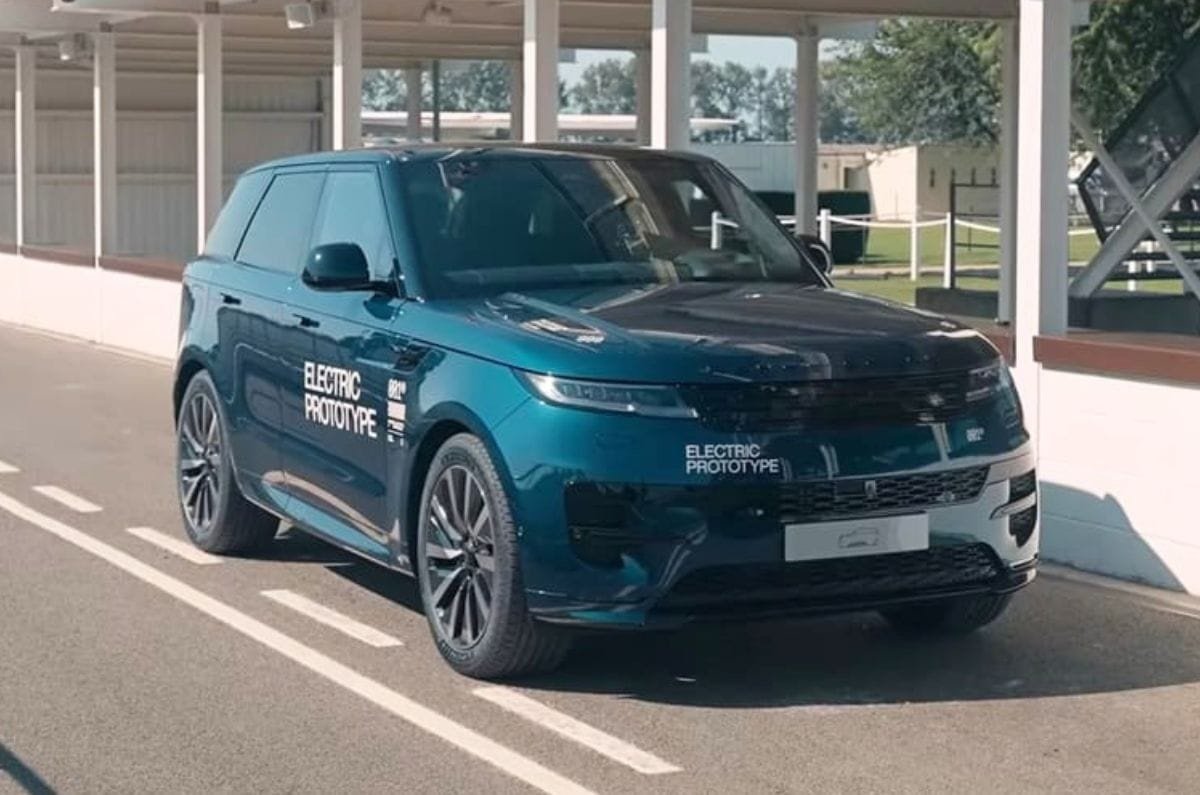
Jaguar Land Rover (JLR) has officially previewed the upcoming Range Rover Sport Electric during a private showcase at the Goodwood Festival of Speed. Marking the brand’s second venture into all-electric luxury vehicles following the flagship Range Rover Electric, the high-performance SUV is set to go on sale in global markets in September 2026, with an expected arrival in Indian showrooms by March 2027.
Rather than launching a radically experimental EV, JLR designed the Sport Electric to feel exactly like its combustion-powered sibling—just with a silent, incredibly quick electric powertrain.
Powertrain, Performance, and Platform
The Range Rover Sport Electric sits on the flexible Modular Longitudinal Architecture (MLA) platform:
-
Dual-Motor All-Wheel Drive: Powered by two in-house-developed electric motors (one on each axle) delivering a combined output of 550 hp (542 bhp) and 850 Nm of torque.
-
Heavyweight Performance: Despite tipping the scales at roughly 2,700 kg, the dual-motor setup catapults the massive SUV from 0 to 100 km/h in an estimated 4.4 seconds.
-
Battery & Architecture: Fitted with a massive 118.5 kWh usable battery pack utilizing 800V electrical architecture. This system supports high-speed DC rapid charging, capable of replenishing the battery from 10% to 80% in approximately 20 minutes.
-
Real-World Range: JLR is targeting a real-world driving range of 480 to 530 km on a full charge. Critics note this range is somewhat modest given the battery’s large size, a byproduct of the Range Rover’s signature bluff, non-aerodynamic shape and off-road-oriented all-season tires.
Steer-by-Screen Regenerative Braking
In an unconventional design choice, JLR has completely omitted steering-wheel paddle shifters for manual energy recuperation. Instead, drivers adjust regenerative braking via the drive selector:
-
“D” Mode: Drivers can toggle between “Light” or “Standard” regenerative braking directly through the central infotainment screen.
-
“S” Mode: Switching the physical gear selector to “S” (which previously stood for Sport in ICE models) now engages Single-Pedal Driving, allowing the car to come to a complete stop when lifting off the accelerator. This mode is also highly useful for ultra-precise crawl speeds during off-roading.
Understated Design & Premium Cabin
The exterior design deliberately retains the muscular, clean styling of the standard Range Rover Sport. The only visual cues hinting at its electric identity are a fully closed-off front grille, aerodynamically optimized alloy wheels, and subtle EV-specific badging.
The interior carries over the familiar, ultra-premium layout of the standard model, including the high-definition curved glass touchscreen and luxurious materials. Early prototype tests at Goodwood indicate that the heavy underfloor battery lowers the vehicle’s center of gravity, resulting in significantly flatter, more stable cornering and an exceptionally quiet ride compared to its ICE siblings.
Market Position and Competition
The Range Rover Sport Electric is slated to go toe-to-toe with elite heavyweights in the luxury electric SUV segment, including the Porsche Cayenne Electric and the BMW iX5.
When it lands in India in early 2027, the Sport Electric will be positioned as a premium import. It is expected to carry a price tag significantly higher than the locally assembled mild-hybrid and diesel Range Rover Sport variants currently on sale (which start around ₹1.40 Crore ex-showroom).
