

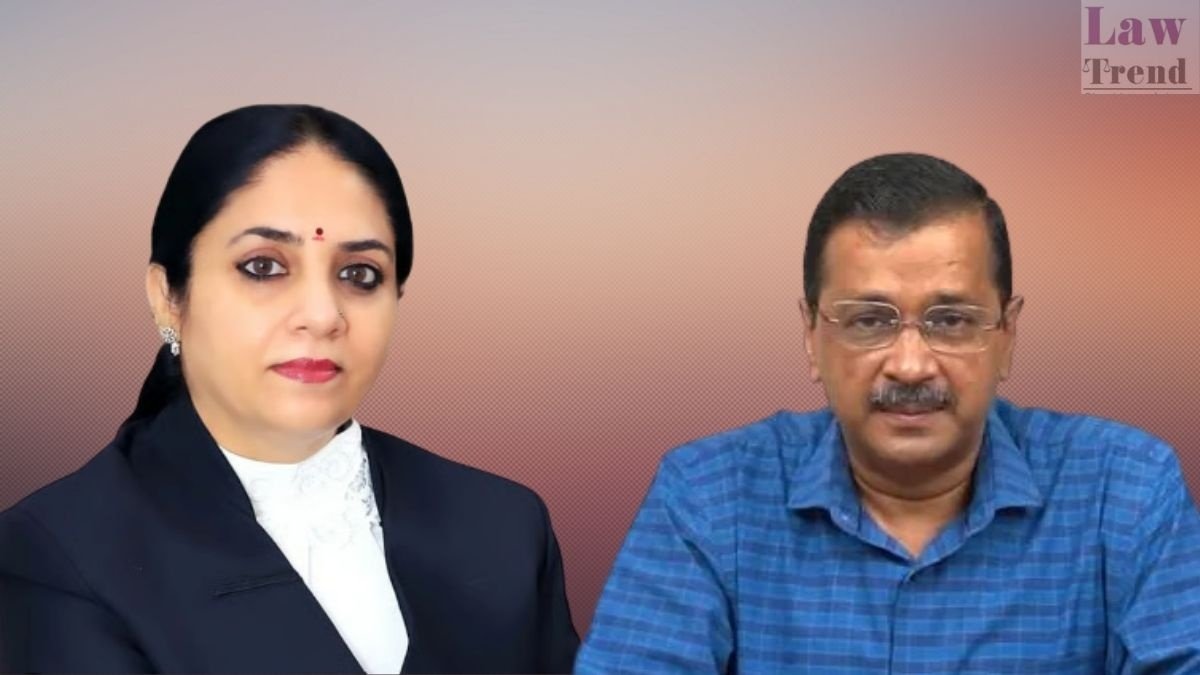
In a dramatic escalation of his legal battles, AAP chief Arvind Kejriwal has launched what he calls a “Satyagraha” against Justice Swarana Kanta Sharma of the Delhi High Court. Citing a complete “shattering” of hope for justice, Kejriwal has officially notified the court that he will no longer participate in proceedings overseen by her regarding the Delhi Liquor Policy case.
The Stand-off: “Justice Must Be Seen to Be Done”
Kejriwal’s refusal to appear—either in person or through counsel—stems from his belief that Justice Sharma harbors a bias that prevents a fair hearing. In a letter and subsequent video statement, the former Delhi Chief Minister invoked Gandhian principles to justify his non-cooperation.
-
The Core Argument: Kejriwal asserts that the current proceedings do not satisfy the legal maxim that “justice must not only be done but must also be seen to be done.”
-
Selective Boycott: Notably, Kejriwal clarified this “Satyagraha” is specific to cases involving the Central Government, BJP, or RSS. He stated he would continue to appear before Justice Sharma in unrelated matters.
-
The Allegation: The defense previously sought her recusal, pointing to her past participation in events organized by the Adhivakta Parishad (an RSS-linked lawyers’ body) and family professional engagements.
The Judge’s Response: “Integrity is Not for Trial”
Justice Sharma has firmly rejected the demand for her recusal, delivering a stinging rebuke to the AAP leader’s tactics. On Monday, she made it clear that a litigant’s “illusions” are not legal grounds to swap judges.
“My oath taught me that justice is not about giving in to pressure, but about not surrendering to it. It is and will remain my resolve,” Justice Sharma stated.
Key points from her refusal:
-
Institutional Integrity: She argued that allowing litigants to hand-pick judges would lower the dignity of the judicial process.
-
Lack of Evidence: She noted there was no material evidence to support the claims of personal or professional bias.
-
Duty Over Ease: She remarked that while recusing would have been the “easier” path, her duty to the Constitution compelled her to stay on the case.
The Legal Deadlock
| Position | Arvind Kejriwal’s Argument | Justice Sharma’s Verdict |
| Recusal | Necessary due to alleged links to RSS-affiliated bodies. | Rejected; no material evidence of bias exists. |
| Participation | Refusal to appear as an act of “Satyagraha.” | Litigants cannot be permitted to “trial” judicial integrity. |
| Outcome | Legal “deadlock”; case likely to head to the Supreme Court. | Integrity must be maintained regardless of litigant pressure. |
What Happens Next?
Kejriwal’s move is virtually unprecedented in the Indian higher judiciary. By refusing to defend himself in her courtroom, he is essentially forcing a procedural crisis.
The AAP legal team has signaled they will challenge the refusal to recuse in the Supreme Court, while the High Court must now decide how to proceed with a case where the primary defendant refuses to acknowledge the authority of the presiding judge.
