

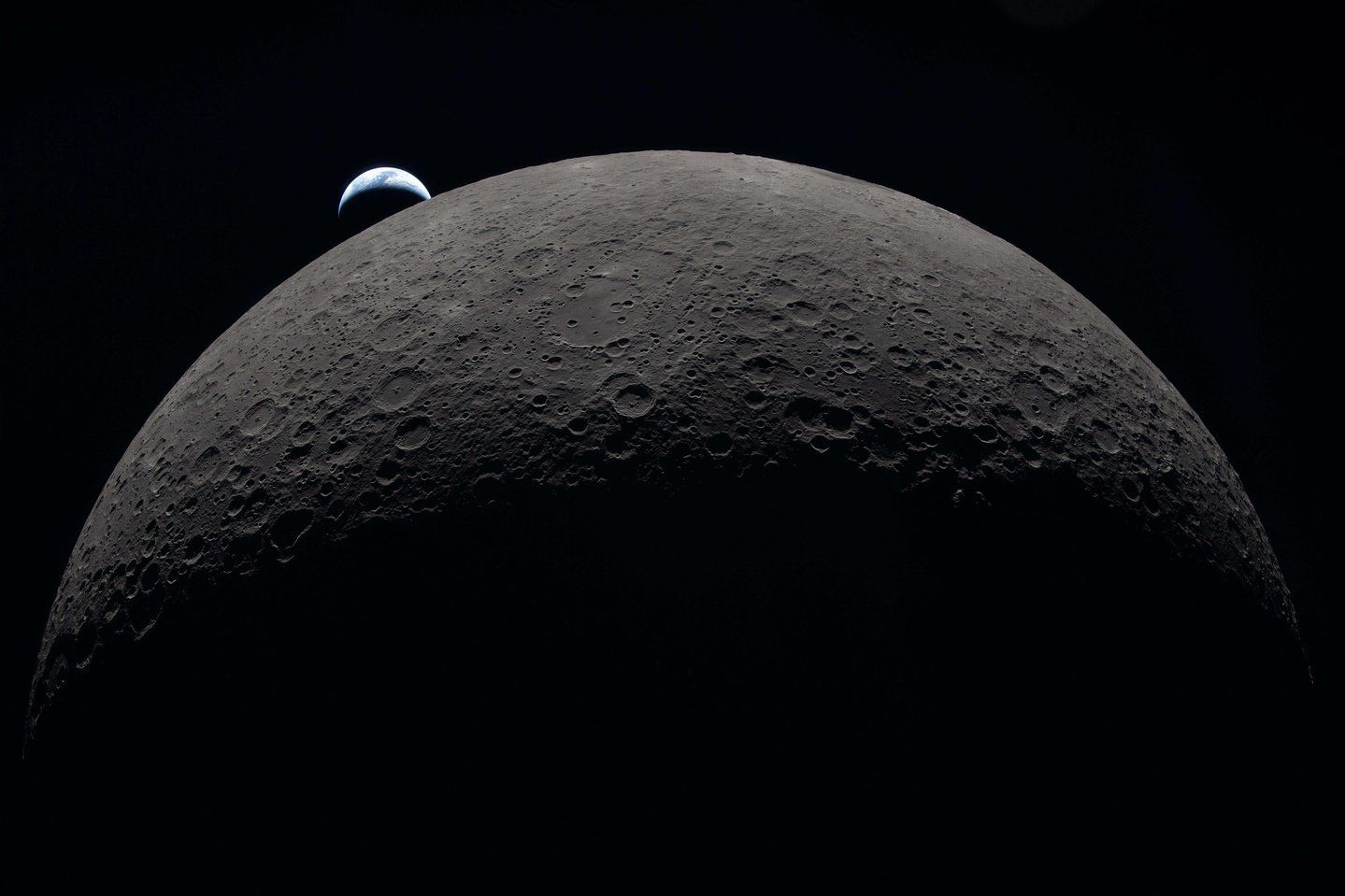
Following a historic mission that broke a decades-old distance record, NASA’s Artemis II crew is currently in the final leg of their journey home. The Orion spacecraft is scheduled to splash down in the Pacific Ocean today, concluding the first crewed lunar mission in over 50 years.
Splashdown & Recovery Details
NASA and the U.S. Navy are currently on high alert for the mission’s conclusion.
-
Scheduled Time: Friday, April 10, 2026, at approximately 8:07 PM EDT (5:07 PM PDT / 00:07 UTC on April 11).
-
Location: Off the coast of San Diego, California.
-
Recovery Team: The USS John P. Murtha is stationed in the Pacific to retrieve the four astronauts and the Orion capsule.
-
The Re-entry: Orion will hit the Earth’s atmosphere at a staggering velocity of nearly 23,864 mph, testing the spacecraft’s heat shield at temperatures reaching 2,760°C (5,000°F).
A Record-Breaking Flight
This mission officially surpassed the long-standing record held by Apollo 13 for the farthest distance humans have ever traveled from Earth.
| Mission | Max Distance (Miles) | Max Distance (km) | Date Set |
| Artemis II | 252,756 | 406,771 | April 6, 2026 |
| Apollo 13 | 248,655 | 400,171 | April 15, 1970 |
Note: The crew traveled roughly 4,101 miles (6,600 km) further than the Apollo 13 astronauts, primarily due to the specific “free-return trajectory” and the high altitude of their lunar flyby.
Mission Highlights
-
The Far Side: On April 6, the crew passed behind the Moon, losing communication with Earth for approximately 40 minutes while they captured high-resolution images of the lunar far side.
-
Solar Eclipse: From their unique vantage point in deep space, the crew witnessed a total solar eclipse where the Earth partially blocked the Sun.
-
Naming “Carroll” Crater: During the flyby, Commander Reid Wiseman announced that the crew had nicknamed a lunar crater after his late wife, Carroll, who passed away in 2020.
-
Technology Tests: The astronauts spent their 10 days validating life-support systems, exercise equipment, and deep-space communication tools required for the upcoming Artemis III lunar landing.
Meet the Crew
The four-person team represents a historic first for lunar exploration:
-
Reid Wiseman (Commander): NASA
-
Victor Glover (Pilot): NASA (First person of color to fly to the Moon)
-
Christina Koch (Mission Specialist): NASA (First woman to fly to the Moon)
-
Jeremy Hansen (Mission Specialist): CSA (First Canadian to fly to the Moon)
