

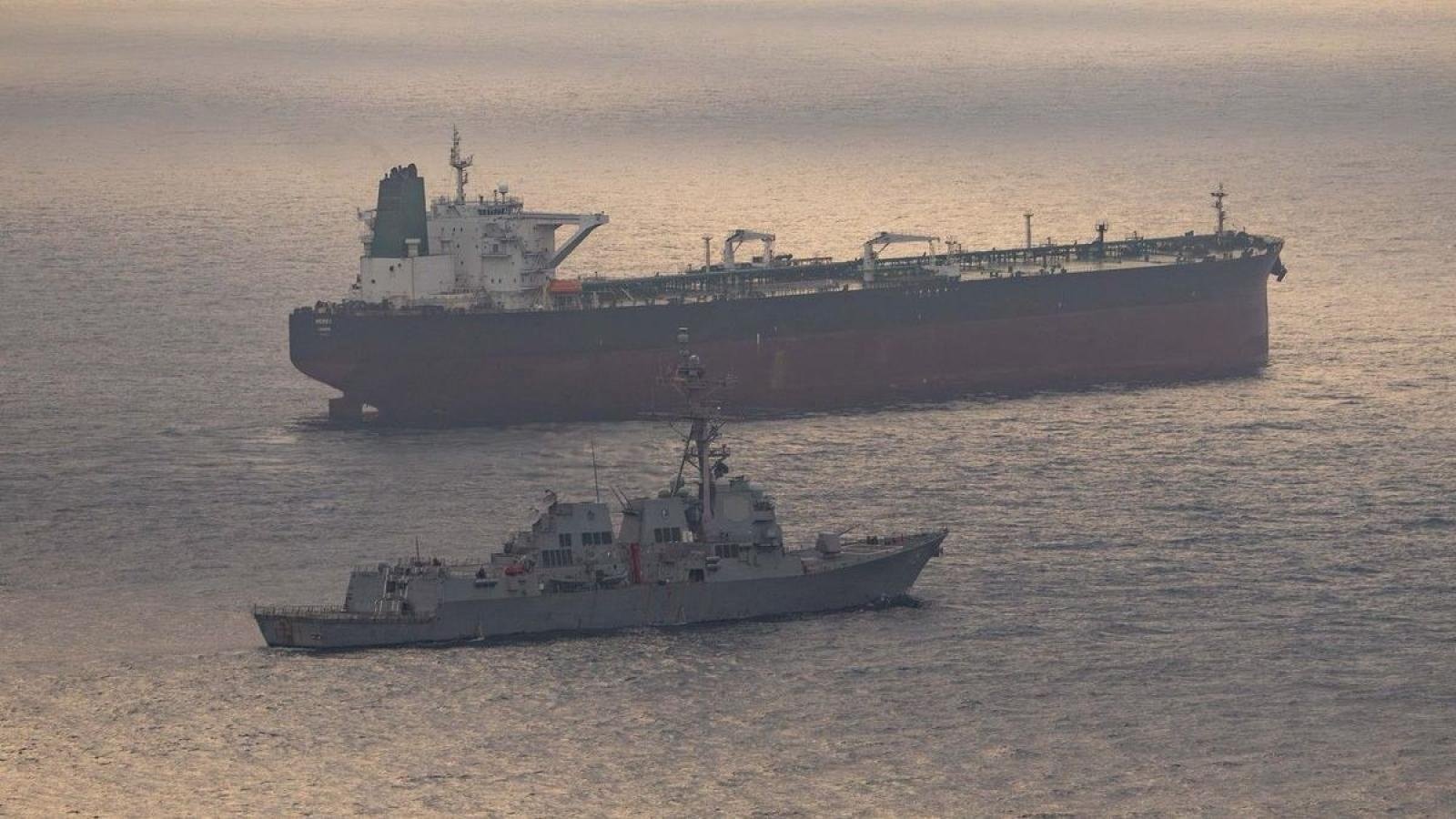
The USS Rafael Peralta (DDG 115), a U.S. Navy guided-missile destroyer, intercepted an Iranian-flagged ship on April 24, 2024. The vessel was halted while attempting to enter an Iranian port, leading to a boarding and investigation by American naval authorities.
This action is part of a broader, aggressive maritime strategy aimed at enforcing a total blockade against Iran.
Escalation of Maritime Interdictions
According to General Dan Caine, Chairman of the Joint Chiefs of Staff, the U.S. military has shifted to a “firm maritime blockade” that began on April 8. This campaign targets not only Iranian-flagged ships but any commercial vessel—regardless of nationality—attempting to enter or exit Iranian territory.
Operation Statistics (as of April 25):
-
34 ships have been intercepted and turned around after encountering the blockade.
-
Multiple seizures have been conducted against the “dark fleet” (vessels used to bypass sanctions).
-
Strategic Coverage: Operations now span the Persian Gulf, the Indian Ocean, and the Indo-Pacific.
Significant Recent Seizures
General Caine detailed several high-stakes operations involving the seizure of ships and cargo:
| Date | Vessel Name | Details |
| April 20 | MT Tiffany | A Very Large Crude Carrier (VLCC) seized with 2 million barrels of sanctioned Iranian oil. |
| April 22 | Majestic X (aka Ponix) | A stateless tanker intercepted in the Indian Ocean. |
| Recent | MV Touska | Seized by U.S. Marines via helicopter fast-rope insertion after ignoring multiple warnings. |
The U.S. Position: “Prepared for Combat”
During a briefing at the Department of War, General Caine emphasized that the U.S. Central Command (CENTCOM) is maintaining a strict posture. He noted that the military remains prepared to transition to “major combat operations” should the President order them.
“We’re closely tracking vessels of interest headed towards Iran… We’re prepared and postured to intercept them.” — General Dan Caine
The General also linked current resolve to historical context, honoring the victims of the 1983 U.S. Embassy bombing in Beirut, framing the current operations as a continuation of the commitment to protect American interests and regional stability.
