

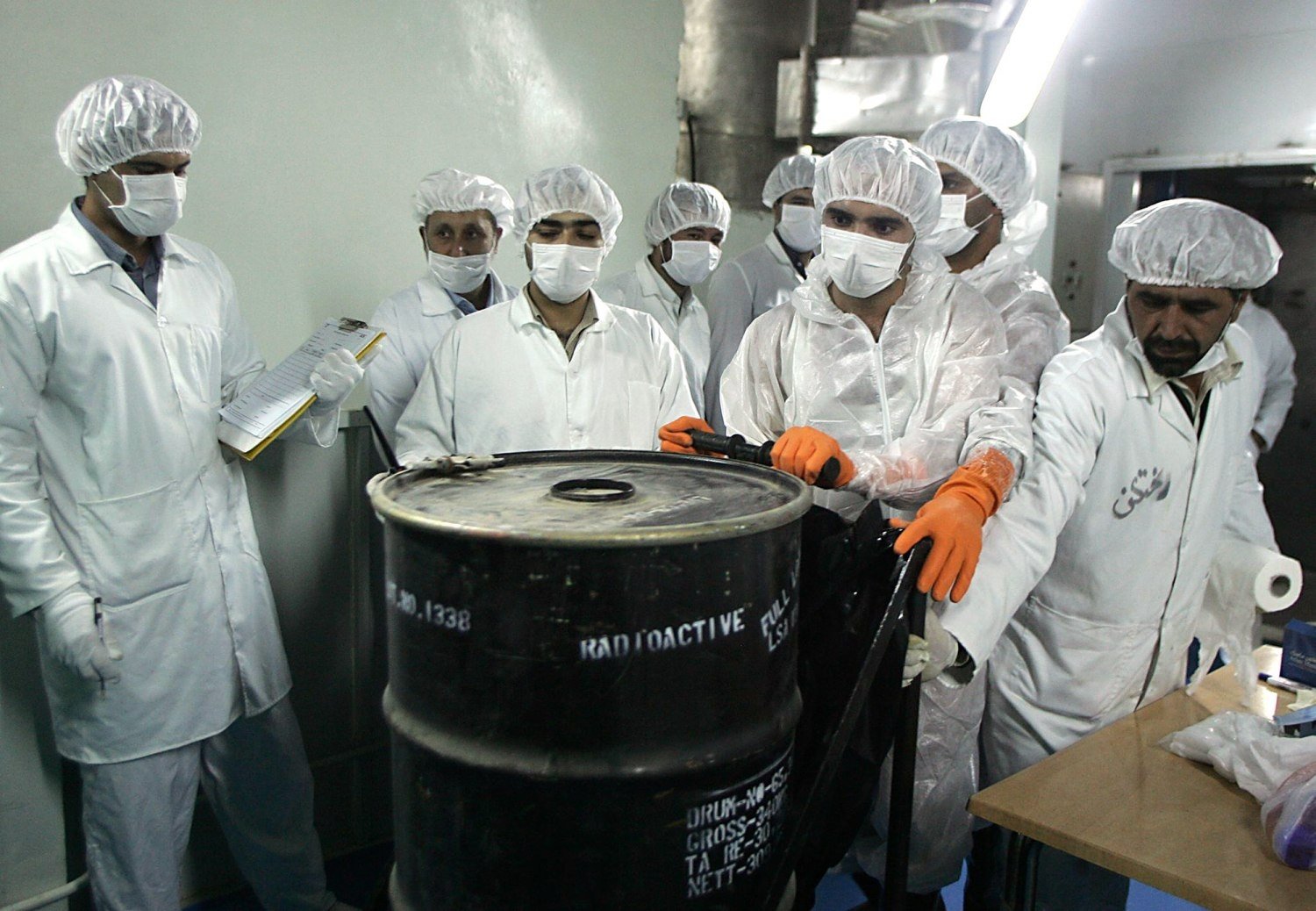
WASHINGTON – President Donald Trump is reportedly weighing a daring and controversial military mission: sending American ground forces into Iran to seize its stockpile of enriched uranium. According to a report by the Wall Street Journal, the goal is to extract approximately 450 kilograms (1,000 pounds) of highly enriched material to permanently eliminate Tehran’s nuclear breakout capability.
While the White House has stated that no final decision has been made, the Pentagon is already preparing options for what experts describe as an “extremely complex and dangerous” undertaking.
The Strategic Objective
The material in question includes uranium enriched to 60%, which is technically just a short step away from the 90% enrichment required for a nuclear weapon.
-
Site Locations: International Atomic Energy Agency (IAEA) Director General Rafael Grossi indicates the material is likely stored at two sites recently targeted by airstrikes: an underground tunnel at Isfahan and a facility at Natanz.
-
Trump’s Stance: In recent statements, Trump has signaled that the war cannot end until Iran surrenders its “nuclear dust.” He has publicly urged Iranian leaders to hand over the material voluntarily but warned that the U.S. is prepared to take it by force.
Why the Operation is High-Risk
Military analysts and former officials warn that this would not be a “quick in-and-out” mission. Unlike previous peaceful transfers of nuclear material (such as from Kazakhstan in 1994), this would be a hostile extraction in a combat zone.
| Challenge | Impact on Operation |
| Handling the Material | Uranium is stored in gaseous form in heavy cylinders that require specialized casks and several trucks for transport. |
| Defensive Environment | U.S. troops would have to operate under fire from Iranian air defenses, drones, and specialized “booby traps” at the sites. |
| Logistics | The mission would likely require establishing a makeshift airfield and securing a large perimeter for several days to a week. |
| Escalation Risk | A ground operation on Iranian soil could trigger a massive regional retaliation and significantly increase U.S. casualties. |
Military and Diplomatic Context
The news comes as the U.S. expands its footprint in the region. The Pentagon is considering deploying 10,000 additional ground troops to West Asia, supplementing the 82nd Airborne Division and Marine units already stationed there.
Meanwhile, Vice President JD Vance has projected that such an operation could last between four to six weeks. Despite the military build-up, a diplomatic window remains open; intermediaries from Pakistan, Turkey, and Egypt are reportedly facilitating indirect communication to see if a negotiated surrender of the uranium is possible before April 6.
