

The United States and Iran traded heavy drone and missile strikes on Friday, marking the seventh consecutive night of American bombardment. US Central Command confirmed the operations, stating they were strategically designed to “continue degrading Iranian military capabilities.”
The conflict escalated sharply as Iran accused US forces of shifting targets to critical civilian infrastructure, including an airport, a railway station, and two bridges. UN Secretary-General António Guterres expressed deep concern over the allegations, declaring attacks on civilian infrastructure “unacceptable.” While US President Donald Trump has previously threatened such targets, US military officials did not explicitly confirm striking civilian networks on Friday.
Tehran Warns: “No Border Safe”
In response to the continued campaign, Major General Mohsen Rezaei, a senior military advisor to Iran’s supreme leader, issued a severe warning, threatening “full-scale offensive operations” if US strikes persist for another two to three days.
“Iran will no longer limit itself to retaliatory, like-for-like responses… and no political border will be safe,” Rezaei stated. Concurrently, Iranian Revolutionary Guards Aerospace Force Commander Majid Mousavi affirmed that targeted operations from mainland Iran would continue until the US halts strikes on southern coastal facilities and areas surrounding the Strait of Hormuz.
The warfare, which began on February 28 following joint US-Israeli strikes, has seen Iran retaliate by closing the critical Strait of Hormuz shipping lane and launching counter-offensives across the Gulf. According to Iran’s health ministry, at least 38 people have been killed and over 400 wounded within the country since hostilities resumed.
Regional Ripple Effects and Infrastructure Damage
The latest wave of hostilities triggered widespread disruptions and military engagements across multiple Middle Eastern nations:
-
Iran & Kuwait: Iran’s energy ministry urged citizens to ration electricity after US strikes strained the domestic power grid. Meanwhile, an Iranian retaliatory strike targeted US military assets in Kuwait, damaging a local power and water plant and wounding several Kuwaiti troops.
-
Qatar: The Iranian Revolutionary Guards claimed strikes on US radar systems and military aircraft stationed in Qatar. Doha reported intercepting an incoming missile, though residents reported the impact shook local homes.
-
Oman & Syria: Iran claimed it targeted two US radar installations in Oman and the Al-Tanf military base in Syria. However, Syrian military sources denied the strike, and US officials noted that forces had already withdrawn from Al-Tanf earlier this year.
-
Jordan & Bahrain: Jordan’s military confirmed shooting down three Iranian missiles passing through its airspace, while Bahrain urged citizens to take shelter following Iranian state media reports targeting an airbase hosting US aircraft.
-
Iraq: Separate drone and rocket strikes killed nine members of an exiled Iranian Kurdish armed opposition group in Iraq’s Kurdistan region, an attack blamed on Iranian forces.
Blockades and Stalled Diplomacy
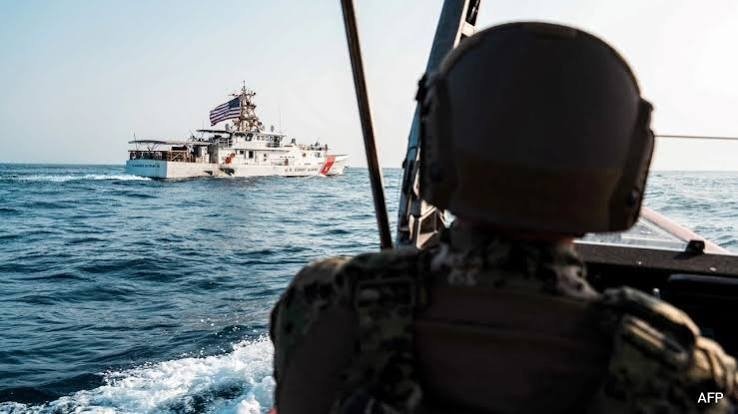
Alongside air operations, the United States has reimposed a maritime blockade on Iranian ports. The shipping crisis in the region remains acute; the UK Maritime Trade Operations (UKMTO) agency reported that an oil tanker was struck by a projectile off the coast of Oman overnight.
Despite diplomatic pressure from nations like China and Pakistan calling for an immediate ceasefire and a return to the negotiating table, analysts warn of a dangerous deadlock. Analysts note that while neither Washington nor Tehran benefits from a prolonged conflict, both sides currently view any diplomatic compromise as an unacceptable capitulation.
