

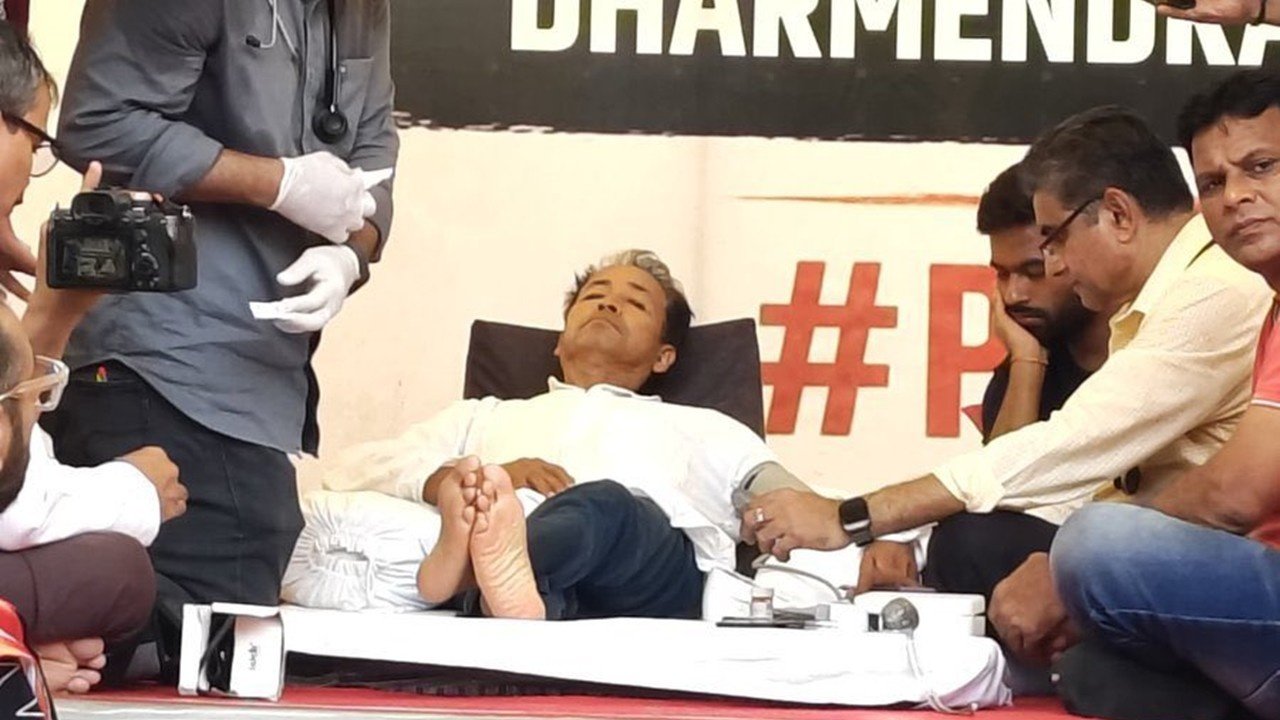
In the early hours of Saturday, July 18, 2026, Delhi Police intervened at Jantar Mantar, removing educator and activist Sonam Wangchuk from his protest site and shifting him to Safdarjung Hospital. The administrative action ended a grueling 20-day hunger strike that pushed the activist’s body to its limits and sparked a major judicial intervention.
Wangchuk, alongside student supporters and the satirical outfit Cockroach Janta Party, had been protesting for nearly a month to demand the resignation of Education Minister Dharmendra Pradhan over the alleged NEET paper leak controversy.
Here is the chronological timeline of how the protest unfolded, escalated, and ultimately concluded with emergency medical intervention.
June 28: The Protest Begins
Sonam Wangchuk launches an indefinite fast from a makeshift stage at Delhi’s iconic protest ground, Jantar Mantar. Joined by hundreds of students, the strike frames twin demands: accountability within national competitive testing frameworks and resolving governance matters in Ladakh.
June 29: Digital Outreach
The protest remains a localized student issue with modest crowds. Wangchuk utilizes video messages broadcasted from the site to articulate his core demands for transparency, drawing national attention to the plight of millions of medical aspirants.
July 3: Standing Firm on Education
While Wangchuk publicly thanks the government for taking steps toward resolving specific issues in Ladakh, he asserts that he will not back down from his fast. He declares that accountability regarding the NEET education framework remains his primary unresolved objective.
July 4: Early Medical Concerns
Entering its seventh day, the fast begins taking a visible physical toll under Delhi’s intense summer heat. Organizers release the first alarming medical updates, describing Wangchuk as frail and exhausted as he issues a fresh appeal to the government for decisive action.
July 5–6: Rapid Physical Deterioration
By Day 8, Wangchuk’s weight drops by 6 kilograms, falling to approximately 60 kg. Public momentum builds as nearly 7,000 people visit the site to join the demonstration. By July 6, his total weight loss nears 7 kg, and his blood glucose levels drop sharply to 72.
July 11: Mainstream Political Trajectory
As Wangchuk’s health steadily worsens, the protest gains significant political traction. Political leaders begin arriving at Jantar Mantar in quick succession to express solidarity with the fasting activist and the student community.
July 15–16: The High Court Steps In
With Wangchuk having shed more than 8 kg, a Public Interest Litigation (PIL) is filed in the Delhi High Court seeking judicial intervention to monitor his health and prevent a fatal outcome. On July 16 (Day 19), the High Court issues a strict directive ordering the government to “do whatever it takes” to save his life, while strongly questioning the lack of structured medical oversight at the site.
July 17: Emergency Alerts and a Vow to March
On Day 20 of the fast, examining doctors describe Wangchuk’s condition as a critical emergency, warning that his organs are at immediate risk of failing. Remaining defiant, Wangchuk issues a statement asserting he will “stay alive at any cost” until Parliament resumes for the Monsoon Session on Monday, where he plans to lead a peaceful march to press student demands.
July 18: Forced Removal and Hospitalization
Citing the High Court’s life-saving mandate and the immediate medical threat, Delhi Police arrive at Jantar Mantar in the early morning hours, clear the area, and transfer Wangchuk to Safdarjung Hospital.
Admitted at 7:40 AM, the hospital’s first official medical bulletin notes that while Wangchuk is currently stable under continuous observation, he remains severely weak from prolonged fasting and dehydration, requiring immediate treatment to restore his vital body parameters.
