

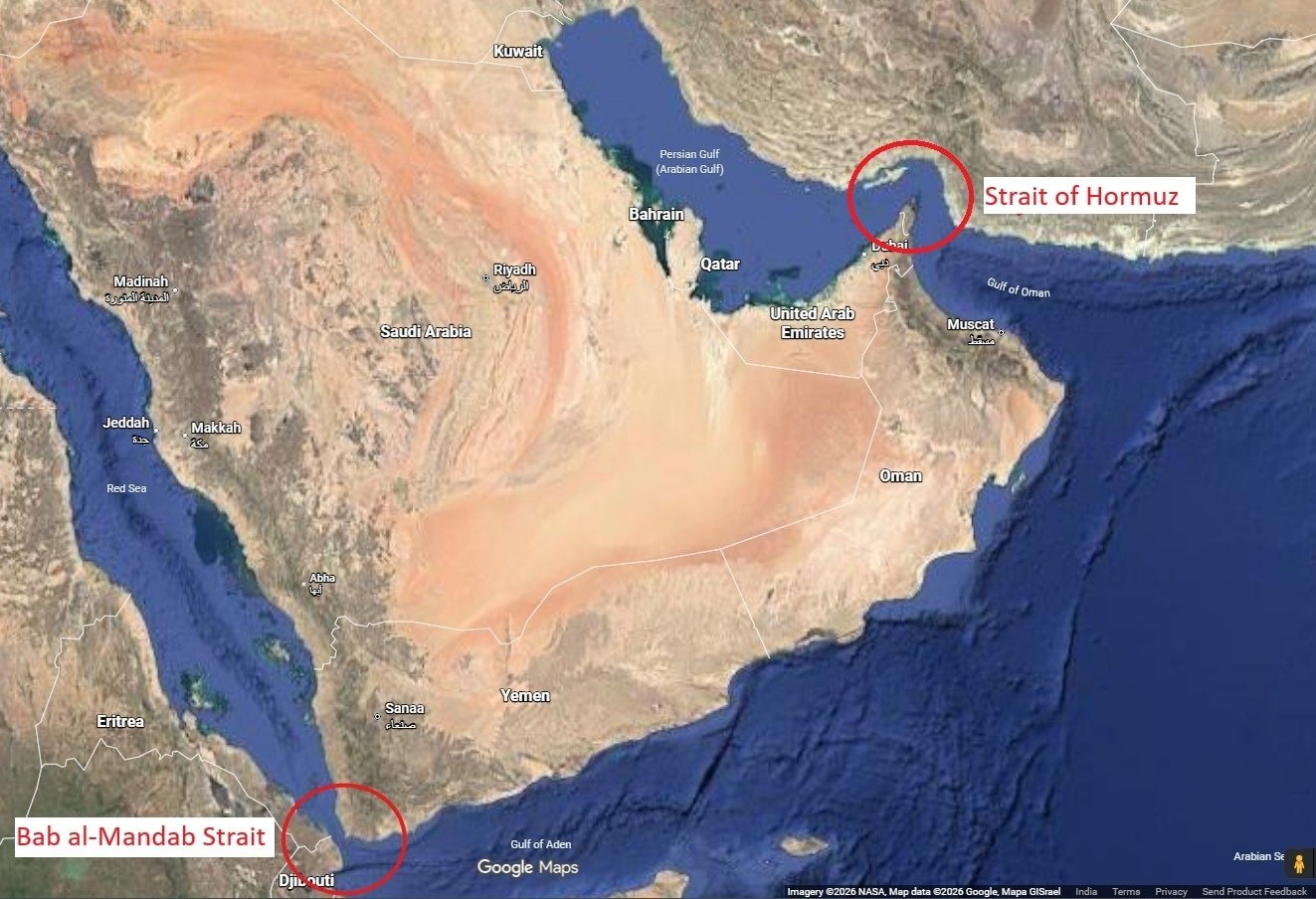
Yemen’s Houthi rebels have opened a “second front” in the escalating conflict, targeting the Bab al-Mandab Strait. This move, combined with Iran’s existing blockade of the Strait of Hormuz, creates a dual-pressure point on global energy corridors, squeezing the Arabian Peninsula from both ends.
The Strategic “Squeeze”
The entry of the Houthis into the conflict shifts the battlefield from a single-point disruption to a regional maritime crisis.
-
The Hormuz Front: Currently handles ~20 million barrels of oil daily. Iran’s blockade here has already jolted markets.
-
The Bab al-Mandab Front: Traditionally handles 10–12% of seaborne crude (approx. 8.7–9.3 million barrels daily at its peak).
-
The “Escape” Route at Risk: Previously, Saudi Arabia and the UAE used pipelines to move oil to the Red Sea port of Yanbu to bypass Hormuz. With the Houthis threatening the Bab al-Mandab, this 4.6 million barrel-per-day “safety valve” is now in the line of fire.
Economic Impact: By the Numbers
The threat to these straits has caused immediate and severe spikes in logistics and commodity costs:
| Metric | Pre-War / Normal | Current / Projected |
| Brent Crude Price | ~$80 – $90 | $110+ (Projected to hit $150-$200) |
| VLCC Charter Rates | ~$40,000 / day | $425,000 – $700,000 / day |
| Freight Surcharge | Base rate | +$2 per barrel (due to re-routing) |
| Bab al-Mandab Volume | ~9 million bpd | 4.1 million bpd (50% drop) |
What This Means for India
While India is geographically distant, the economic “aftershocks” are hitting home through two main channels:
1. Energy Security and Diversification
-
Lower Direct Exposure: 40–50% of India’s crude skips the Bab al-Mandab as it comes through Hormuz. However, the Hormuz blockade has already forced India to diversify.
-
The Russian Pivot: India has resumed large-scale purchases of Russian crude to offset Middle Eastern losses, despite previous US diplomatic pressure.
-
Price Thresholds: To prevent a massive spike in retail fuel prices, the Indian government recently slashed federal excise duties (Petrol to ₹3, Diesel to zero). This indicates the government is reaching its fiscal limit to subsidize fuel.
2. Trade and Inflation
-
Container Traffic: 15–20% of global container traffic passes through the Bab al-Mandab. This includes machinery, food, and manufactured goods.
-
The “Africa Detour”: Re-routing ships around the Cape of Good Hope adds weeks to delivery times and massive fuel costs.
-
Downstream Inflation: These increased costs filter down to the Indian consumer, raising the price of imported goods and essentials, which disproportionately affects lower-income populations.
The Bottom Line
If the Houthis successfully disrupt the Bab al-Mandab, the “two-strait chokehold” will be complete. Experts warn that even a few targeted strikes could halt all commercial shipping in the Red Sea. For India, this translates to a permanent increase in the Crude Oil Basket price and a significant logistical hurdle for its exports to Europe and the US.
