

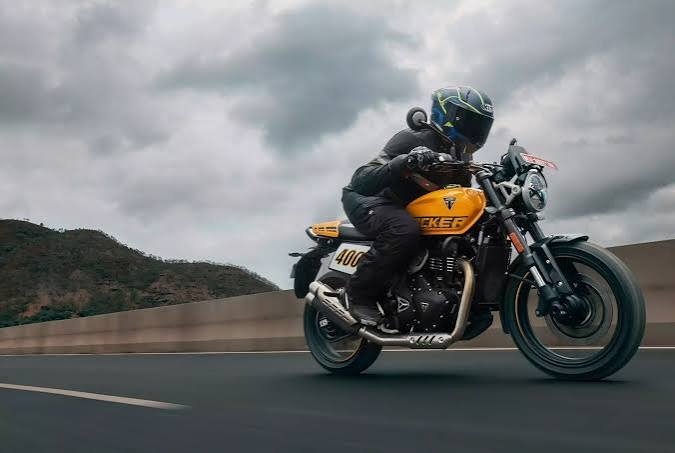
Triumph has introduced a more aggressive chapter to its single-cylinder platform with the Triumph Tracker 400, priced at ₹2.46 lakh (ex-showroom). Positioned roughly ₹15,000 above the foundational Speed 400, the Tracker transforms a highly accessible formula into a sportier, flat-track-inspired machine tailored for riders who want distinct road presence without compromising daily usability.
Technical Architecture: The 350cc Revision
While international markets utilize a 398cc layout, the India-spec platform features a shorter-stroke 349cc liquid-cooled single-cylinder engine optimized for domestic tax brackets. Despite the smaller cubic capacity, the Tracker shares a premium state of tune with the café-racer styled Thruxton 400, resulting in the most urgent performance configuration in Triumph’s 350cc stable.
| Parameter | Specification |
| Engine Type | Liquid-cooled, 4-valve, DOHC, Single-cylinder |
| Max Power | 40 PS @ 8,750 rpm |
| Max Torque | 32 Nm @ 7,500 rpm |
| Gearbox | 6-speed manual with assist & slipper clutch |
| Claimed Top Speed | 154 km/h |
| Claimed Mileage | 27.7 km/pl (ARAI) |
By dropping two teeth from the rear sprocket relative to the Speed 400, Triumph has given the Tracker a taller final drive. Combined with a highly linear ride-by-wire throttle and punchy top-end output (with a noticeable performance surge post 6,000 rpm), it maintains relaxed triple-digit highway cruising.
Geometry and Rider Ergonomics
The defining character shift of the Tracker 400 comes down to its altered rider triangle and frame geometry:
-
Sharper Dynamics: A tighter rake and a 1,367 mm wheelbase (20 mm shorter than the Speed 400) make it incredibly agile, enabling snap direction changes through city gaps.
-
Aggressive Rider Triangle: The flat handlebars are 23 mm wider and positioned 134 mm further forward. Paired with rear-set footpegs, it coaxes the rider into an assertive, elbows-out, sportier stance.
-
The Flat-Track Visuals: The bodywork leans heavily into a minimalist dirt-oval theme, featuring unique side number-board panels, a flat rider’s saddle (805 mm seat height), and a removable rear seat cowl that covers the pillion space.
Safety and Electronics Suite
The hardware package retains premium, non-intrusive safety networks. You get 43 mm upside-down big-piston forks with 140 mm of travel, a 300 mm front disc brake clamped by a 4-piston radial caliper, and dual-channel ABS. For riding on loose gravel or dirt surfaces, the switchable traction control can be completely deactivated via the semi-digital console to allow for controlled rear-wheel slides.
The Structural Drawback: The flat-track aesthetic does demand a few practical compromises. The flat seat padding can feel noticeably thin on multi-hour highway stints, there is zero wind protection out of the box, and the incredibly wide handlebars require extra care when lane-splitting through tight traffic.
To see a comprehensive visual breakdown of its flat-track styling cues, lighting elements, and sound note, check out this Triumph Tracker 400 Walkaround and Launch Overview. This video details the exact specifications, color variations, and physical differences that set the Tracker apart from the rest of Triumph’s 350cc lineup.
