

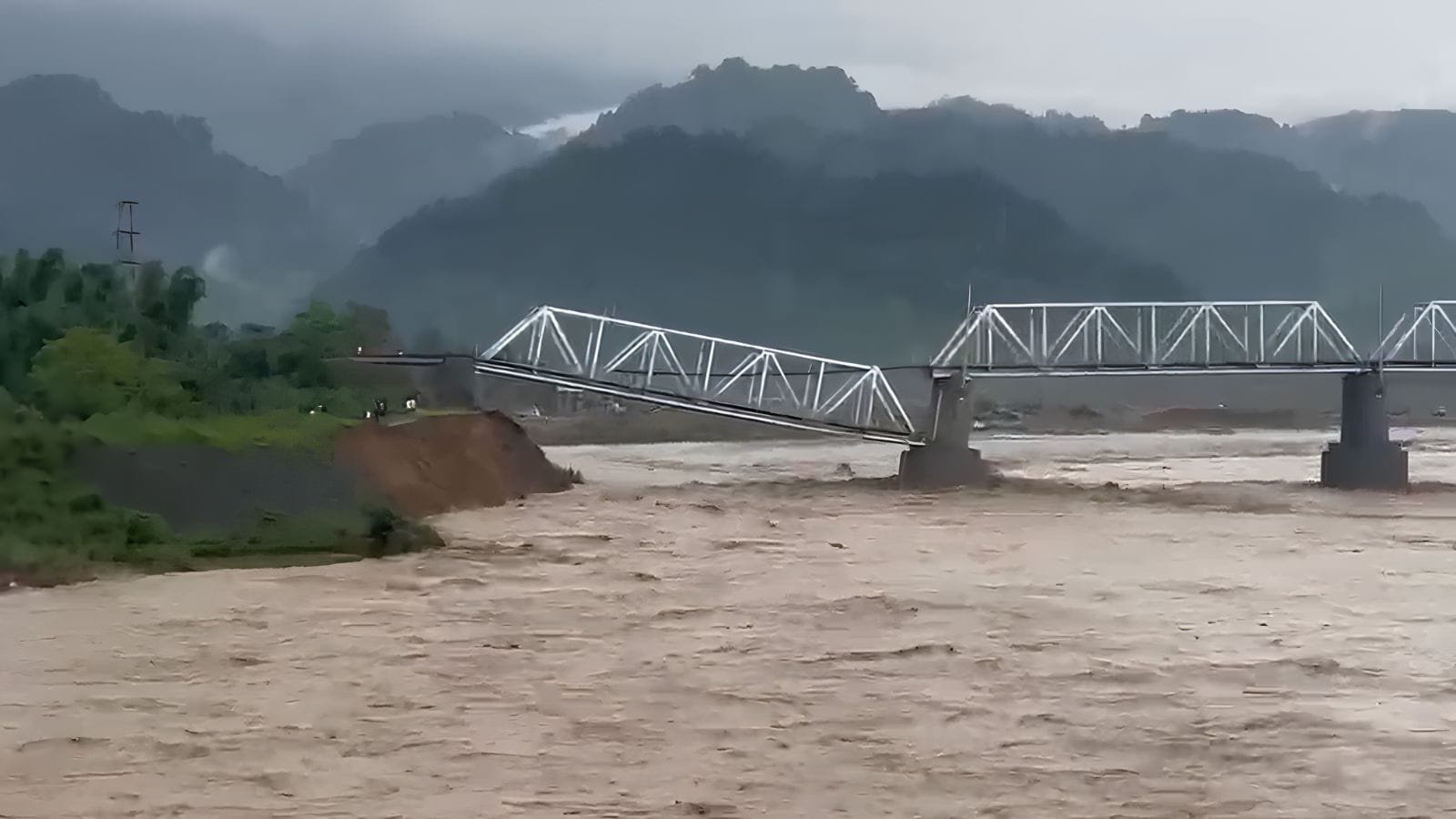
In a high-level review meeting held at Lok Seva Bhawan in Dispur on July 1, 2026, the Central Government assured full administrative and financial backing to Assam and Arunachal Pradesh to counter severe monsoon damages. Jointly chaired by Union Minister for Agriculture & Farmers’ Welfare Shivraj Singh Chouhan and Union Minister for Parliamentary Affairs Kiren Rijiju, the emergency response framework addresses an anomalous dual-front climate crisis: managing massive current inundations while simultaneously retrofitting 12 vulnerable Assam districts against erratic, El Niño-induced micro-climatic disruptions.
Sudden regional cloudbursts have significantly altered river paths, bringing severe flash floods to villages previously categorized as completely safe. Preliminary damage assessments indicate critical structural losses across roads, power grids, bridges, livestock, and local standing crops.
The Current Impact and Regional Data Baseline
As the first major wave of the 2026 monsoon cycle moves across the northeast, the State Disaster Response Fund (SDRF) has initiated immediate life-saving deployments, with additional National Disaster Response Fund (NDRF) allocations slated following final inter-ministerial assessments.
| Affected Parameter | Documented Operational Impact | Strategic Intervention Status |
| Total Active Flood Scale | 13 districts severely affected across Assam; over 72,000 citizens displaced. | Complete local administrative mobilization; immediate deployment of medical and food supplies. |
| Ground Zero Epicenter | Dhemaji District (Worst hit, accounting for nearly 50,000 affected residents). | High-priority rescue operations actively managed by NDRF and state disaster units. |
| Arunachal Frontier Damage | Over 90,000 people impacted across 28 districts; 4 documented casualties. | Joint aerial and ground assessments completed by Union Ministers and CM Pema Khandu. |
Understanding the El Niño Threat Matrix in Flood Zones
The primary concern highlighted by the Union Agriculture Ministry is the long-term impact of the active El Niño phenomenon over the equatorial Pacific Ocean. While the Brahmaputra basin is currently battling severe excess precipitation driven by shifting river channels, the overarching El Niño system introduces severe micro-climatic instability.
Rather than a uniform drought, the phenomenon is presenting as an unpredictable, high-volatility weather cycle characterized by erratic rainfall gaps, intense hyper-localized cloudbursts, and prolonged dry spells during the critical Kharif sowing season.
To insulate rural ecosystems from the compound shocks of immediate infrastructure destruction and upcoming crop cycle failures, the Centre has structured an inter-agency mitigation package:
-
Agricultural Safety Nets: Farmers facing extensive crop loss will be fast-tracked through targeted crop insurance payouts. The Indian Council of Agricultural Research (ICAR) is formulating district-specific contingency plans, advising a transition toward short-duration, drought-tolerant crop variants if El Niño-induced rainfall gaps expand later in July.
-
Infrastructure Reconstruction: Central engineering wings have been directed to immediately restore broken power transmission lines, establish temporary bridges, and repair disconnected rural roadways. Families whose homes were swept away are being registered for priority housing reconstruction under the Pradhan Mantri Awas Yojana.
-
AI-Driven Ecological Monitoring: In tandem with human rescue operations, advanced Artificial Intelligence (AI) tracking arrays have been deployed for the first time in Kaziranga National Park to monitor real-time flood elevations along the Brahmaputra, allowing forest rangers to secure wildlife migration corridors across National Highway 715.
The Structural Policy Mandate: The Union Government emphasized that technical solutions must move directly from administrative desks to active agricultural fields. District Collectors have been instructed to prioritize water conservation and moisture-management check-dams under Mahatma Gandhi National Rural Employment Guarantee Act (MGNREGA) allocations to build immediate local resilience against any upcoming El Niño dry phases.
