

The Jammu and Kashmir administration has placed downtown Srinagar under a strict security lockdown, sealing all major access points to the Mazar-e-Shuhada (Martyrs’ Graveyard) at Naqshband Sahib. The preemptive measures are aimed at preventing political assemblies marking the anniversary of the July 13, 1931, security force firing that left 22 Kashmiri civilians dead.
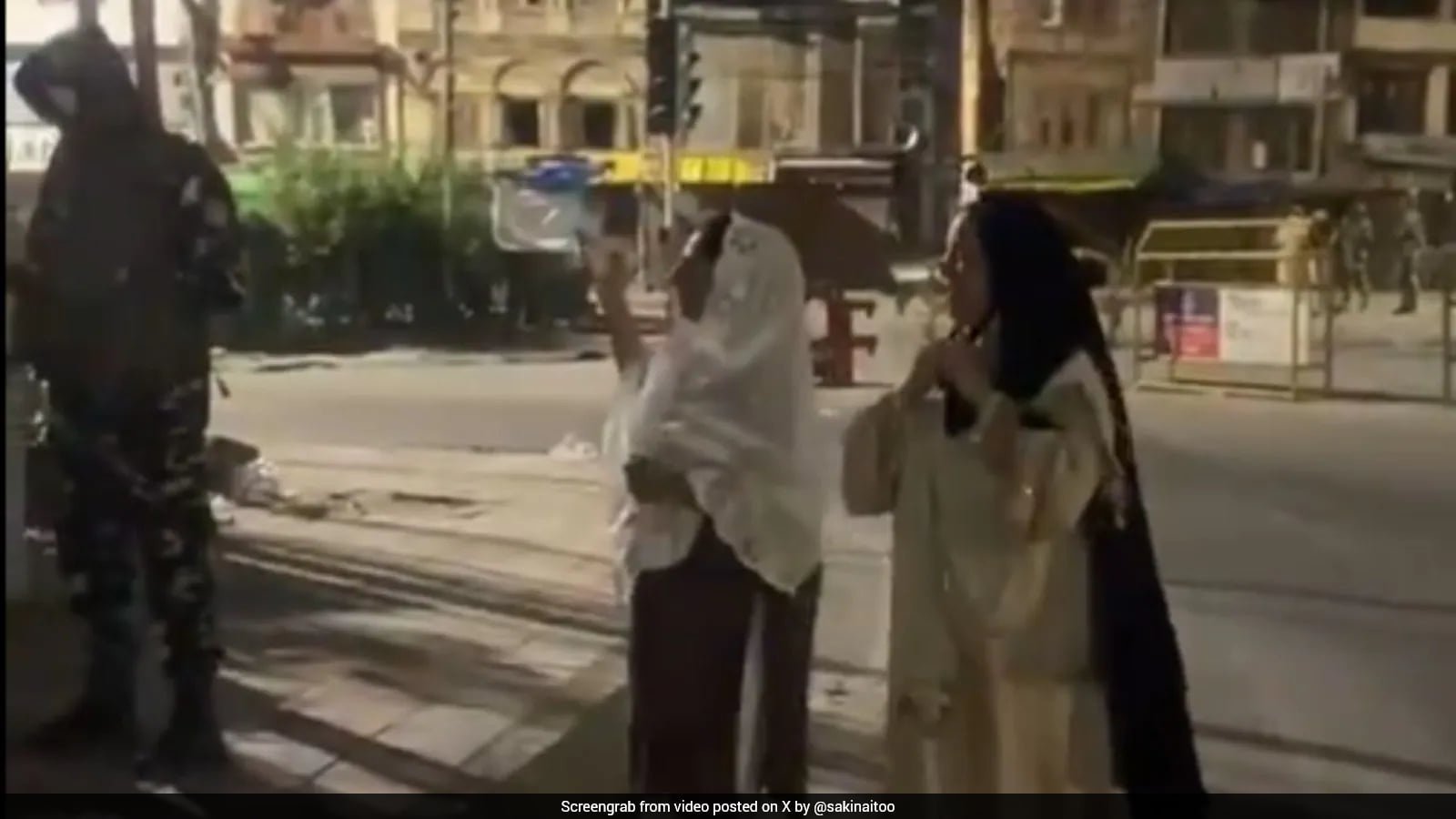
Despite the restrictions, J&K Cabinet Minister Sakina Itoo, wearing a burqa, attempted to reach the cemetery during the early morning hours but was intercepted by security forces.
Security Lockdown and Political Standoff
The administration established a comprehensive security grid involving Jammu and Kashmir Police and Central Armed Police Forces (CAPF), setting up physical blockades within a one-kilometer radius of the shrine using concertina wire, iron structures, and armored vehicles.
-
The Minister’s Pre-Dawn Attempt: Minister for School Education, Health, and Social Welfare Sakina Itoo, accompanied by JKNC Women’s Wing Provincial President Sabiya Qadri, arrived at the perimeter at 4:30 AM. Local security personnel enforcing the perimeter denied them access, citing direct instructions that classified the cemetery as a complete no-go area for the day.
-
The Administration’s Justification: Authorities tightened security measures following incidents from previous years where political figures bypassed barriers to pay homage. Inspector General of Police (IGP) VK Birdi clarified that while selective restrictions were active in the interest of maintaining law and order, no formal house arrests or political detentions had been implemented against opposition figures like Iltija Mufti.
The Historical Paradigm Shift
The friction surrounding July 13 underscores a wider structural and narrative shift in the region’s governance since the abrogation of Article 370 in August 2019:
-
Pre-2019 Protocol: July 13 was observed as an official state holiday across Jammu and Kashmir. The day was marked by high-profile government events, institutional floral tributes, and an official gun salute by the state police force honoring those who rose against the Dogra monarchy under the British Raj.
-
Post-2019 Policy: The union territory administration systematically removed the date from the gazetted holiday list. In a complete policy reversal, the administration introduced the birth anniversary of Maharaja Hari Singh as a public holiday, shifting the official state narrative regarding the 1931 uprising.
