

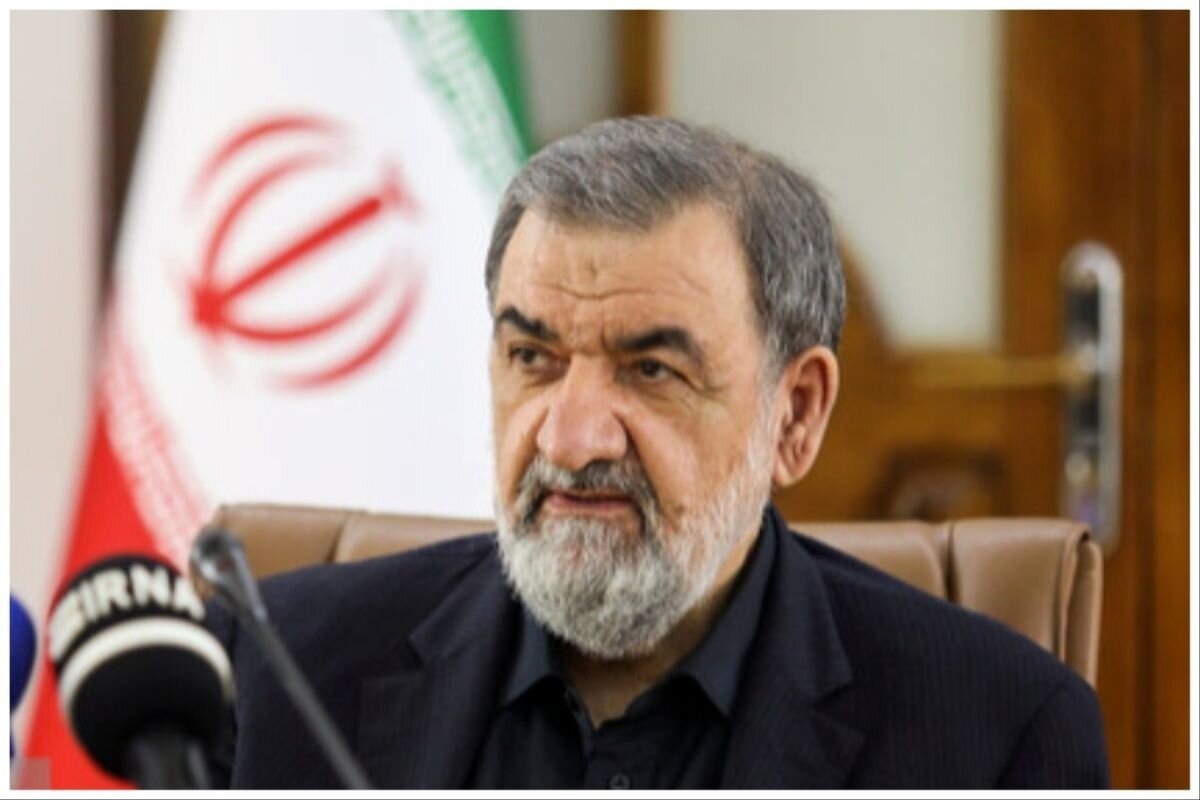
As the U.S. naval blockade of the Strait of Hormuz enters its third day, Mohsen Rezaei, senior military adviser to Supreme Leader Ayatollah Ali Khamenei, has issued a defiant message to Washington. Rezaei declared that the Islamic Republic will not relinquish its presence or leverage in the strategic waterway until its economic and sovereign “rights are fully secured.”
His remarks, carried by state-run Press TV, underscore a hardening of Tehran’s stance even as back-channel diplomatic efforts continue behind the scenes.
Key Assertions from the Supreme Leader’s Office
Mohsen Rezaei, a veteran former commander of the IRGC, framed the current standoff as a test of endurance, challenging the U.S. narrative of naval dominance.
-
Strategic Leverage: Rezaei emphasized that the Strait remains Iran’s most powerful “choke point” against what he termed “unlawful restrictions” on Iranian trade.
-
War Readiness: Addressing the psychological aspect of the conflict, he stated, “Unlike the US, which fears prolonged war, Iran is fully prepared and experienced in long-term war.”
-
Questioning US Dominance: In a direct jab at CENTCOM’s claims of maritime control, Rezaei asked: “Why do US vessels and forces avoid crossing the Strait of Hormuz if Iran’s navy has supposedly been destroyed?”
-
New Preconditions: He signaled that Iran is no longer accepting terms dictated by the West, stating that Tehran is now the one setting the preconditions for any meaningful de-escalation.
CENTCOM: “Blockade Successfully Implemented”
The advisor’s comments come less than 24 hours after CENTCOM Commander Admiral Brad Cooper announced that U.S. forces had effectively halted all maritime trade entering and leaving Iran.
| Metric | Status (as of April 16, 2026) |
| Duration of Blockade | ~36-48 Hours |
| Scope | All Iranian ports, including Bandar Abbas and Chahbahar. |
| Vessels Intercepted | 10 Iranian-flagged ships (as of 11:58 AM IST). |
| US Presence | Dominated by guided-missile destroyers like the USS Spruance. |
The Economic & Diplomatic Crossroads
The Strait of Hormuz is the world’s most important energy transit point, handling nearly 20% of global oil supply. The current blockade has turned it into a high-stakes bargaining chip:
-
Trump’s “Sweet Oil” Gambit: In a parallel development, President Trump has reportedly offered to “load up” the world market with U.S. crude to stabilize prices while the Iranian stalemate continues.
-
The China Connection: Iran is actively briefing Beijing on the “provocative” U.S. positions, hoping that Chinese economic interests will pressure Washington to ease the blockade.
-
The “Pakistan Track”: Despite the rhetoric, the White House has hinted that communication through Pakistani intermediaries is being streamlined to find a “permanent” solution to the Hormuz deadlock.
Current Outlook: While the U.S. maintains physical control of the water, Rezaei’s statements suggest that Iran is digging in for a diplomatic “war of attrition,” refusing to sign any agreement that does not prioritize its specific economic demands.
