

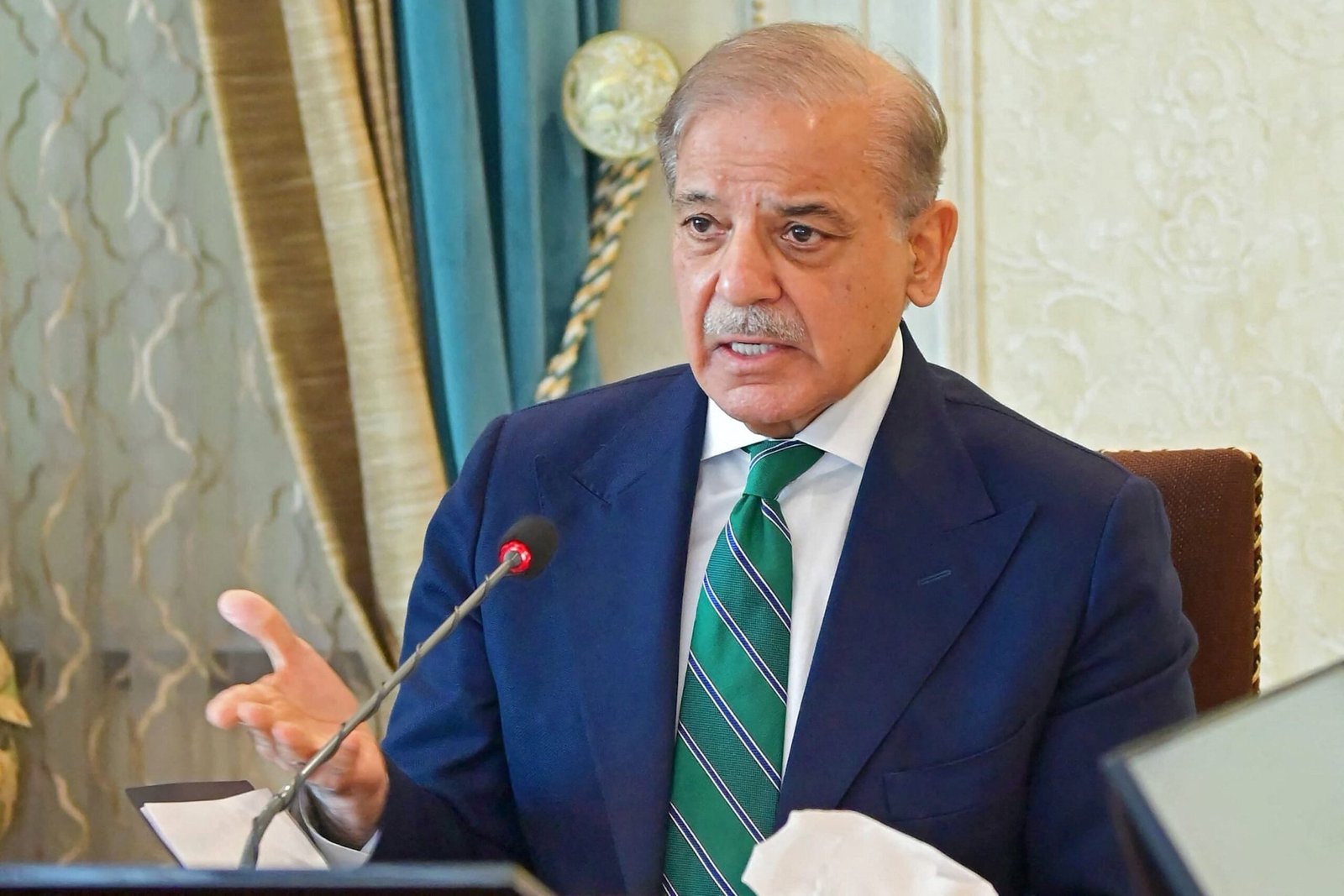
New details from the Financial Times and The New York Times suggest that the recently announced US-Iran ceasefire was not a spontaneous Pakistani peace initiative, but rather a carefully orchestrated push by a “desperate” White House. Despite President Trump’s public threats to “obliterate” Iranian civilization, reports indicate his administration was deeply concerned by surging oil prices and the unexpected resilience of the Iranian regime.
The “Muslim-Majority” Strategy
Washington specifically utilized Islamabad as a “convenient channel” because they believed Tehran would be more receptive to an offer delivered by a neighboring, Muslim-majority state that had maintained neutrality.
-
The Back-Channel: The negotiations were reportedly spearheaded by Pakistan’s Defense Chief, Asim Munir, who facilitated messages between the IRGC and the White House.
-
The “Draft” Blunder: Evidence of the US’s heavy hand emerged when Pakistan PM Shehbaz Sharif posted the ceasefire announcement on X (formerly Twitter) with the subject line “draft — Pakistan’s PM message on X” still attached, suggesting the statement had been pre-approved or drafted by the White House.
Internal Resistance and the “Jubail” Incident
While Iranian political leaders like Foreign Minister Abbas Araghchi were amenable to a “Ceasefire-for-Hormuz” swap, the Islamic Revolutionary Guard Corps (IRGC) remained sharply divided.
-
Sabotage Attempt: On Tuesday, a drone attack hit the Saudi petrochemical hub of Jubail. Analysts believe this was an IRGC attempt to derail the peace process.
-
Pakistan’s Leverage: Pakistan—which has a mutual defense pact with Saudi Arabia—responded with “anger,” signaling to Tehran that further strikes on the Kingdom would result in Iran’s total regional isolation. This pressure reportedly forced Iranian President Masoud Pezeshkian to finally agree to the Islamabad summit.
The Looming Islamabad Summit
With the two-week “pause” now in effect, all eyes turn to the April 11 negotiations in Pakistan.
| Key Development | Status/Detail |
| US Representative | Vice President JD Vance is expected to lead the delegation. |
| Iranian Position | More amenable to limiting its uranium stockpile, though still far apart on final terms. |
| Current Conflict | Hostilities in Lebanon continue; Israel maintains they are not bound by the US-Iran truce. |
| Energy Market | Trump is reportedly “worried” about oil prices; the reopening of the Strait of Hormuz remains his top priority. |
Other Top Stories: April 9, 2026
-
Energy Crisis: India’s Petroleum Minister Hardeep Singh Puri has arrived in Qatar to address a 17% drop in LNG export capacity caused by the war.
-
Judiciary: The Supreme Court used its Article 142 powers to end a decade-long “Mahabharata-like” divorce battle, ordering a ₹5 crore settlement.
-
IPL 2026: Shubman Gill was fined ₹12 lakh for a slow over-rate following the Gujarat Titans’ thrilling 1-run win over Delhi Capitals.
-
Geopolitics: Israel’s envoy to India, Reuven Azar, has questioned Pakistan’s credibility as a mediator, labeling it a “problematic state” similar to Qatar or Turkey.
