

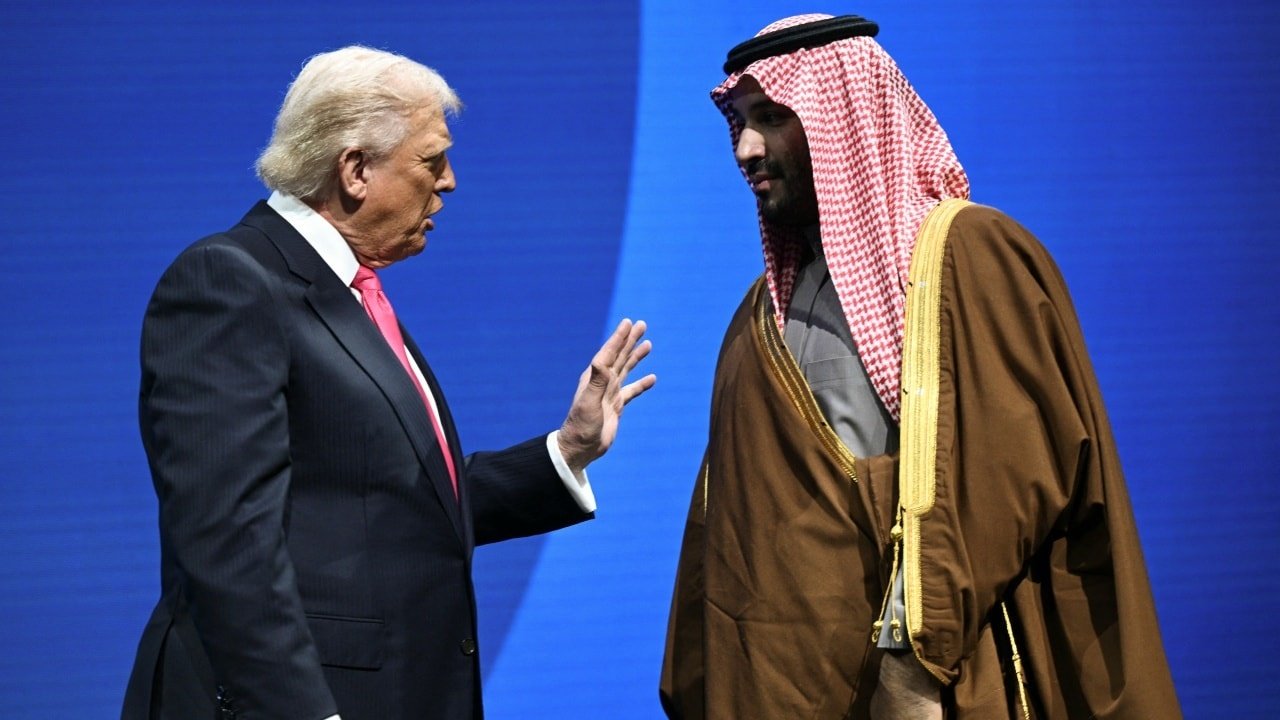
As the US-Iran conflict intensifies, a critical strategic rift has emerged between Washington and its closest Gulf ally. Saudi Arabia is reportedly “pressing” the Trump administration to abandon its plan to blockade Iranian ports, fearing the move will trigger a catastrophic expansion of the naval war.
The Strategic Dilemma: A Tale of Two Straits
The conflict has fundamentally altered how oil flows out of the Middle East, creating a high-stakes “chokepoint” game:
-
The Strait of Hormuz: Currently under an Iranian blockade, this has cut off roughly 13 million barrels of oil per day, sending global prices surging past $100 a barrel.
-
The Red Sea Route (The Lifeline): Saudi Arabia has bypassed the Hormuz closure by piping crude across the desert to the Red Sea. This has allowed Riyadh to maintain exports of nearly 7 million barrels a day.
-
The Threat to Bab al-Mandeb: Riyadh warns that if the US blockades Iran’s ports, Tehran will retaliate by using its Houthi allies in Yemen to shut down the Bab al-Mandeb—the southern exit of the Red Sea—effectively trapping Saudi oil.
Escalating Threats from Tehran
Iran has made it clear that it views maritime security as an “all or nothing” scenario. Recent statements from Iranian officials include:
-
The “Single Signal” Warning: Ali Akbar Velayati, advisor to the Supreme Leader, stated that the flow of global energy could be disrupted with a single signal if the US continues its “stupid mistakes.”
-
Targeting Neighbors: Iran’s armed forces warned that if Iranian ports are not safe, “no port in the Persian Gulf and the Sea of Oman will be safe,” a direct threat to the infrastructure of its neighbors.
Regional Impact & US Stance
| Entity | Current Position | Primary Concern |
| United States | Enforcing a total blockade on Iranian shipping. | Crippling Iran’s economy to force a surrender or new terms. |
| Saudi Arabia | Pressing for a return to the negotiating table. | Protection of its Red Sea export route from Houthi/Iranian strikes. |
| Iran | Maintaining a chokehold on the Strait of Hormuz. | Retaliating against US economic warfare by disrupting global energy. |
The Economic Toll
The IMF recently noted that India and other oil-dependent nations are facing significant “headwinds” due to this volatility. With 20% of global oil and LNG passing through these waterways in peacetime, the continued closure or expansion of the blockade risks a deeper global recession.
The Big Picture: While the White House maintains that Gulf allies are “on board,” the reality on the ground suggests a deepening panic in Riyadh. Saudi officials are now scrambling to restart diplomatic talks, fearing that a total US blockade will turn their remaining export routes into a permanent war zone.
