

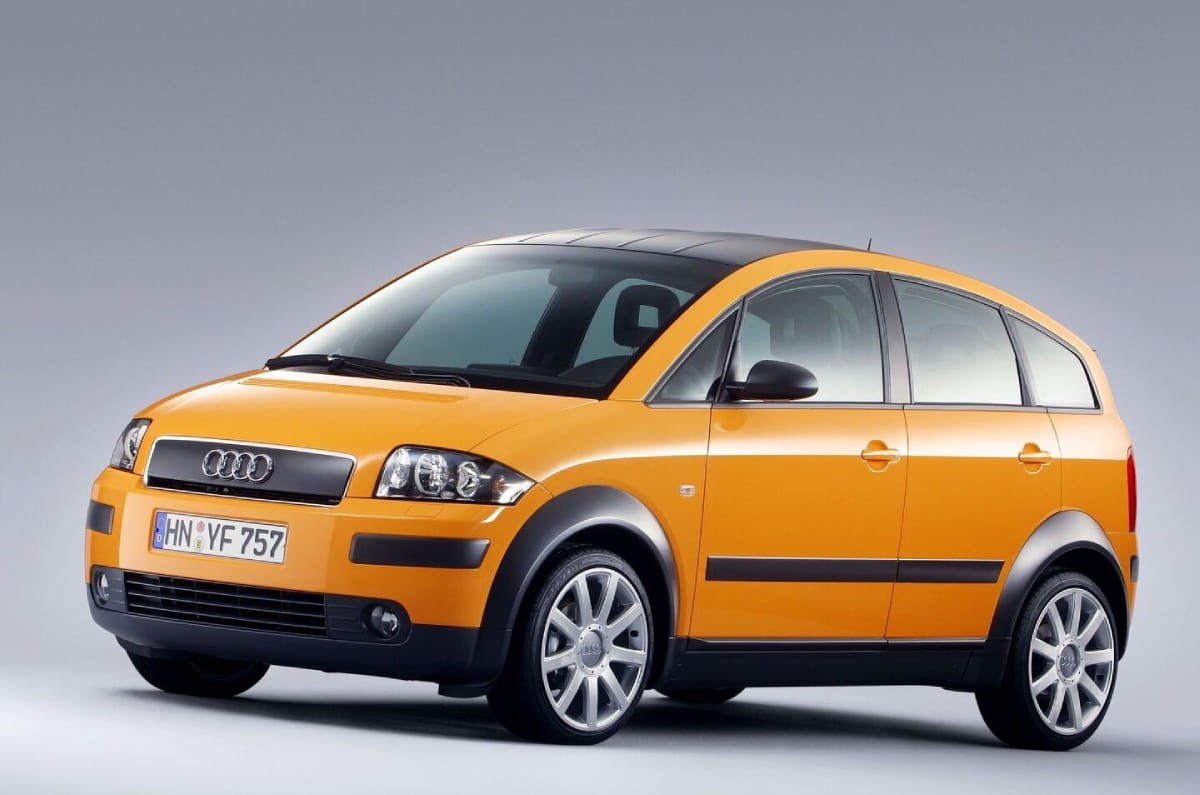
In 1999, Audi launched a car that was unapologetically bizarre, yet light-years ahead of its time. The original Audi A2 was an all-aluminum, bubble-shaped hatchback that prioritized hyper-efficiency and low drag coefficient over mainstream curb appeal. While the automotive market wasn’t quite ready for it 25 years ago, Audi is betting the electric age is the perfect home for its spiritual successor: the all-new, fully electric Audi A2 e-tron.
With production winding down on the internal combustion engine (ICE) A1 and Q2 models, Audi CEO Gernot Döllner officially confirmed that the A2 e-tron will debut in Autumn 2026 as the brand’s smallest, most accessible entry-level premium EV.
Engineering & Extreme Weather Validation
To gear up for its fall reveal, heavily camouflaged production prototypes have been clocking intense real-world validation miles across Europe:
-
Sub-Zero Dynamics: In Lapland, Finland, engineers pushed the A2 e-tron across frozen lake handling tracks. The brutal cold provided the ultimate baseline to stress-test battery degradation and optimize the vehicle’s high-precision thermal management.
-
Real-World Handling: Moving down to Audi’s backyard in Bavaria and the Altmühltal region, the compact EV tackled steep inclines, tight switchbacks, and uneven road surfaces to validate its chassis dynamics and advanced driver-assistance systems in heavy traffic.
-
The Wind Tunnel Crucible: Staying true to the original model’s hyper-aerodynamic ethos, the A2 e-tron has been refined using wind tunnel speeds reaching up to 300 km/h and a 235 km/h rolling road. Initial design sketches reveal a sharply tapered roofline tailored to slash drag, cut cabin wind noise, and wring out every last mile of driving range.
Platform and Pricing: What to Expect
| Expected Detail | Specification & Targets |
| Underlying Architecture | Volkswagen Group MEB Platform (Shared architecture with the VW ID.3 Neo) |
| Charging Architecture | 400-Volt System |
| Production Hub | Audi’s main facility in Ingolstadt, Germany |
| Target Starting Price | Under €35,000 (Approx. $40,600) |
| Global Reveal Window | Autumn 2026 |
The Platform Strategy: Because the next-generation SSP architecture is still in development and the premium PPE platform is reserved for massive models like the Q6 e-tron, building the compact A2 on the proven MEB platform allows Audi to keep prices low enough to draw younger buyers into the luxury EV space.
The India Dilemma: Will it Arrive?
While the A2 e-tron is explicitly designed to conquer dense, eco-conscious European urban hubs, its future on Indian shores looks incredibly bleak. Despite India experiencing a noticeable surge in luxury EV adoption, domestic buyers across premium price points overwhelmingly lean toward high-riding SUVs rather than compact premium hatchbacks.
Because of these market dynamics, Audi India has dropped no official hints about an alternative body style like the A2 e-tron making it to local showrooms, prioritizing its e-tron SUV lineup instead.
INGOLSTADT — In 1999, Audi launched a car that was unapologetically bizarre, yet light-years ahead of its time. The original Audi A2 was an all-aluminum, bubble-shaped hatchback that prioritized hyper-efficiency and low drag coefficient over mainstream curb appeal. While the automotive market wasn’t quite ready for it 25 years ago, Audi is betting the electric age is the perfect home for its spiritual successor: the all-new, fully electric Audi A2 e-tron.
With production winding down on the internal combustion engine (ICE) A1 and Q2 models, Audi CEO Gernot Döllner officially confirmed that the A2 e-tron will debut in Autumn 2026 as the brand’s smallest, most accessible entry-level premium EV.
Engineering & Extreme Weather Validation
To gear up for its fall reveal, heavily camouflaged production prototypes have been clocking intense real-world validation miles across Europe:
-
Sub-Zero Dynamics: In Lapland, Finland, engineers pushed the A2 e-tron across frozen lake handling tracks. The brutal cold provided the ultimate baseline to stress-test battery degradation and optimize the vehicle’s high-precision thermal management.
-
Real-World Handling: Moving down to Audi’s backyard in Bavaria and the Altmühltal region, the compact EV tackled steep inclines, tight switchbacks, and uneven road surfaces to validate its chassis dynamics and advanced driver-assistance systems in heavy traffic.
-
The Wind Tunnel Crucible: Staying true to the original model’s hyper-aerodynamic ethos, the A2 e-tron has been refined using wind tunnel speeds reaching up to 300 km/h and a 235 km/h rolling road. Initial design sketches reveal a sharply tapered roofline tailored to slash drag, cut cabin wind noise, and wring out every last mile of driving range.
Platform and Pricing: What to Expect
| Expected Detail | Specification & Targets |
| Underlying Architecture | Volkswagen Group MEB Platform (Shared architecture with the VW ID.3 Neo) |
| Charging Architecture | 400-Volt System |
| Production Hub | Audi’s main facility in Ingolstadt, Germany |
| Target Starting Price | Under €35,000 (Approx. $40,600) |
| Global Reveal Window | Autumn 2026 |
The Platform Strategy: Because the next-generation SSP architecture is still in development and the premium PPE platform is reserved for massive models like the Q6 e-tron, building the compact A2 on the proven MEB platform allows Audi to keep prices low enough to draw younger buyers into the luxury EV space.
The India Dilemma: Will it Arrive?
While the A2 e-tron is explicitly designed to conquer dense, eco-conscious European urban hubs, its future on Indian shores looks incredibly bleak. Despite India experiencing a noticeable surge in luxury EV adoption, domestic buyers across premium price points overwhelmingly lean toward high-riding SUVs rather than compact premium hatchbacks.
Because of these market dynamics, Audi India has dropped no official hints about an alternative body style like the A2 e-tron making it to local showrooms, prioritizing its e-tron SUV lineup instead.
