

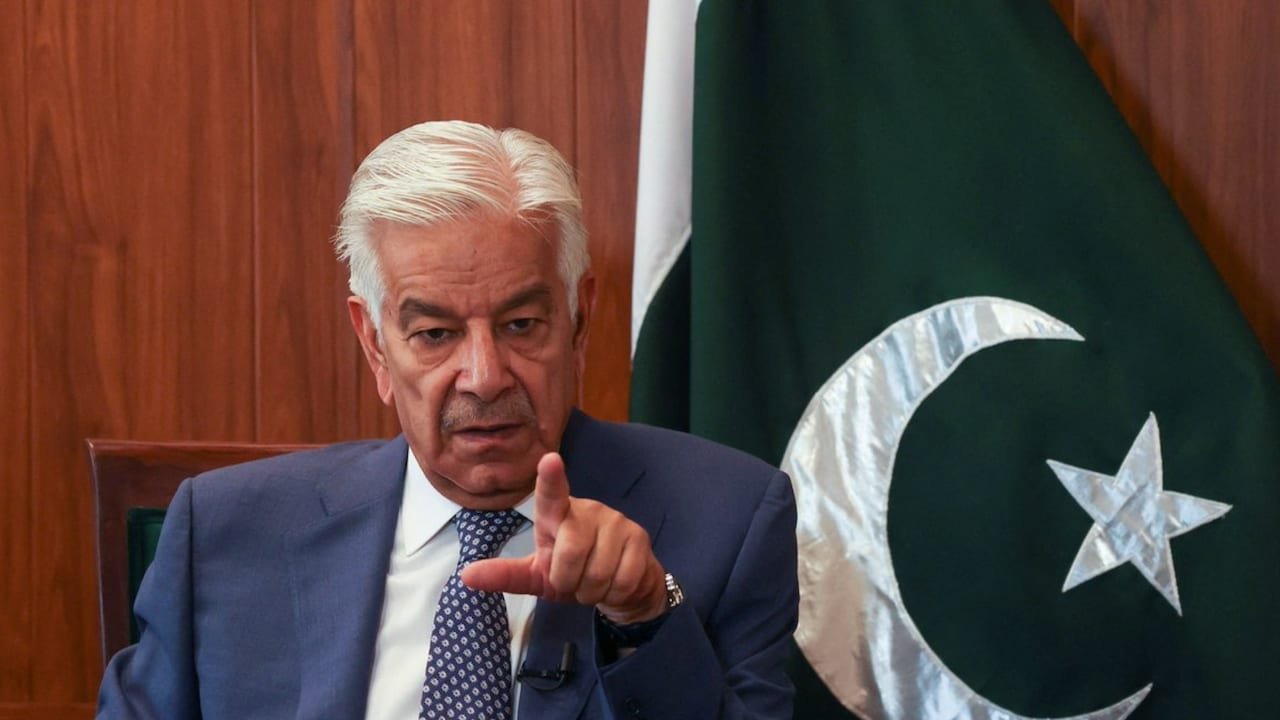
Pakistan Defence Minister Khawaja Asif has raised serious concerns over what he described as a “significant exodus” of senior bureaucrats, accusing high-ranking civil servants of systematically planning their permanent relocation to foreign nations while still actively serving in government offices.
The “Bureaucratic Exodus” and Loyalty Questions
In a blunt post on X, Asif questioned the core commitment and integrity of elite officers who have made countries like Canada, the United States, the United Kingdom, and European nations—particularly Portugal—their ultimate settlement goals.
“They prepared for this while they were employed by the Government of Pakistan, doing so under a deliberate plan. This raises questions about their commitment to their homeland and their jobs during their tenure,” Asif stated.
Highlighting Portugal as a recent top destination for departing bureaucrats, Asif noted that the officers implicated held powerful positions and had long been favored across successive political administrations. He further alleged that a facilitator responsible for arranging permanent residency (PR) deals for these wealthy officials fled after collecting substantial sums of money from them.
Expressing deep skepticism over the civil service’s motives, Asif asked whether top officials who enjoyed state privileges and accumulated wealth view Pakistan as a permanent obligation or merely a temporary stopover:
“Does it rise above all doubt and suspicion, or are they merely in transit?”
Governance Shadows and the Hybrid Regime
Asif’s public critique has refocused international attention on accountability mechanisms and civil service integrity within Pakistan’s complex governance structure. Historically, civilian bureaucracies in Islamabad have functioned under the heavy influence of the nation’s powerful military establishment.
The controversy unfolds against the backdrop of an evolving political landscape. The current coalition government, led by Prime Minister Shehbaz Sharif’s Pakistan Muslim League (N) alongside the Pakistan People’s Party, remains closely aligned with Army Chief General Asim Munir, whose pivotal role in administrative and strategic governance continues to define the nation’s trajectory.
