

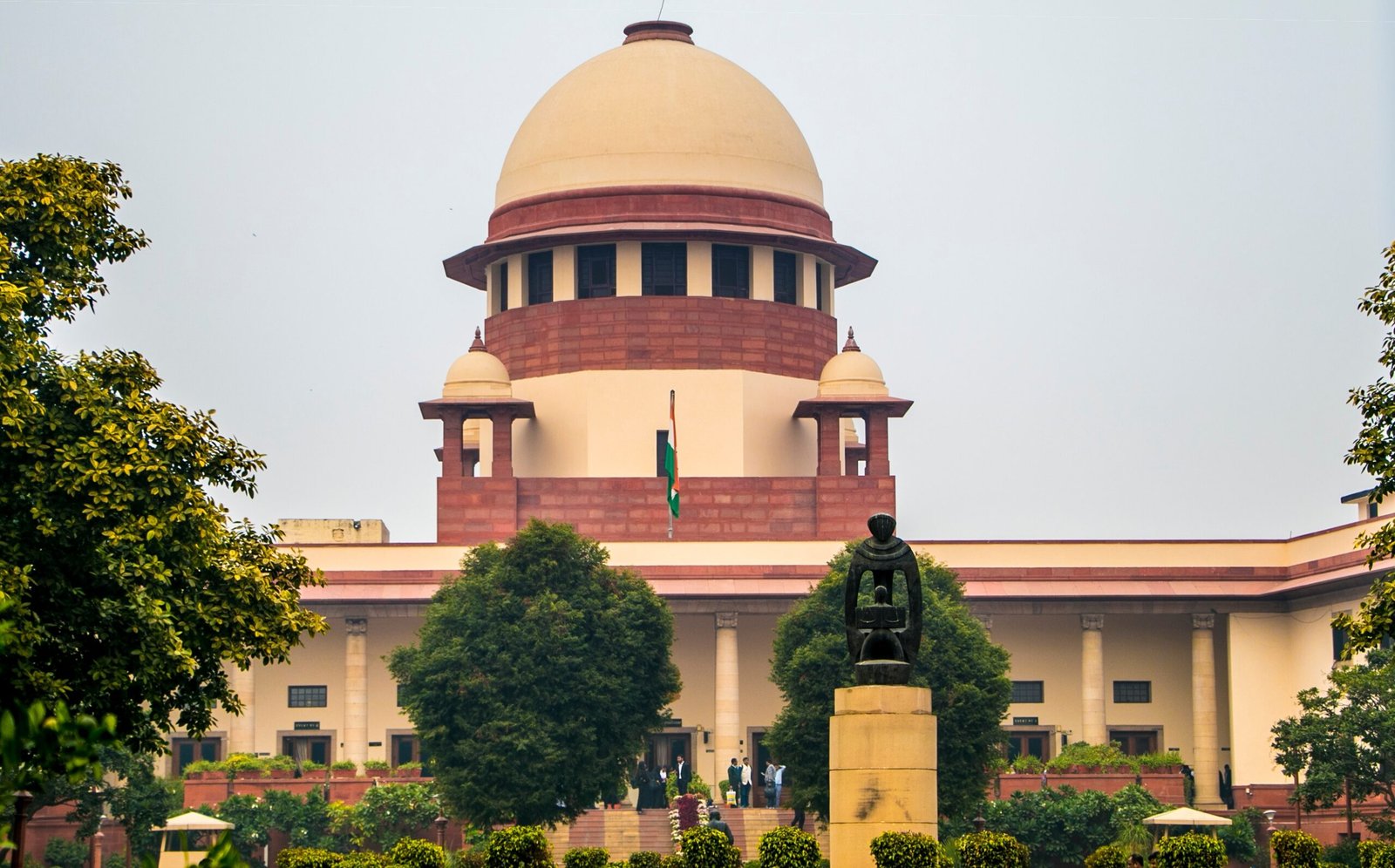
Comparing a toxic matrimonial dispute to the epic “Mahabharata,” the Supreme Court of India has exercised its extraordinary powers to dissolve a marriage that it deemed “dead for all practical purposes.” The bench, comprising Justice Vikram Nath and Justice Sandeep Mehta, acted to provide a final “quietus” to a conflict that had spiraled into over 80 legal proceedings.
The Core of the Dispute
The couple, married in 2010, separated in 2016. What followed was a decade of intense legal attrition involving their two minor sons.
-
The Wife’s Allegations: Her legal team argued that the husband, a practicing advocate, used his legal expertise to harass her family and lawyers with more than 80 litigations. She claimed he resigned from various directorships specifically to evade maintenance payments for his children.
-
The Husband’s Defense: Appearing in person, the husband claimed he was traumatized by criminal cases filed by the wife, which led to his brief incarceration. He alleged “parental alienation” of his sons and argued that his wife, a highly qualified professional, was falsely projecting herself as destitute.
The Court’s “Article 142” Intervention
Under Article 142 of the Constitution, the Supreme Court has the unique power to pass any order necessary for doing “complete justice.” The court utilized this power to bypass the usual lengthy procedures of lower courts.
Key Rulings:
-
Dissolution of Marriage: The marriage was officially dissolved by the court’s decree.
-
Financial Settlement: The husband was ordered to pay a one-time consolidated sum of ₹5 crore to the wife within one year.
-
Legal Clean Slate: All pending civil, criminal, and miscellaneous proceedings—including FIRs and complaints against relatives and lawyers—were ordered closed.
-
Property & Custody: The wife retains custody of the two sons (with visitation rights for the father) but must vacate her father-in-law’s 3-BHK flat in Mumbai upon receiving the full payment.
Critical Observations
The bench was particularly stern regarding the husband’s conduct:
-
Vindictive Litigation: The court labeled the husband’s approach as “hostile, cantankerous, and vindictive,” noting that he multiplied proceedings to complicate the matter.
-
Capacity to Pay: The court dismissed the husband’s claim of financial incapacity as a “subterfuge” to avoid his moral and legal responsibilities.
-
Education vs. Maintenance: The court clarified that a wife being “highly educated or professionally qualified” does not absolve a husband of his paternal and matrimonial obligations.
“This is a supremely fit case to exercise special powers to provide a quietus to this decade-long dispute which has crossed all limits.” — Supreme Court Bench
This judgment serves as a significant precedent for cases where the legal process itself is weaponized, emphasizing that the judiciary will intervene to end “endless” litigation in broken marriages.
