

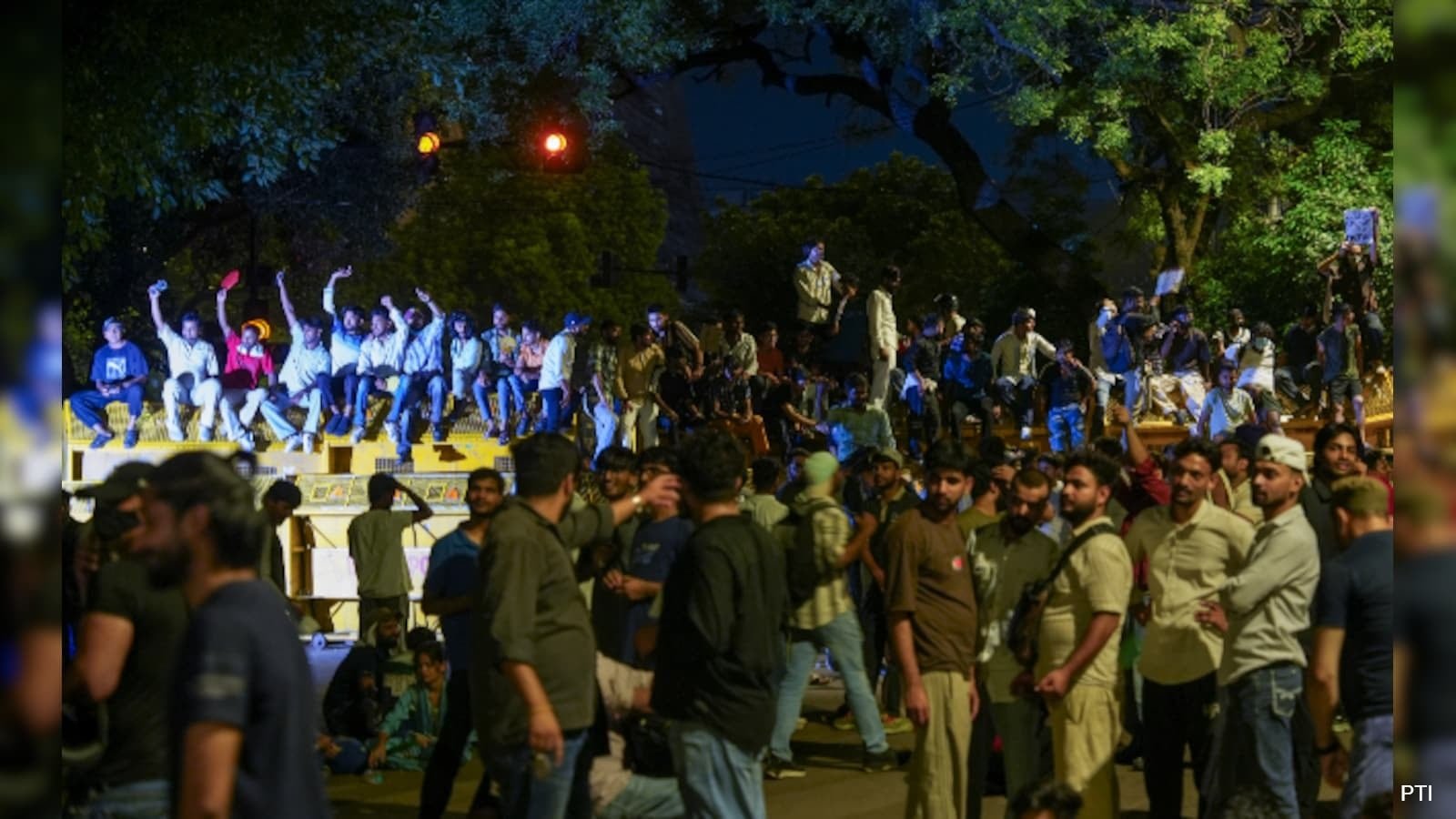
Following widespread criticism over the police crackdown on the Cockroach Janata Party (CJP) student march to Parliament, hundreds of members of the legal fraternity assembled at the Supreme Court lawn to recite the Preamble of the Indian Constitution and sing the National Anthem.
The silent gathering aimed to express solidarity with injured students and advocate for constitutional values without slogan-shouting or political posturing.
Bar Associations Condemn Police Action
The demonstration follows strong statements issued by major legal bodies, including the Supreme Court Bar Association (SCBA) and the Supreme Court Advocates-on-Record Association (SCAORA), condemning the use of force by Delhi Police and the Rapid Action Force (RAF) during the July 20 student march.
Over 650 lawyers signed a joint statement characterizing the police action as an attack on democratic rights.
Key Excerpt from SCBA Resolution:
“The Supreme Court Bar Association strongly condemns the brutal lathi charge on innocent students, which resulted in several students sustaining serious injuries. The use of excessive and disproportionate force against peaceful students and members of the Bar is deeply disturbing and wholly unacceptable in a democratic society.”
Legal & Judicial Status
While legal professional associations mobilized, parallel developments unfolded across Delhi’s courts:
-
Supreme Court: A bench led by Chief Justice of India Surya Kant declined an urgent hearing on a petition challenging the police crackdown, refusing to examine video evidence during mentioning.
-
Delhi High Court: The High Court issued formal notices to the Centre and Delhi Police regarding three Public Interest Litigations (PILs) alleging excessive force against student demonstrators.
Key Demands from the Legal Community
-
Time-Bound Inquiry: An immediate, impartial, and time-bound investigation into the operational decisions leading to the lathi-charge.
-
Accountability: Strict disciplinary and legal action against officers responsible for excessive force against peaceful demonstrators.
-
Protection of Civil Rights: Safeguarding citizens’ constitutional rights to assemble peacefully and protest without fear of disproportionate police action.
