

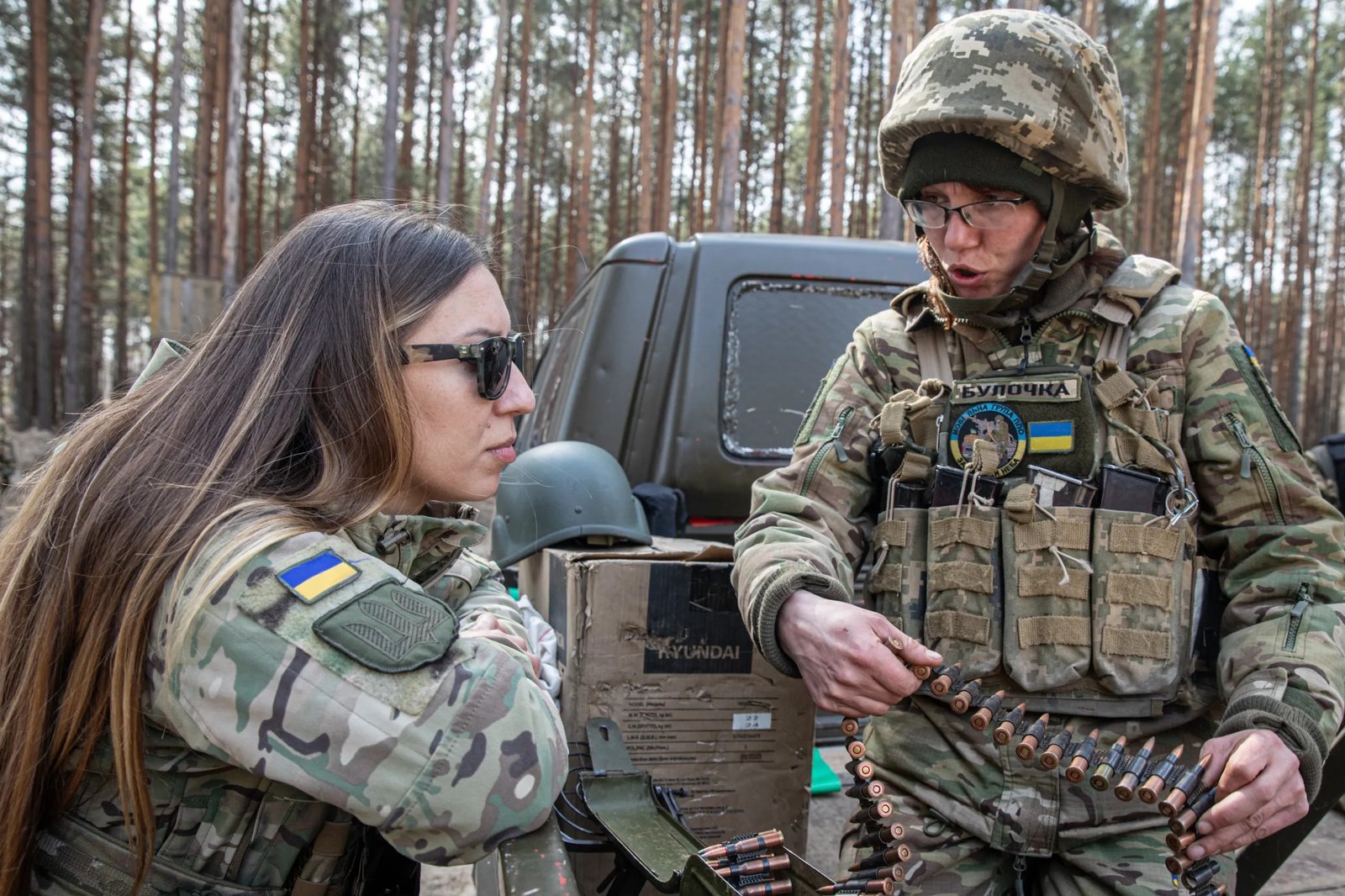
As the war in Ukraine stretches past its fourth year, the face of the Ukrainian resistance has fundamentally shifted. The loud, visible defiance of the invasion’s early days has moved into the digital shadows, transformed into a highly disciplined, covert intelligence network driven heavily by women—and agents posing as them.
Central to this underground warfare is a term frequently used by resistance commanders: ‘vidma’, a word from Ukrainian folklore loosely translated as “witch.” Historically respected in Ukraine for possessing exclusive, specialized knowledge, today’s vidmas are underground intelligence assets systematically dismantling Russian positions from within occupied territories and abroad.
The Anatomy of a Digital ‘Honeytrap’
In the modern conflict, the space between a text message and a military strike has shrunk to mere minutes. Ukrainian intelligence services have institutionalized online manipulation, training handlers to exploit the isolation of front-line Russian soldiers.
-
The Setup: A Russian soldier in occupied Ukraine spent months messaging a woman he believed was a lonely local housewife. After building romantic intimacy, she asked for a photo of his posting. He complied, sending a snapshot that inadvertently caught a compound map in the background.
-
The Reality: The woman never existed. The account was managed by Serhiy, a male Ukrainian military intelligence officer.
-
The Strike: Within minutes of receiving the photo, the coordinates were extracted, and a Ukrainian drone struck the compound. Investigators note that handlers have occasionally still been actively texting a target at the moment the drone hits.
Why Women Drive the Underground Resistance
According to Petro Andriushchenko, a resistance cell manager who escaped Mariupol, women are uniquely positioned to navigate the friction of occupation. “They can go places, do things that men cannot. Also, they are ruthless,” he told The Atlantic.
These operatives blend seamlessly into daily occupied life—visiting clinics, crossing checkpoints with groceries, and volunteering with Russian aid charities—all while cataloging troop movements, vehicle counts, and supply lines.
The Global ‘Kill Chain’ from Kitchen Tables
The network extends far beyond the front lines. Thousands of Ukrainian refugees living safely in Poland, Germany, and across Europe are actively integrated into the military’s target verification process.
Case Study: “Roksana” A former healthcare worker from Kherson, Roksana fled the occupation after witnessing rampant violence. Now living abroad, she uses her intimate, building-by-building knowledge of her hometown to cross-reference coordinates sent by ground assets before strikes are authorized.
When asked about guiding bombs to her former home, her stance was absolute: “We can rebuild warehouses. But the Russians can’t rebuild Russians.”
Psychological Warfare: Cultivating Paranoia
Organizations like the Ukrainian Women’s Guard have trained over 60,000 women in survival, self-defense, and resistance tactics since 2014. For the operatives still operating behind enemy lines, the ultimate goal is to weaponize the invisible nature of their work to induce psychological paralysis within Russian ranks.
An operative inside Mariupol, code-named Sestra, summarized the psychological objective of the vidma network:
“I want every Russian soldier who has set foot on our land to carry that paranoia with him, suffocating, relentless, every second of every day. I want him to look at the grandmother at the market, at the bus driver, at the doctor in the clinic… and to see in each of them his own potential destruction.”
