

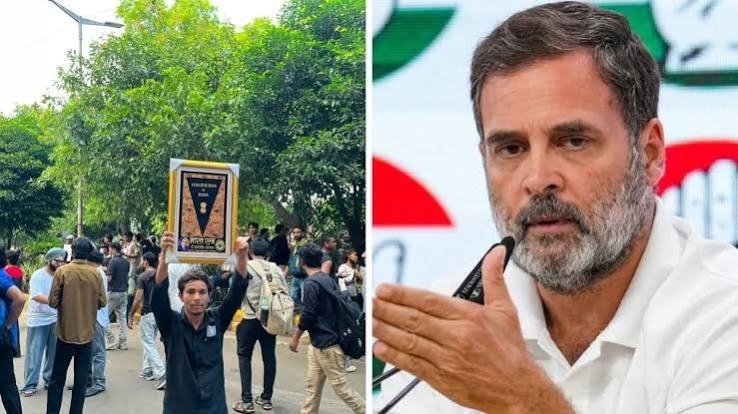
Leader of Opposition Rahul Gandhi launched a sharp critique on Friday against major academic institutions, including Delhi University (DU) and Jawaharlal Nehru University (JNU), following official advisories directing students to abstain from ongoing demonstrations at Jantar Mantar.
The advisories—issued as nationwide student mobilizations continue over competitive examination integrity and paper leak allegations—warn students that participation in regulated gatherings could result in legal liability, academic disruption, and disciplinary action.
Taking to social media platform X, Gandhi condemned the university administration’s approach, characterizing the warnings as intimidation against democratic expression.
“How dare you threaten students for exercising their democratic rights? Please note, you are the ones that will be held accountable when the time comes.”
— Rahul Gandhi, Leader of Opposition in Lok Sabha
Escalating Directives Across Major Universities
The political confrontation follows a sequence of statements issued by prominent higher education institutions over a 24-hour window:
1. Delhi University (DU)
In a statement posted Thursday night, DU cautioned both faculty and students regarding gatherings at Jantar Mantar. Citing Supreme Court guidelines on public demonstrations, the administration noted that participation in unauthorized assemblies could invite police action, jeopardize personal safety, and compromise future career opportunities. The varsity also urged restraint against online misinformation intended to escalate campus tensions.
2. Jawaharlal Nehru University (JNU)
Following DU’s directive, JNU issued a parallel advisory on Friday morning urging its “epistemic community” to refrain from visiting or participating in gatherings near Jantar Mantar. The university explicitly cautioned students regarding social media conduct, warning that violations of conduct codes could trigger both campus disciplinary proceedings and legal consequences.
3. Institutional Trend
Similar notices have emerged beyond the national capital. IIT Roorkee recently reminded campus members to avoid involvement in political movements or unapproved public statements—a directive the institute subsequently clarified as a routine annual communication. Meanwhile, student representatives at IIT Madras reported administrative requests to remove solidarity posts from social platforms.
Stakeholder Responses: Opposition, Alumni, and Academia
The advisories have drawn widespread backlash from opposition lawmakers, academic bodies, and public figures:
| Stakeholder / Public Figure | Platform / Organization | Primary Reaction & Stance |
| Rahul Gandhi | Lok Sabha / Congress | Accused administrations of threatening students; asserted future accountability. |
| Deepender Singh Hooda | Congress MP (DU Alumnus) | Challenged DU’s characterization of Jantar Mantar assemblies as “unlawful,” calling the statement misleading. |
| Pooja Bhatt | Actor / Filmmaker | Argued that suppressing student voices jeopardizes safety more than open expression. |
| Democratic Teachers’ Front (DTF) | DU Faculty Union | Criticized the university’s response as insensitive, alleging it masks institutional apathy as empathy. |
Core Context Driving the Demonstrations
The student assemblies in central Delhi stem from prolonged agitation surrounding examination governance, paper leaks in national competitive tests like NEET-UG, and demands for systemic reform. Demonstrations intensified following a 26-day hunger strike by activist Sonam Wangchuk, alongside marches organized by student groups demanding executive accountability and the resignation of Union Education Minister Dharmendra Pradhan.
While university leadership maintains that the directives are aimed purely at ensuring student safety and preserving academic continuity, civil rights advocates and opposition politicians view the measures as an attempt to stifle constitutionally guaranteed rights to peaceful assembly.
