

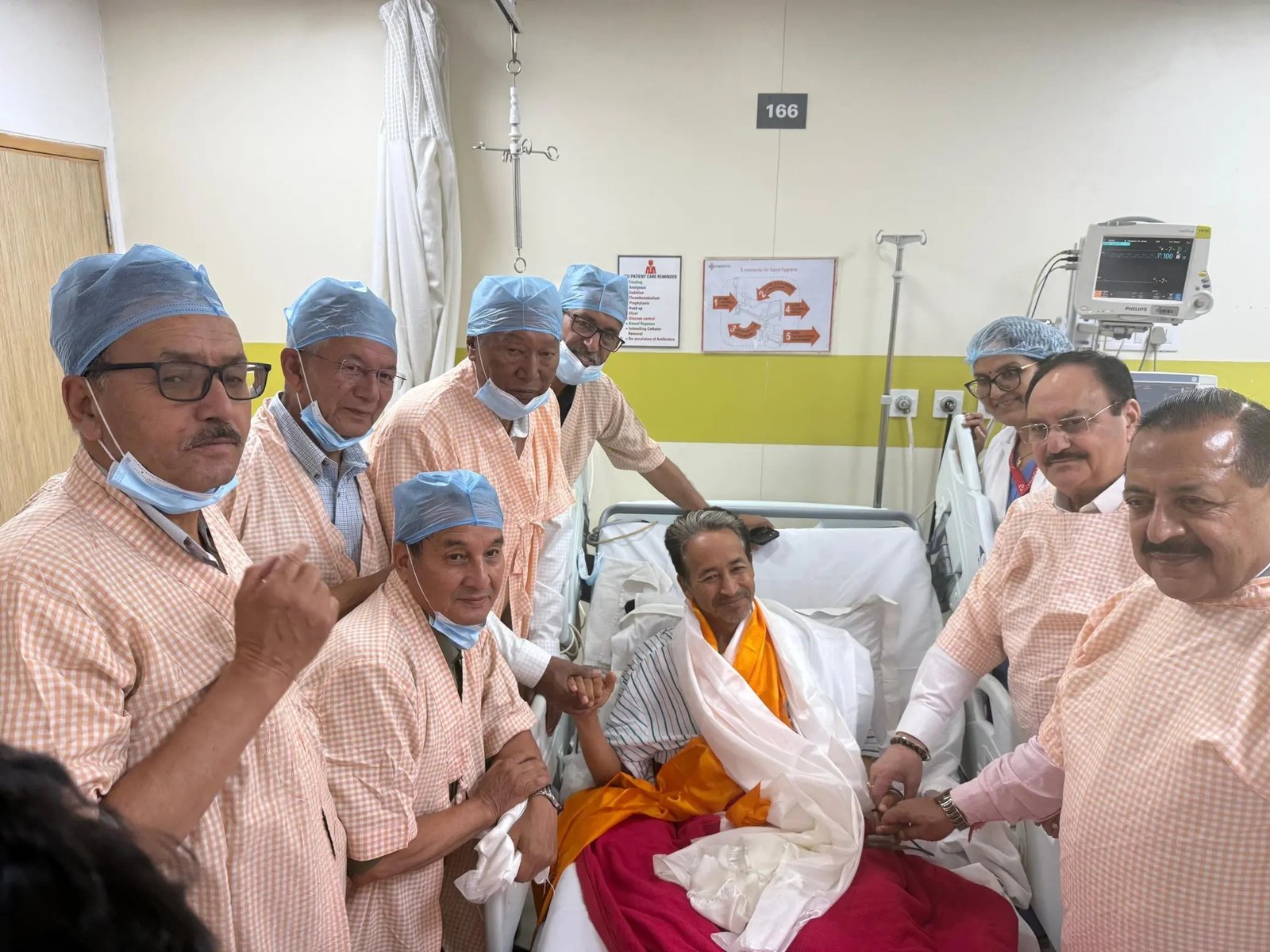
Education reformer and climate activist Sonam Wangchuk formally concluded his 26-day indefinite hunger strike on July 23. The fast was called off at Gurugram’s Medanta Hospital after crucial negotiations with the Union Government over the handling of student-led protests against examination irregularities and paper leaks.
Wangchuk, who initiated his fast on June 28 at Delhi’s Jantar Mantar, broke it in the presence of Union Ministers J.P. Nadda and Dr. Jitendra Singh, representatives from the Apex Body of Leh-Ladakh, and his wife, Gitanjali Angmo. Visuals from the hospital showed Union Minister J.P. Nadda assisting Wangchuk with a cup of liquid to mark the end of the fast.
“I am grateful and happy to break my fast. Thank you,” Wangchuk stated, holding the hands of the Union Ministers. Turning to his wife, he added, “Gitanjali has always been by my side. I don’t want to thank you, but express my feelings.”
Key Assurances and Terms of Resolution
The resolution follows intense engagement between government officials, cross-party lawmakers, and the activist. Over 65 Members of Parliament from various political affiliations had reached out or visited Wangchuk to request an end to the fast, citing concerns over his deteriorating health.
The key conditions negotiated between the Centre and Wangchuk include:
-
Protection from Legal Action: The government assured that peaceful student demonstrators participating in the Jantar Mantar and Chalo Sansad protests will not face retaliatory or punitive legal action.
-
Parliamentary Accountability: Issues regarding exam security, paper leak prevention, and institutional accountability are slated for structured discussion during the current session of Parliament.
-
Compensation Considerations: Discussions were initiated regarding support for families of candidates impacted by exam cancellations and related hardships.
Context of the Agitation
Wangchuk originally joined the demonstration in solidarity with student groups protesting systemic failures and alleged leaks in competitive entrance examinations, notably NEET-UG. The movement demanded legislative overhauls, fast-track judicial process for leak-related crimes, and executive accountability.
| Parameter | Agitation Details |
| Primary Location | Jantar Mantar, New Delhi |
| Duration of Fast | 26 Days (June 28 – July 23) |
| Key Demand Resolved | No punitive FIRs or legal action against peaceful student protesters |
| Government Interlocutors | J.P. Nadda (Union Minister), Dr. Jitendra Singh (MoS PMO) |
Legislative and Administrative Response
The culmination of the hunger strike comes amidst broader policy announcements by the central administration. The government has introduced a draft bill proposing fast-track courts and severe penalties for individuals or syndicates involved in leaking examination materials. Concurrently, administrative shifts within the Ministry of Education were carried out to restructure leadership following the protests.
Reflecting on the conclusion of his fast, Wangchuk emphasized that while the physical hunger strike has ended, the long-term push for transparency in national examinations will continue through constitutional channels. He urged all student groups and supporters across the country to maintain strict peace and avoid any form of violent escalation.
