

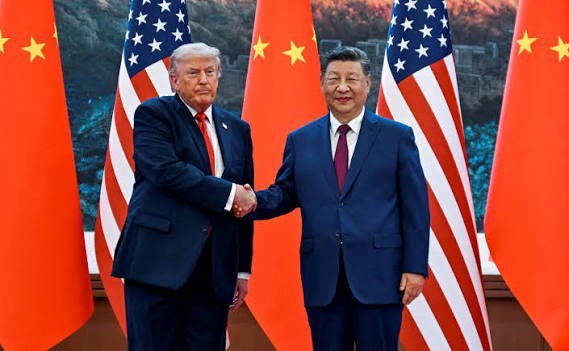
As Chinese President Xi Jinping prepares for his upcoming state visit to Washington, the geopolitical landscape looks markedly different from when he and U.S. President Donald Trump last met. Driven by a booming export economy, China enters the September summit from a position of relative strength, while the Trump administration faces domestic headwinds and complex foreign entanglements.
Key Dynamics Shaping the Summit:
-
The Trade Engine & Truce Extension: China’s global trade surplus is on track to surpass $1 trillion for the second consecutive year. With the bilateral trade truce struck last year nearing its expiration, the primary objective of the September 24 meeting is stabilizing economic relations and exploring a framework for reciprocal tariff reductions.
-
Preparatory Talks in New York: U.S. Treasury Secretary Scott Bessent and Chinese Vice Premier He Lifeng recently wrapped up preparatory discussions in Manhattan, laying groundwork for potential agreements surrounding AI safety guardrails, non-sensitive product trade, and critical minerals.
-
The Taiwan Factor: Asian allies are closely watching how Washington handles its stance on Taiwan. With Trump previously labeling a multi-billion-dollar arms package for Taiwan as a potential “negotiating chip”, Beijing continues to frame the island’s status as a core red-line issue tied to broader cooperation.
-
Pressure Over the Middle East: Washington remains eager for Beijing to leverage its economic ties—particularly as Iran’s largest oil customer—to help de-escalate the conflict in the Middle East, a crisis that has weighed heavily on the U.S. president’s domestic approval ratings. However, analysts note that Xi has shown little appetite to yield easily on these fronts.
Ultimately, rather than a sweeping grand bargain, analysts expect the summit to focus heavily on maintaining strategic stability, allowing both leaders to manage immediate domestic and international pressures.
