

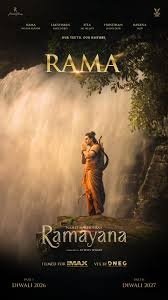
At the recently concluded CinemaCon in Las Vegas, actor Yash and producer Namit Malhotra took the stage to present Ramayana Part One to a global audience. While the film’s massive scale has generated significant buzz, the duo addressed recent critiques regarding the production’s “Westernized” visual style, emphasizing that the film is designed to bridge the gap between Indian heritage and international appeal.
Humanizing the Antagonist
Yash, who steps into the formidable role of Ravana, shared his approach to portraying the asura king. Rather than a one-dimensional villain, Yash aim to bring a grounded, psychological depth to the character.
“I have tried to internalize the whole essence of Ravana and tried to make him as human as possible at times,” Yash told Reuters. “It’s important for people to relate to him.”
Responding to social media criticism that the character designs—specifically the asuras—look heavily inspired by Western fantasy, Yash noted that the aesthetic choices are intentional. To fulfill the film’s “global ambitions,” he argued, the visual language must be “familiar to a Western audience.”
A $500 Million Cinematic Gamble
Ramayana is shaping up to be a historic production, with a combined budget for its two parts estimated at $500 million. This makes it not only the most expensive Indian film ever made but also one of the costliest productions globally.
Producer Namit Malhotra described the project as a “best of both worlds” collaboration, citing cinematic giants as inspiration:
-
Influences: The film draws stylistic cues from The Lord of the Rings and Gladiator.
-
Vision: Malhotra promises an experience that differs from traditional Indian cinema and standard Hollywood fare alike.
-
The Goal: To create a “human drama” wrapped in epic fantasy that resonates worldwide.
The Epic Cast
While the visual style leans toward a global palette, the core of the story remains rooted in Valmiki’s sacred text. The primary trio includes:
-
Ranbir Kapoor as Lord Rama
-
Sai Pallavi as Sita
-
Yash as Ravana
Following the release of the “Rama glimpse” earlier this month, anticipation is building for how this high-stakes blend of Eastern storytelling and Western technical prowess will be received when it hits the silver screen.
