

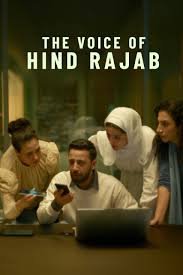
NEW DELHI — In the world of high-stakes cinema, the distance between a 23-minute standing ovation in Venice and a complete blackout in India is exactly one “oral rejection.”
The theatrical release of the Tunisian-produced, Oscar-nominated film The Voice of Hind Rajab has been indefinitely stalled by India’s Central Board of Film Certification (CBFC). While the board has not issued a formal written ban, its distributor, Manoj Nandwana of Jai Viratra Entertainment, revealed a chilling justification provided by board members: the film is simply “too sensitive” for India’s current diplomatic relationship with Israel.
The Story the World Heard
Directed by Kaouther Ben Hania, the docudrama captures one of the most harrowing vignettes of the 2024 Gaza war. It follows the final hours of five-year-old Hind Rajab, who was trapped in a car in Gaza City alongside the bodies of her aunt, uncle, and three cousins after their vehicle came under fire from Israeli tanks.
The film’s power lies in its visceral authenticity; it utilizes the actual, viral audio recordings of Hind’s desperate calls to the Palestine Red Crescent Society. “Please come to me, please come. I’m scared,” her voice crackles over the phone as gunfire erupts in the background. The narrative ends in tragedy: both Hind and the two paramedics sent to rescue her were found dead days later.
The “Informal” Ban
Nandwana, who purchased the rights for roughly ₹1 crore at Venice, intended to release the film on March 6, 2026, to capitalize on the buzz surrounding the 98th Academy Awards. However, after a screening for the CBFC in late February—notably coinciding with a high-profile state visit by Prime Minister Narendra Modi to Israel—the certificate was withheld.
“I was told that if it gets released, it would break up the India-Israel relationship,” Nandwana said. Despite his counter-argument that the film has been released in the U.S., UK, and France—all nations with strong Israeli ties—the board referred the film to a Revising Committee. Nandwana has since expressed “no faith” in this secondary review, describing it as a “delay tactic” designed to let the film lose its relevance.
A Growing Pattern of Censorship
The controversy has reignited a fierce debate over the “progressive tightening” of Indian film certification. The CBFC has recently faced criticism for its inconsistent application of rules:
-
Political Sensitivity: Films like Santosh and Punjab 95 remain in limbo for their portrayals of religious and caste politics.
-
The “Oral” Rejection: By not providing a rejection in writing, the board effectively prevents the distributor from seeking immediate legal recourse in the High Court.
Congress MP Shashi Tharoor characterized the move as “disgraceful,” stating, “Screening a film is a reflection of our society’s freedom of expression and has nothing to do with government-to-government relations.”
The Aftermath
While The Voice of Hind Rajab won the Grand Jury Prize in Venice and was a frontrunner at the 2026 Oscars, its Indian audience remains restricted to those who attended the Kolkata International Film Festival, where organizers reportedly bypassed central clearances.
For the rest of the country, the voice of Hind Rajab remains silenced—not by the noise of war, but by the quiet considerations of international diplomacy. The distributor noted that his investment was not insured against such a “political veto,” leaving the future of the film’s South Asian distribution in a state of terminal uncertainty.
