

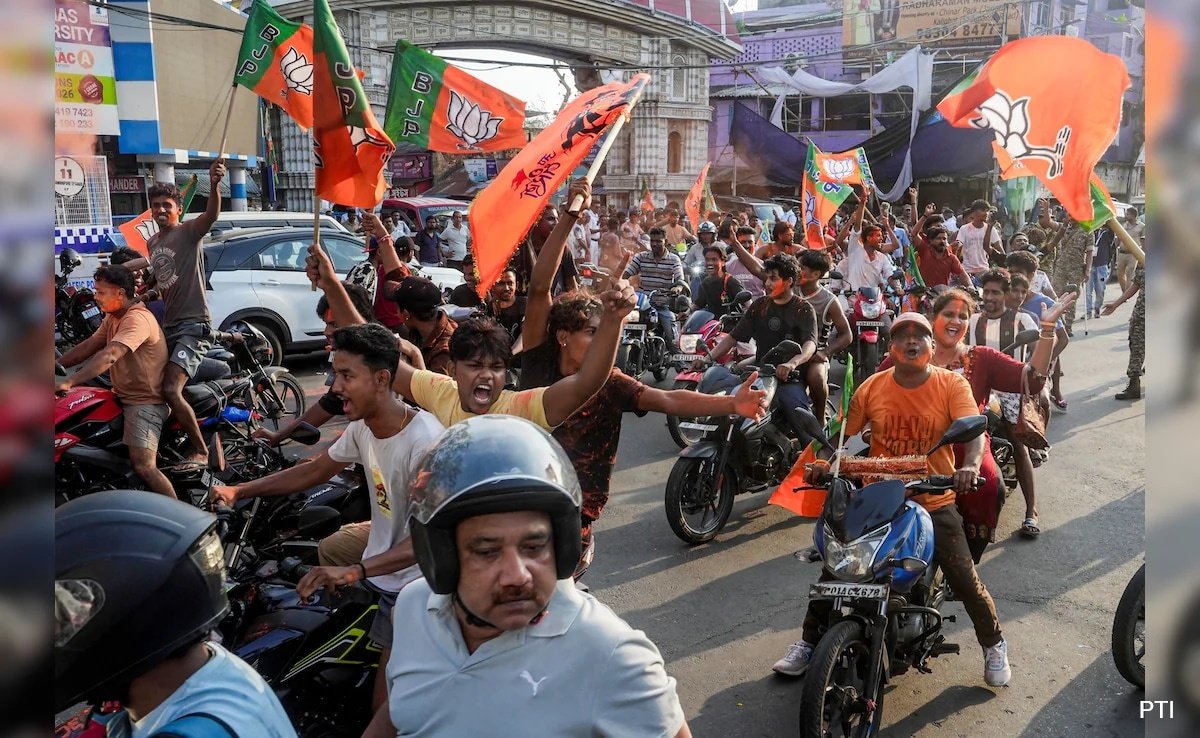
The BJP and its NDA allies have delivered a definitive blow to the opposition in West Bengal and Assam, sweeping through constituencies reserved for Scheduled Castes (SC) and Scheduled Tribes (ST). This performance signals a massive social shift, as the party successfully expanded its footprint into regions traditionally dominated by regional or secular forces.
West Bengal: A Dramatic Political Reversal
In a state where reserved seats were once a fragmented battleground, the BJP has established clear dominance over the Trinamool Congress (TMC).
-
Total Dominance in Tribal Belts: The BJP won all 16 ST reserved seats in the state.
-
SC Stronghold: Out of 68 SC constituencies, the BJP secured 51, leaving the TMC with just 17.
-
Social Consolidation: Analysts attribute this success to a deep consolidation of Matua voters, Dalit communities, and tribal groups across North Bengal and the Jangalmahal region.
-
The Tally: Overall, the BJP won 67 out of 84 reserved seats in Bengal.
Assam: Near-Total NDA Control
Benefiting from recent delimitation, which increased the number of reserved seats, the NDA almost entirely shut out the Congress.
| Category | Total Seats | NDA Performance | Key Takeaway |
| Scheduled Tribes (ST) | 19 | 19/19 | BJP won 13; allies BPF and AGP took the rest. |
| Scheduled Castes (SC) | 9 | 8/9 | BJP won 5; AGP won 3. Congress held only 1. |
The alliance with local parties like the Bodoland People’s Front (BPF) and Asom Gana Parishad (AGP) was instrumental in securing indigenous and tribal votes in Upper Assam and Bodoland.
Beyond the East: Southern Gains
The NDA’s momentum extended into Tamil Nadu and Puducherry, though on a smaller scale:
-
Tamil Nadu: Ally AIADMK secured nine SC seats and one ST seat.
-
Puducherry: Ally AINRC won two SC seats in the Union Territory.
The Strategic Shift
For the BJP, these results are more than just numbers; they represent a fundamental change in their electoral identity. By capturing 80% of Bengal’s reserved seats, the party has transformed what were once “vulnerable pockets” into the central pillars of its regional strategy, effectively diversifying its social coalition beyond its traditional urban and middle-class base.
