

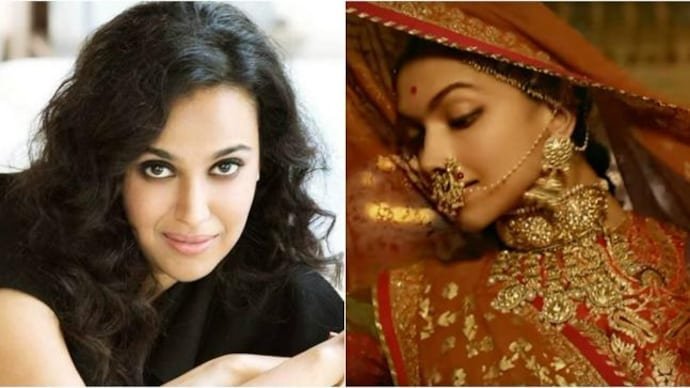
Actor Swara Bhasker is facing severe political and social backlash from the Bharatiya Janata Party (BJP) and the Rajput organization Karni Sena following her recent critique of the jauhar (mass self-immolation) sequence depicted in the 2018 film Padmaavat. The controversy stems from Bhasker’s comments questioning the modern-day messaging of glorifying self-immolation to “save honour” in a society battling a high rate of sexual violence.
The Core Controversy During a recent event, Bhasker argued that the cinematic glorification of jauhar inadvertently sends a damaging message to survivors of sexual assault. She noted that such depictions imply that those who do not choose death over assault do not deserve to live. After facing intense online criticism, the actor issued a video clarification stating she never used the word “coward” to describe Rani Padmavati, the central character of the film.
Political and Social Pushback The actor’s remarks have triggered widespread condemnation from political and cultural outfits:
-
BJP Leadership: Party spokesperson Gaurav Bhatia dismissed Bhasker’s views as a “distorted voice” fed by external forces, insisting that “every woman must respect other women” rather than critique historical depictions of them.
-
Legal Action: Krishna Kumar Singh, a state BJP leader in Bihar, escalated the issue by filing a formal police complaint, accusing the actor of making derogatory statements against Hindu society and Rajput women.
-
Karni Sena’s Warning: Kirthi Rathore, chief of the Karni Sena’s women’s wing, issued a strong rebuke, demanding Bhasker mind her language. Rathore accused the actor of selectively targeting Hindu traditions while remaining silent on regressive practices in Islam, warning that the organization would not forgive insults directed at “Sanatan female warriors.”
The climactic scene of Padmaavat—based on Malik Muhammad Jayasi’s 16th-century epic poem—features Rani Padmavati (played by Deepika Padukone) leading the women of Chittor into a fire to evade capture by the invading army of Alauddin Khilji. The film originally faced massive, violent protests from the Karni Sena prior to its release over similar sensitivities regarding the portrayal of Rajput honor.
