

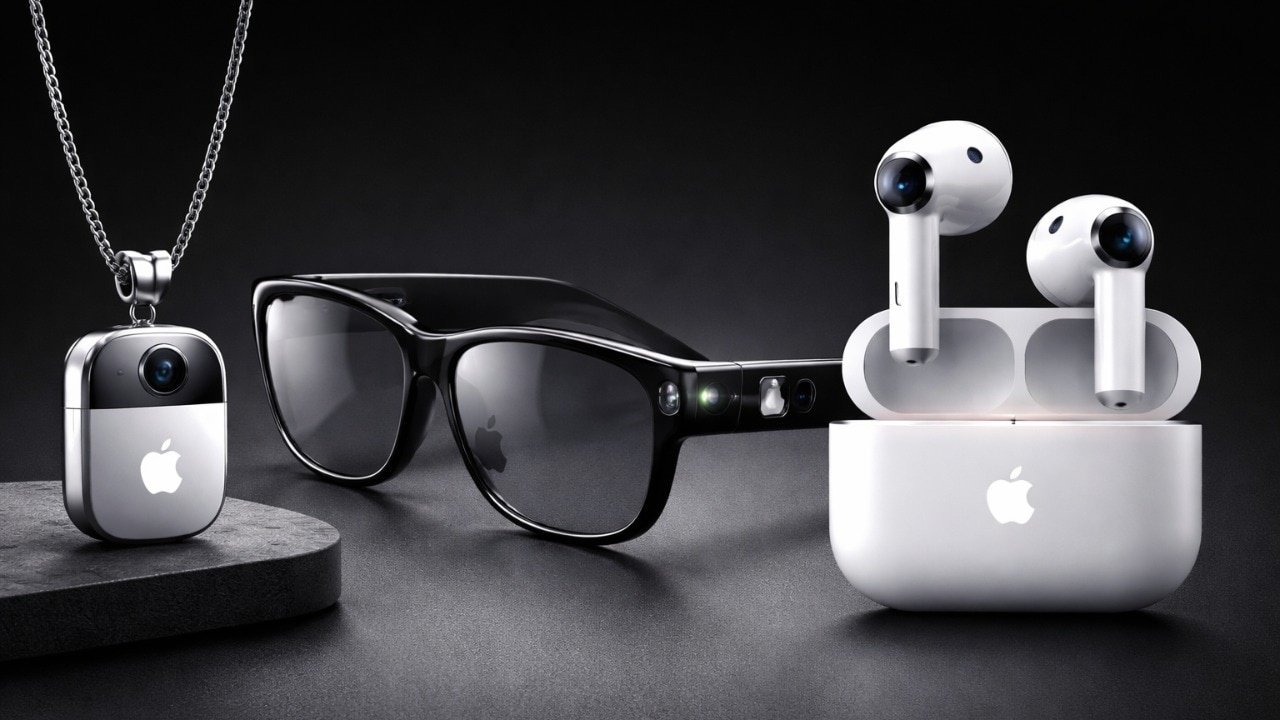
Apple’s long-rumored “AirPods Ultra” (codenamed B790 / B798) reflect a strategic shift in wearable technology. Rather than focusing solely on sound driver enhancements or spatial audio tuning, Apple is leveraging AirPods as a continuous environmental sensor array for its AI ecosystem.
Why Is Apple Putting Cameras on Earbuds?
1. Contextual “Visual Intelligence” for Siri
The low-resolution or infrared sensors in these earbuds are not designed for photography or traditional video recording. Instead, they serve as the “eyes” for Apple Intelligence.
-
Ambient Awareness: By capturing spatial context on either side of the wearer’s head, Siri can instantly identify landmarks, parse street signs, read labels, or recognize objects you are pointing at.
-
Multimodal Prompts: Instead of taking out your iPhone to snap a photo, you can ask questions like “Siri, what am I looking at?” or “How many calories are in this meal?” hands-free.
2. Bridge to Smart Glasses & AR
Full-featured smart glasses present thermal, weight, and battery life constraints. Ear-worn camera sensors offer a lightweight interim solution, gathering first-person spatial data to feed Apple’s multimodal AI models without requiring bulky display hardware in front of your eyes.
3. Cross-Device Context Aware Routing
By combining camera input from AirPods with data from an Apple Watch and an iPhone, Apple’s ecosystem can dynamically adjust notifications and interaction modes based on real-time situations (e.g., recognizing when you are navigating a crowded airport or rushing through a transit station).
Key Technical & Rumor Highlights
| Aspect | Expected Specification / Detail |
| Model Codenames | B790 (accelerated version referenced in iOS 27 code) / B798 (advanced build) |
| Primary Function | Siri Visual Intelligence & gesture/environmental tracking |
| Sensor Type | Low-resolution / Infrared spatial depth sensors |
| Design Adjustment | Slightly elongated stems to accommodate camera optics & LED indicators |
| Software Support | System prompt metadata found in developer builds of iOS 27 |
Privacy & Implementation Challenges
-
Privacy Indicators: To prevent covert recording and comply with regulatory scrutiny, the hardware is expected to incorporate a physical LED transmission light that activates whenever environmental visual data is processed.
-
Infrared vs. RGB: Utilizing infrared sensors rather than standard color cameras allows depth and gesture detection while preventing recognizable photographic capture, helping mitigate public privacy concerns.
-
Battery Drain: Operating continuous optical sensors within ultra-compact earbud housing requires low-power processor architecture to prevent severe impacts on playback time.
