

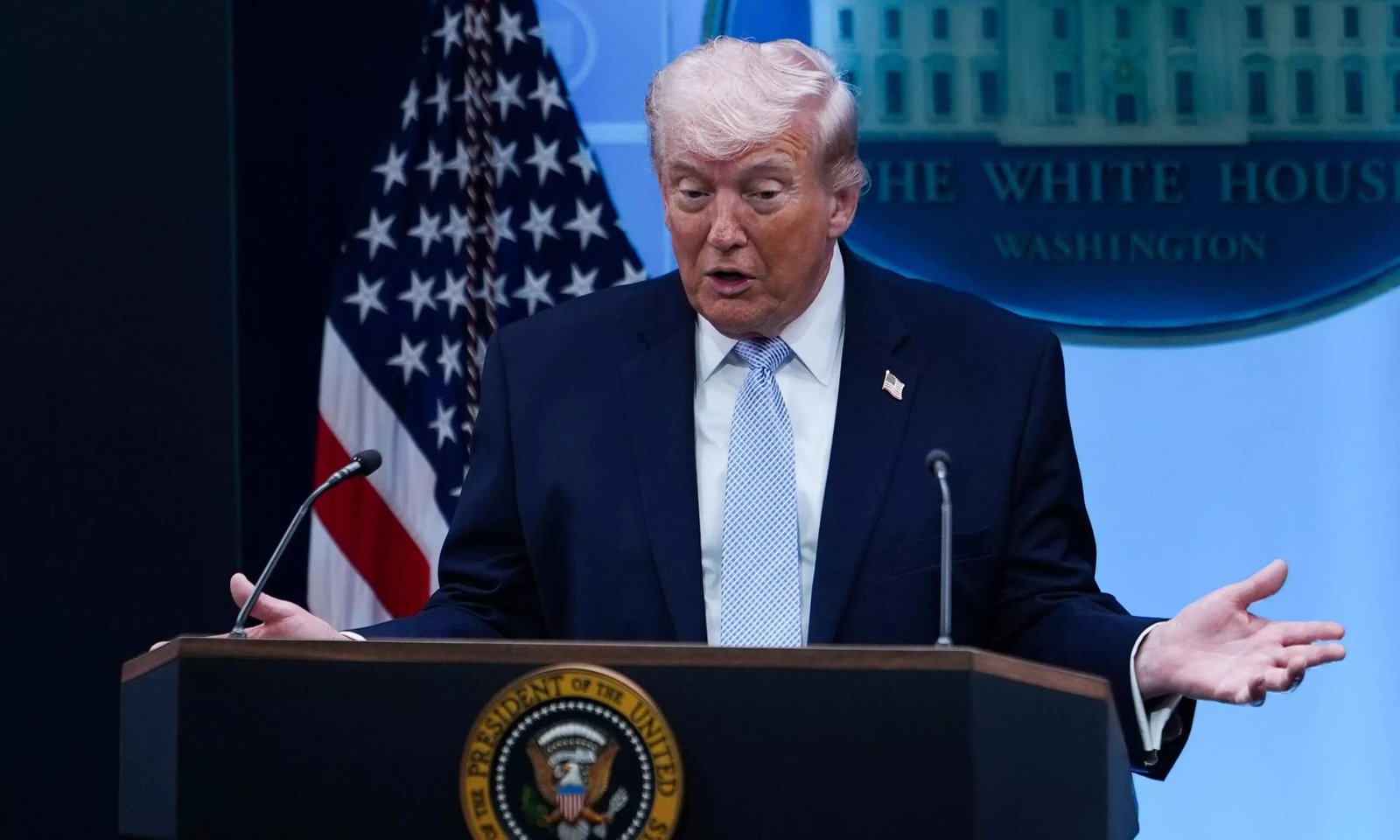
The dramatic reversal by US President Donald Trump—from threatening the “death of a civilization” to embracing a Pakistani-mediated ceasefire just hours later—has exposed the high-stakes nature of his “Madman Theory” diplomacy. While the 14-day truce has momentarily halted a 40-day war that claimed over 5,000 lives, the underlying architecture of the deal is under immense strain.
1. The “TACO” Pattern: Leverage vs. Hyperbole
Critics have labeled the president’s latest U-turn as “TACO” (Trump Always Chickens Out), suggesting a recurring strategy of maximalist threats followed by rapid backpedaling when faced with economic or political fallout.
-
The Catalyst: A sharp spike in US gasoline prices and slumping approval ratings ahead of the midterms appeared to drive the sudden shift.
-
The Threat: On Tuesday morning, Trump warned that unless a deal was reached, “a whole civilization will die tonight.“
-
The Reality: Experts note that following through would have likely constituted war crimes, and the domestic cost of even a limited execution was deemed too high.
2. A War of Definitions: Lebanon and the Strait
The most dangerous fault line in the ceasefire is the disagreement over its scope.
-
The Strait of Hormuz: Iran shuttered the vital waterway again on Wednesday, citing Israeli strikes in Lebanon. Despite White House demands for an “immediate and safe” reopening, Tehran maintains that the blockade is a direct response to continued hostilities against its allies.
-
The Lebanon Exception: Israel, supported by the Trump administration, insists that the ceasefire only applies to Iran, not Hezbollah. Israeli strikes on Wednesday killed between 112 and 250 people (depending on the source), including what Israel calls “terrorist infrastructure.“
3. The New Mediator: Why Pakistan?
Israel has expressed deep skepticism over the choice of Islamabad as a facilitator. Ambassador Reuven Azar labeled Pakistan a “problematic” and “not credible” player, comparing the situation to previous US reliance on Qatar and Turkey.
-
The Rationale: Washington appears to have chosen Pakistan due to its unique position—a nuclear-armed nation with a history of military and diplomatic ties to both the US and Iran.
-
The Next Step: US Vice President JD Vance is scheduled to arrive in Islamabad on April 11 for direct negotiations.
The Current State of Play
| Factor | Status | Impact |
| Global Markets | S&P 500 up 2.5% | Markets responded positively to the idea of a truce. |
| Energy Security | Hormuz remains closed | Oil prices remain volatile despite the diplomatic announcement. |
| Nuclear Issue | Uranium remains “entombed” | Iran’s nuclear stockpile is buried but intact; dismantling is a core Israeli demand. |
| Leadership | Mojtaba Khamenei active | The new Supreme Leader has ordered a ceasefire but warns “this is not the end.” |
Conclusion
Trump’s “escalate to de-escalate” tactic has secured a temporary off-ramp, but at the cost of confusing both allies and enemies. As the US prepares for the Islamabad summit, the conflict remains a “separate skirmish” in Lebanon that could, at any moment, collapse the broader regional peace.
