

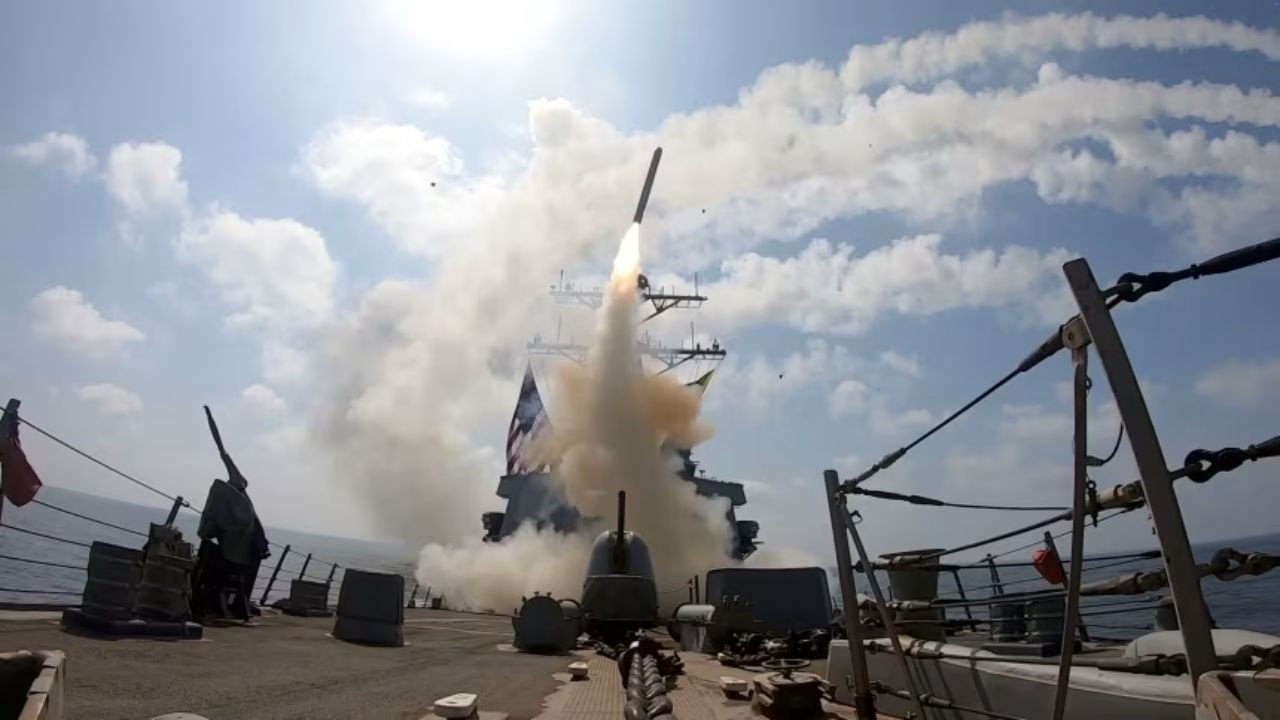
A recent Pentagon estimate reveals that President Trump’s “war of choice” in Iran has placed an unprecedented strain on the United States’ military capacity. By burning through thousands of high-end missiles and interceptors in just over a month of conflict, the U.S. has significantly drained stockpiles intended for potential confrontations with major adversaries like Russia or China.
The Massive Financial Toll
While the White House has yet to release an official figure, independent analysts estimate the 38-day conflict cost between $28 billion and $35 billion—averaging nearly $1 billion per day.
-
Initial Blitz: In the first 48 hours of the campaign alone, the U.S. military reportedly expended $5.6 billion in munitions.
-
Target Discrepancy: While the military officially struck 13,000 targets, the actual number of munitions used is far higher, as warplanes and artillery typically strike large targets multiple times to ensure destruction.
Critical Munitions: A Deep Dive into the Depletion
The following table illustrates the sheer volume of high-cost weaponry used during the 38-day war compared to current production and remaining stocks:
| Weapon System | Number Used | Unit Cost | Context / Remaining Stock |
| Patriot Interceptors | 1,200+ | $4 million | Double the entire U.S. production for 2025. |
| JASSM-ER | 1,100 | $1.1 million | Only ~400 remaining in the total U.S. stockpile. |
| Tomahawk Missiles | 1,000+ | $3.6 million | 10x the annual U.S. purchase rate; ~3,000 left. |
| ATACMS / PrSM | 1,000+ | Varies | Inventories described as “worrisomely low.” |
Strategic Vulnerabilities and the “Governance Gap”
The rapid expenditure of these assets has exposed two critical vulnerabilities in the U.S. defense infrastructure:
-
Global Readiness: Munitions were rushed to the Middle East from commands in Asia and Europe, leaving those regions less combat-ready for potential regional confrontations.
-
The Replenishment Crisis: Senator Jack Reed (D-RI) warned that at current production rates, reconstituting these stockpiles could take years. The Pentagon is currently awaiting Congressional approval for additional funding to pay manufacturers for replenishment.
-
Cost Asymmetry: The war highlighted an overreliance on expensive interceptors to counter relatively cheaper threats, raising questions about whether the U.S. defense industry can pivot to producing more cost-effective systems, such as attack drones.
The White House Stance
The White House has officially dismissed these reports. Press Secretary Karoline Leavitt stated that the premise of a depleted military is false, asserting that the U.S. remains “fully loaded” and capable of achieving any military operation directed by the Commander-in-Chief.
Why This Matters
As a ceasefire takes hold, the focus shifts to the domestic industrial base. The conflict has served as a “stress test” for the U.S. military-industrial complex, revealing that while the U.S. possesses superior technology, its capacity for sustained, high-intensity traditional warfare may be limited by current manufacturing throughput.
