

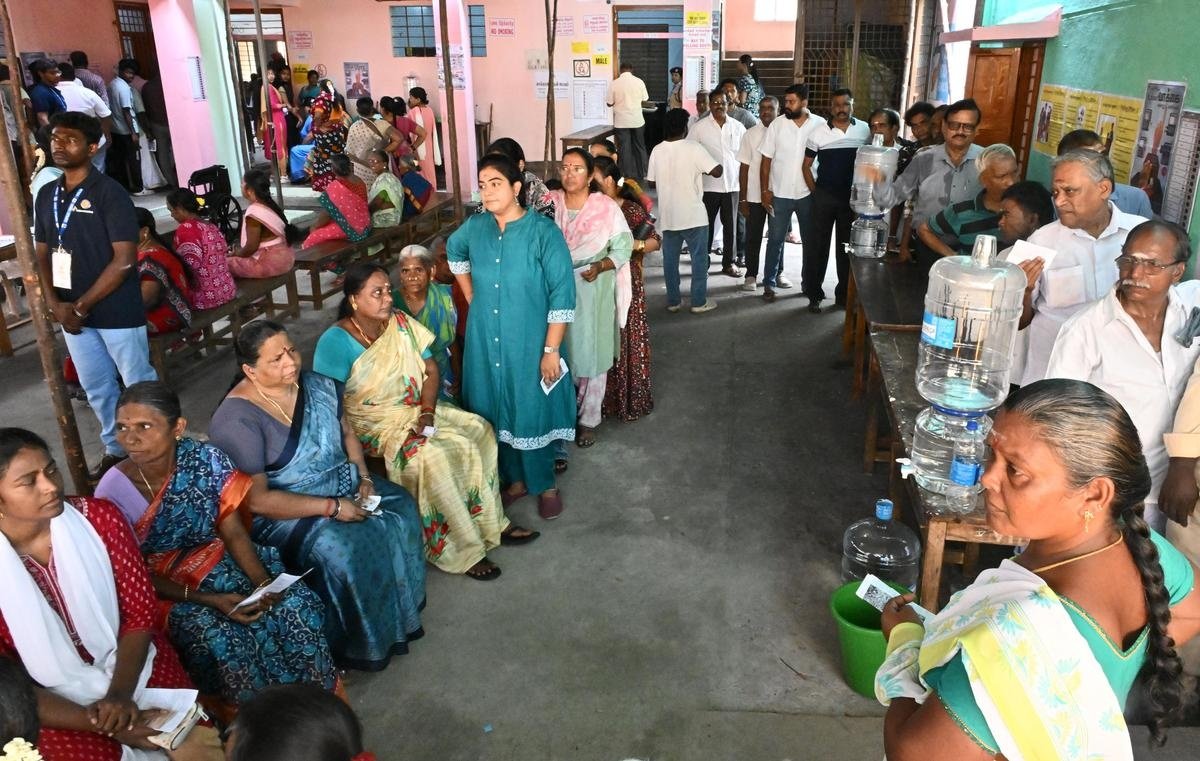
While the 78.27% voter turnout in the April 9, 2026, Kerala assembly elections is being hailed as the highest since 1987, a deeper dive into the data reveals a more complex reality. The “historic” surge may be more of a mathematical byproduct than a massive wave of new voters.
The “Shrinking Electorate” Effect
The headline percentage is significantly influenced by a massive cleanup of the electoral rolls. Before the polls, the Election Commission removed 15.72 lakh ineligible names (deceased, duplicates, and migrants).
-
2021 Electorate: 2.74 crore
-
2026 Electorate: 2.71 crore
The Math: When the total number of eligible voters (the denominator) decreases, the turnout percentage naturally rises, even if the actual number of people showing up stays the same or drops.
Regional Disparity: North vs. South
The data shows that Kerala did not have a uniform statewide “swing.” Instead, it was a tale of two halves:
-
Northern Kerala (The Surge): In districts like Malappuram, Kozhikode, and Kannur, the voter base actually expanded. Malappuram saw a genuine spike in participation, likely due to localized EC campaigns and high overseas (Gulf-based) voter registrations.
-
Central & Southern Kerala (The Dip): In districts like Thiruvananthapuram, Kottayam, and Pathanamthitta, the number of actual voters declined despite higher percentages.
Case in Point: Thiruvananthapuram
Turnout rose from 61.85% (2021) to 74.89% (2026), yet the number of actual votes cast dropped by 7,028.
Key Takeaways for Results Day (May 4)
| Feature | Reality in 2026 |
| Actual New Voters | Roughly 9.18 lakh statewide (approx. 6,500 per seat). |
| Critical Margins | In 2021, 38 seats were decided by fewer than 6,500 votes. |
| Election Nature | Not a “wave,” but 140 intensely local contests. |
| Palakkad Exception | Added 5,882 voters—crucial in a seat won by only 3,859 last time. |
The Bottom Line: While the Left coalition (CPIM) hopes for a hat-trick win, the data suggests that the outcome will hinge on small, localized shifts in specific pockets rather than a broad, statewide mandate. The “historic” turnout is largely a reflection of a cleaner voter list, not necessarily a transformative surge in public participation.
